


Billedet følger dine valg: , .
Beskrivelse af samlerobjektet
Admire 'Rock Warbler' by John William Lewin – a serene 19th-century watercolor capturing nature’s beauty. Explore this naturalistic piece reminiscent of early illustrations.
Kunstnerbiografi
A natural history illustrator known for Birds of New Holland. Discover his stunning Australian wildlife watercolors today.
 Vis mere
Håndlavet oliereproduktion
Håndmalet olie på lærred i din valgte størrelse og ramme, udført efter bestilling af vores kunstnere. ( Skift til printsalg Skift til digitalt billede)
Læs mere om dette maleri
 Se i rummet
 Del som kort
 Del
Del
 Detaljer
 Guide
Guide

 Download
 Lignende værker
 Røntgenundersøgelse
 Diasshow
 Spørgsmål og svar
 Statistikker
Bestil dit maleri i fire enkle trin
Tag dig god tid. Du kan ændre alle svar; prisen i din indkøbskurv opdateres efter hvert valg.
1 Trin et af fire
Hvilken størrelse ønsker du?
Disse størrelser bevarer det originale maleris proportioner. Tegningen viser dit valg på en væg, over en to meter lang sofa.
Eller angiv dine egne mål
Vælg mellem vores forudindstillede størrelser, der matcher kunstværkets originale proportioner.

Indtast den bredde og højde, du har brug for, så det passer til din ramme eller din væg. Da dette er håndmalet, kan kunstneren ved en anden form på størrelsen male lidt mere rundt om billedet eller skære lidt væk — det er op til dig. Vi sender dig et digitalt mockup til godkendelse, før maleriet påbegyndes. Billedet, der vises på denne side, viser ikke det endelige resultat — det er kun mockuppet, der gør.
2 Trin to ud af fire
Hvordan skal det klargøres: rullet, udstrakt eller indrammet?
Priserne nedenfor gælder for den størrelse, du valgte i trin ét.
Vælg kanterne på det opspændte lærred
Vælg din ramme

Hvid kant Dkr1

Udvasket kant Dkr1

Fortsat motiv Dkr1

P118B Dkr10

P118H Dkr10

P118W Dkr10

P438Z Dkr10

P508JH Dkr12

P508YH Dkr12

P805H Dkr10

P805Z Dkr10

P919BZ Dkr10

P919G Dkr10

P919XJ Dkr10

P959ZH Dkr10

P968JZ Dkr12

W106C Dkr8

W218G Dkr10

W218JH Dkr8

W218Y Dkr10

W307PJ Dkr10

W316G Dkr10

W316PJ Dkr8

W316Y Dkr10

W398PJ Dkr8

W4111J Dkr10

W500HY Dkr15

W500JH Dkr15

W692G Dkr12

W849H Dkr8

W940BG Dkr15

W953PJ Dkr8

H24-GOLD Dkr30

H24-SILVER Dkr30

H36-GOLD Dkr45

H36-SILVER Dkr45
Indrammet
Profil: . Samlet størrelse med ramme: .
3 Trin tre ud af fire
Ønsker du at få ændret noget i maleriet?
De fleste svarer nej. Da hvert maleri er håndlavet, kan vores kunstner også tilpasse det til dig.
Efter bestilling vil ArtsDot.com-teamet sende en e-mail til kunden for at få instruktioner og levere et udkast til forhåndsvisning
4 Trin fire ud af fire
Et par forskellige efterbehandlingsmuligheder
Alle er valgfrie. De svar, der allerede er valgt, koster ikke ekstra.
Hvem har malet det?
Verdensomspændende levering () på 3-4 uger i stedet for de standard 5 uger. (7 november). Ingen kompromiser med kvaliteten.
En navneplade, ligesom på et museum?
Detaljer om indgraveret bronzeskilt
This elegant plaque features the artist's name and the title of the artwork, finely engraved for a timeless presentation.
It is made from bronze with a refined, elegant finish. The text is precisely laser-engraved for a sharp and permanent result. Measuring 9x2 cm, the plaque is compact yet easy to read. It's built to be durable and scratch-resistant, offering a professional, museum-quality look. Mounting is simple thanks to the included adhesive backing.
Detaljer om gennemsigtig akrylplade
The plaque includes essential engraved details such as the artist's name, the title of the artwork, the date it was created, the type of media used-like oil on canvas or watercolor-a brief description of the piece, and a QR code that links to the complete artwork information.
It is crafted from clear acrylic, offering a sleek, modern appearance. The text is UV-engraved in black to ensure strong visual contrast. With a size of 10x15 cm, it ensures optimal readability. It comes equipped with two metal hooks for secure wall mounting. The plaque is designed to be weather-resistant, making it suitable for various environments, and it includes interactive features that work seamlessly with smartphone scanning.
Detaljer om sort akrylplade
This elegant plaque includes engraved information such as the artist's name, the title of the artwork, the date it was created, the type of media used (like oil on canvas or watercolor), a short description of the artwork, and a QR code for quick access to more information.
The plaque itself is made from refined black acrylic with a premium finish. The text is laser-engraved in white for high contrast and readability. Its size is 10x15 cm, designed to be easy to read. It comes with two metal hooks for professional mounting. The design is sleek and fits any interior style. It is also weather-resistant and durable, with built-in digital integration for mobile compatibility.
En beskyttende lak?
Hvornår skal det leveres?
✓ Tjek og bestil
Dit maleri, præcis som du har bestilt det

Rock Warbler
Reproduktionsmetode
Størrelse på reproduktion
-

Eksklusivt udvalgte senior-kunstnere
Mere detaljerigdom, finesse og ekstra produktionstid
-

Indramning af reproduktion
-
-
For kunstværker eller reproduktioner, der er større end 105 cm (ca. 41 tommer) på en hvilken som helst side, vil rammen blive leveret som et adskilt sæt. Denne metode sikrer sikker levering og forhindrer skader under transport.
Professionel montering er påkrævet – dette er ikke et gør-det-selv produkt.
Sættet skal samles, og lærredet skal opspændes af en erfaren professionel indrammer ved brug af trælim (ikke medfølger), en lærredsspænder og klemmer til at holde blindrammen vinkelret, mens limen tørrer. Forkert samling eller ujævn spænding af lærredet kan beskadige kunstværket permanent og er ikke dækket af vores garanti.
 For kunstværker eller reproduktioner, der er større end 105 cm (ca. 41 tommer) på en hvilken som helst side, vil rammen blive leveret som et adskilt sæt. Denne metode sikrer sikker levering og forhindrer skader under transport.
Alle massive trælister er inkluderet, præcist tilpasset i størrelsen.
Samles med de medfølgende skruer samt trælim til hjørneforbindelserne, som ikke medfølger og skal anskaffes af din indrammer.
Professionelt værktøj er påkrævet og medfølger ikke: en lærredsstrækker (spændetang) og klemmer til at holde blindrammen vinkelret, mens limen tørrer.
Vigtigt:
Hjørneforbindelserne kræver trælim, listerne skal holdes fast med skruetvinger, indtil limen er helt tør, og opspænding af lærredet på den samlede ramme kræver en lærredsspænder. Ingen af disse dele er inkluderet i sættet. Vi anbefaler, at du kontakter en erfaren professionel indrammer, før du bestiller denne størrelse.

Navneskilt
-
-

Beskyttende fernis
Blank lak (fremhæver farverne og beskytter mod lys og fugt)
-

Tilpas mit kunstværk
Eksempler på tilpasningsmuligheder: Udskift ansigt med kunde-foto; Tilføj kæledyr (f.eks. udskift kat med hund); Inkluder skjult besked i baggrunden; Ændr baggrundslandskab eller elementer.
-

Hurtig levering
Verdensomspændende levering () på 3-4 uger i stedet for de standard 5 uger. (7 november). Ingen kompromiser med kvaliteten.
-
Ekspreslevering
Verdensomspændende levering til inden for 5 uger. (14 november).
Inkluderet
Samlet pris
Dkr 1757
Glasmulighed er kun tilgængelig i størrelser under 110 cm
Inkluderet i hver ordre
- Gratis ekspresforsendelse til hele verden
- Lærred af linned i høj kvalitet
- Fuld transportforsikring
- Garanti for refusion af told og importafgifter
- Garanti for præcis farvegengivelse
- 100 dages returret ved fabrikationsfejl
- 100% fuld returret
- Mængderabat ved flere køb


Lignende kunstværker


John William Lewin
1770 - 1819, United Kingdom
Kunstnerbiografi
A Pioneer of the Australian Wild
Born into a lineage of scientific artistry in the United Kingdom, John William Lewin arrived on the shores of New South Wales in 1800, forever altering the visual record of a burgeoning colony. As the son of the renowned naturalist and illustrator William Lewin, his very foundation was built upon the meticulous observation of the natural world. While he originally intended to travel to Australia to document entomological life for a British patron, his arrival marked the beginning of a profound transformation in his art. He transitioned from the conventional natural history illustrations practiced in England to creating deeply authentic images that captured the unique essence of the Australian landscape.
Lewin’s journey was one of both scientific rigor and artistic evolution. Settling initially near Parramatta, he utilized every opportunity to venture into the untamed wilderness, accompanying expeditions to the Bass Strait, the Hunter River, and even the rugged terrain beyond the Blue Mountains. His work was not merely a collection of specimens but an attempt to grasp the very atmosphere of the bush. He possessed a rare ability to observe the translucent foliage of the eucalyptus and the delicate, feathery grasses of the interior, rendering them with a sense of light and life that avoided the stifling conventions of European art.
The Art of Observation and Legacy
The breadth of Lewin's repertoire extended far beyond the wings of birds and the carapaces of insects. He was a versatile observer who captured the diversity of Australian fauna, from the enigmatic duck-billed platypus to the vibrant species of the sea. His skill in documenting the bounty of the colony is perhaps most strikingly realized in his oil painting, Fish catch and Dawes Point, Sydney Harbour, which stands as the earliest known oil painting on canvas in Australia. In this work, he masterfully arranged various species like the snapper and hammerhead shark, suggesting an abundance that mirrored the hopes of the new settlement.
Beyond his scientific contributions, Lewin held significant roles within the colonial structure, serving as the city coroner and working under the patronage of Governors Philip Gidley King, William Bligh, and Lachlan Macquarie. His published works, such as Prodromus Entomology and Birds of New Holland with their Natural History, remain vital historical documents. Through his delicate watercolors and precise engravings, he provided a window into a world that was, to the European eye, entirely new. Today, his legacy lives on not only in museum collections but in the very names of the species that continue to inhabit the lands he so lovingly documented.
- Notable Species Named After Him: Lewin's rail, Lewin's honeyeater, and Lewin's euploea.
- Key Artistic Contributions: The first professional artist of the New South Wales colony and creator of the first illustrated book engraved and printed in Australia.
Relaterede artikler

Ephemeral Visions: Exploring the History & Emotional Resonance of Watercolor Painting
Explore the captivating history of watercolor painting, from ancient techniques to modern masters like Kandinsky & Blake. Discover essential artists, collecting tips & the emotional power of this luminous medium. Expert insights for art enthusiasts.
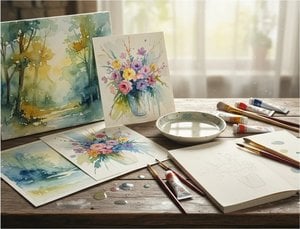
Ephemeral Visions: Exploring the Artistic Legacy & Nuances of Watercolor Painting
Explore the captivating world of watercolor painting! Discover its rich history, essential techniques, influential artists & collecting tips from art experts. A comprehensive guide for enthusiasts.

John Singer Sargent: Top 25 Mesterværker – Portrætter & Historier | ArtsDot.dk
Oplev John Singer Sargents 25 mest ikoniske malerier – fra elegante portrætter til impressionistiske mesterværker. Lær historierne bag kunsten & find inspiration til din indretning med ArtsDot.com. Udforsk samlingen online!