


 Se i rummet
 Send
Send Del
Del
 Detaljer
 Studieguide til kunstværker

 Download
 Lignende værker
 Røntgenundersøgelse
 Se diasshow
 Statistik
The Old Cremona
 Acrylic On Canvas
- WallArt
- Trompe-l'oeil
 1887
1887 41.0 x 31.0 cm
 Metropolitan Museum of Art
 Læs mere
Giclée / Kunsttryk
Giclée- eller lærredstryk i museumskvalitet med hurtig produktion og fleksible muligheder for finish. ( Bestil håndmalet reproduktion Skift til digitalt billede)




P118B Dkr10

P118H Dkr10

P118W Dkr10

P438Z Dkr10

P508JH Dkr12

P508YH Dkr12

P805H Dkr10

P805Z Dkr10

P919BZ Dkr10

P919G Dkr10

P919XJ Dkr10

P959ZH Dkr10

P968JZ Dkr12

W106C Dkr8

W218G Dkr10

W218JH Dkr8

W218Y Dkr10

W307PJ Dkr10

W316G Dkr10

W316PJ Dkr8

W316Y Dkr10

W398PJ Dkr8

W4111J Dkr10

W500HY Dkr15

W500JH Dkr15

W692G Dkr12

W849H Dkr8

W940BG Dkr15

W953PJ Dkr8




Vælg mellem vores forudindstillede størrelser, der matcher kunstværkets originale proportioner.

Indtast den bredde og højde, du har brug for, så det passer til din ramme eller din væg. Et print kan kun beskæres, aldrig gøres større end billedet, så en størrelse med en anden form vil miste en del af motivet. Vi sender dig en digital mockup til godkendelse, før vi printer noget. Billedet vist på denne side viser ikke den faktiske beskæring — det er kun mockuppen, der gør.
Verdensomspændende levering () på 2 uger i stedet for de sædvanlige 4/5 uger. (24 oktober)

Gratis ekspresforsendelse til hele verden

Lærred af linned i høj kvalitet

Komplet transportforsikring

Garanti for refusion af told og importafgifter

Garanti for autentisk farvegengivelse

100 dages returret ved fabrikationsfejl

100% fuld returret

Mængderabat ved flere køb
 Glasmulighed er kun tilgængelig i størrelser under 110 cm

The Old Cremona
Giclée / Kunsttryk
Reproduktionsstørrelse
-


Samlet pris
Dkr 413
The Old Cremona: A Trompe l'oeil Echo of Harnett’s Genius
John Frederick Peto’s “The Old Cremona” stands as a testament to the enduring fascination with illusionistic painting and the influence of contemporary artistic trends. Painted in 1887, this seemingly simple still life—a cello resting against a weathered wooden door—holds within it layers of artistic deliberation and subtle stylistic nuances that elevate it beyond mere representation.
- Artist’s Context: Peto's work emerged during the Victorian era, a period marked by burgeoning interest in realism alongside an appreciation for decorative arts. He was deeply connected to William Michael Harnett, whose groundbreaking trompe l'oeil technique – exemplified by “The Old Violin” – profoundly impacted artistic discourse and practice.
- Composition & Technique: Peto deliberately eschewed traditional modeling techniques, opting instead for a flattened perspective that prioritized textural effect. This approach mirrors Harnett’s style, creating an image that feels more akin to a decorative pattern than a meticulously rendered depiction of reality. The loose brushwork contributes to an aged aesthetic, hinting at the passage of time and fostering a contemplative mood.
- Symbolism & Material Culture: The cello itself serves as a potent symbol – representing musical heritage, artistry, and perhaps even nostalgia for bygone eras. Alongside it rests sheet music and a small tag bearing “VIOLIN,” reinforcing this thematic connection. The weathered wooden door embodies materiality and history, mirroring the broader Victorian preoccupation with documenting everyday life.
- Lighting & Perspective: Dramatic lighting casts deep shadows that accentuate the cello’s contours and the door's surface, guiding the viewer’s gaze and enhancing the painting’s visual impact. Shallow perspective emphasizes the foreground elements while subtly suggesting depth through shading variations – a technique characteristic of Luminism.
A Dialogue with Harnett: Borrowed Form, Distinct Vision
Peto's decision to adapt Harnett’s compositional framework wasn’t merely an act of stylistic homage; it was a conscious effort to forge his own artistic voice. By prioritizing textural surface and decorative qualities over precise anatomical detail—a hallmark of Harnett’s oeuvre—Peto achieved a markedly different aesthetic experience. This divergence underscores the importance of considering artistic influences while recognizing individual creative expression.
Color Palette & Decorative Emphasis
The painting's color palette is dominated by earthy browns and reds, punctuated by flashes of gold and cream – hues that evoke warmth and richness. These colors are skillfully blended to create a harmonious visual tapestry, prioritizing decorative impact over photographic accuracy. The artist’s focus on surface texture—the grain of the wood, the sheen of the cello varnish—further reinforces this aesthetic sensibility.
Emotional Resonance & Artistic Legacy
"The Old Cremona" transcends its subject matter to convey a profound sense of solitude and quiet contemplation. It speaks to an appreciation for craftsmanship and invites viewers to engage in introspection – qualities that resonate deeply with the spirit of Victorian art. Peto’s rediscovery as a masterful trompe l'oeil artist represents a significant contribution to American painting history, securing his place among the foremost practitioners of illusionistic technique.
Spørgsmål & svar
Kan jeg bruge augmented reality til at se "The Old Cremona" af John Frederick Peto i mit eget rum?
"The Old Cremona" har en augmented reality-forhåndsvisning: kunstværkets AR-forhåndsvisning-side viser det i dit eget rum på en kompatibel enhed.
Hvilken printstørrelse og orientering anbefales til "The Old Cremona"?
Til "The Old Cremona" er den anbefalede printopsætning en størrelse på Large og en Portrait orientering.
Hvilken national oprindelse ligger bag Trompe-l'oeil i "The Old Cremona"?
Det Trompe-l'oeil værk "The Old Cremona" blev skabt af en kunstner født i USA.
Lignende kunstværker


Om kunstneren
John Frederick Peto: En genopdaget mester af amerikansk trompe l'oeil
- Født: Philadelphia, USA (1854)
- Død: 1907
John Frederick Peto var en amerikansk kunstner, der opnåede berømmelse for sin mesterlige beherskelse af trompe l'oeil-maleriet – en teknik, der har til formål at bedrage beskuerens øje og skabe en illusion om, at de malede genstande er virkelige. I mange år forblev Petos værker stort set glemte, indtil de blev genopdaget i slutningen af det 20. århundrede side om side med værkerne fra den ligesindede trompe l'oeil-kunstner William Harnett. Hans malerier tilbyder et unikt og stemningsfuldt blik ind i hverdagslivet og den materielle kultur i det sene 19. århundrede.
Tidligt liv og kunstnerisk uddannelse
- Peto modtog sin tidlige kunstneriske træning ved Pennsylvania Academy of the Fine Arts, hvor han studerede sammen med William Harnett.
- I begyndelsen af sin karriere indsendte han regelmæssigt værker til de årlige udstillinger ved akademiet i Philadelphia.
- I 1889 flyttede Peto til Island Heights, New Jersey, et vendepunkt, der i betydelig grad formede både hans kunstneriske stil og hans motivvalg.
Kunstnerisk stil og særpræg
- Trompe l'oeil-teknikken: Det mest definerende træk ved Peto var hans ekstraordinære evne inden for trompe l'mulie. Han gengav med utrolig præcision helt almindelige genstande – pistoler, hestesko, papirstumper, nøgler og bøger – hvilket skabte en illusion af tredimensionalitet på en todimensional flade.
- Lavt rum og komposition: Hans malerier er typisk karakteriseret ved arrangementer af disse objekter inden for et lavvandet rum, hvilket forstærker følelsen af dybde og realisme.
- Fokus på skygge og tekstur: Peto lagde stor vægt på samspillet mellem lys og skygge samt overfladernes tekstur, hvilket yderligere bidrog til værkernes bedrageriske kvalitet. Han benyttede subtile gradueringer af lys og mørke for at skabe illusionen af mærkbare, fysiske overflader.
- Farvepalette og teknik: Petos modne værker er kendetegnet ved en uigennemsigtig og pudderagtig tekstur, som ofte sammenlignes med stilen hos den berømte franske maler fra det 18. århundrede, Jean-Baptiste-Siméon Chardin. Hans farvepaletter var generelt dæmpede og jordnære, hvilket afspejlede tonerne i de aldrende genstande og slidte overflader.
Genopdagelse og eftermæle
- De glemte år: Efter flytningen til Island Heights trak Peto sig i vid udstrækning tilbage fra den etablerede kunstverden. Han levede et stille liv, hvor han supplerede sin indkomst ved at male for turister og spille musik ved lokale begivenheder. Hans arbejde var i årtier reelt glemt af eftertiden.
- Eftermæle og anerkendelse: Genopdagelsen af Petos malerier i slutningen af det 20. århundrede bragte fornyet opmærksomhed til hans talent, og forskere begyndte at anerkende hans unikke bidrag til amerikansk kunst.
- Sammenligning med Harnett: Selvom han ofte sammenlignes med William Harnett, betragtes Petos stil generelt som mere abstrakt og følelsesmæssigt resonant end Harnetts teknisk brillante, men til tider stive tilgang. Petos kompositioner er mindre formelle, og hans genstande fremstår ofte ældre og mere præget af tidens tand.
- Museer og samlinger: I dag kan man finde Petos malerier på fremtrædende museer over hele USA, herunder John F. Peto Studio Museum, som er dedikeret til at bevare hans kunstneriske arv.
Bemærkelsesværdige værker
- Take Your Choice (1885)
- Reminiscences of 1865 (1901)
- Job Lot Cheap (1901)
- Still Life with Mug, Pipe and Book (1870)
- Still Life with Oranges and Banana (ca. 1880)
For yderligere information om John Frederick Petos liv og værk, besøg venligst ArtsDot.com.

John Frederick Peto
1854 - 1907 , USA
Hurtige fakta
- Artistic Movement Or Style: Trompe-l'oeil, Realisme
- Artists Who Influenced This Artist: ['Jean-Baptiste-Siméon Chardin']
- Date Of Birth: 21. maj 1854
- Date Of Death: 23. november 1907
- Full Name: John Frederick Peto
- Nationality: Amerikansk
- Notable Artworks:
- Take Your Choice
- Reminiscences of 1865
- Job Lot Cheap
- Stilleben med krus, pibe og bog
- Stilleben med appelsiner og banan
- Place Of Birth: Philadelphia, USA
Relaterede artikler

Amerikansk Realisme: 10 Mesterværker der Definerede En Kunstbevægelse – Find Din Inspiration Hos ArtsDot
Oplev de 10 mest ikoniske værker inden for amerikansk realisme! Fra Edward Hopper til Andrew Wyeth – lær historierne bag mesterværkerne og find inspiration til dit hjem. Køb museumskvalitets reproduktioner på ArtsDot.com.

Fra Klassisk Stilleben til Moderne Abstraktion: Kunsten at Løfte Villaens Atmosfære og Forbedre Selskabslivet
Oplev kunsten at skabe en unik atmosfære i din villa med stilleben og abstrakt kunst. Få inspiration, ekspertråd og eksklusive reproduktioner af højeste kvalitet. Løft dit hjem til et nyt niveau!

Grant Wood & American Regionalism: Identity, Myth & the Rural Landscape
Explore the world of Grant Wood & American Regionalism with ArtsDot. Discover the symbolism behind 'American Gothic', recurring themes, and the movement's lasting impact on art history. High-quality reproductions available.

Severin Roesen: Evoking National Identity Through American Still Life Painting
Explore the captivating world of Severin Roesen, a major American still life painter influenced by Dutch masters. Discover his lush compositions and the symbolism within his art – a window into 19th-century America.
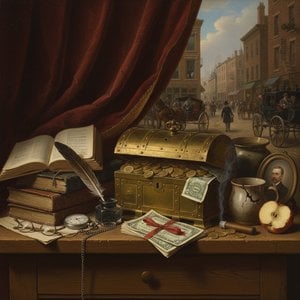
William Michael Harnett: Still Life, Realism & the American Pursuit of Materiality
Explore the captivating still lifes of William Michael Harnett, a master of American realism and trompe l'oeil painting. Discover his technique, legacy & the cultural context behind his iconic works.