


 Se i rummet
 Send
Send Del
Del
 Detaljer
 Studieguide til kunstværker

 Download
 Lignende værker
 Røntgenundersøgelse
 Se diasshow
 Statistik
Old Sarum
 Watercolor
- WallArt
- Romantic Landscape
 1834
1834- 19th Century
 300.0 x 487.0 cm
 Victoria and Albert Museet
 Læs mere
Håndlavet oliereproduktion
Håndmalet olie på lærred i din valgte størrelse og ramme, udført efter bestilling af vores kunstnere. ( Skift til printversion Skift til digitalt billede)




P118B Dkr10

P118H Dkr10

P118W Dkr10

P438Z Dkr10

P508JH Dkr12

P508YH Dkr12

P805H Dkr10

P805Z Dkr10

P919BZ Dkr10

P919G Dkr10

P919XJ Dkr10

P959ZH Dkr10

P968JZ Dkr12

W106C Dkr8

W218G Dkr10

W218JH Dkr8

W218Y Dkr10

W307PJ Dkr10

W316G Dkr10

W316PJ Dkr8

W316Y Dkr10

W398PJ Dkr8

W4111J Dkr10

W500HY Dkr15

W500JH Dkr15

W692G Dkr12

W849H Dkr8

W940BG Dkr15

W953PJ Dkr8




Vælg mellem vores forudindstillede størrelser, der matcher kunstværkets originale proportioner.

Indtast den bredde og højde, du har brug for, så det passer til din ramme eller din væg. Da dette er håndmalet, kan kunstneren ved en anden form på størrelsen male lidt mere rundt om billedet eller skære lidt væk — det er op til dig. Vi sender dig et digitalt mockup til godkendelse, før maleriet påbegyndes. Billedet, der vises på denne side, viser ikke det endelige resultat — det er kun mockuppet, der gør.
Efter bestilling vil ArtsDot.com team sende en e-mail til kunden for at indhente instruktioner og fremsende et udkast til gennemgang.
Levering i hele verden () på 3-4 uger i stedet for de standard 5 uger. (25 oktober). Ingen kompromiser med kvaliteten.

Gratis ekspresforsendelse til hele verden

Lærred af linned i høj kvalitet

Komplet transportforsikring

Garanti for refusion af told og importafgifter

Garanti for autentisk farvegengivelse

100 dages returret ved fabrikationsfejl

100% fuld returret

Mængderabat ved flere køb
 Glasmulighed er kun tilgængelig i størrelser under 110 cm

Old Sarum
Reproduktionsmateriale
Reproduktionsstørrelse
-


Samlet pris
Dkr 2053
A Symphony of Sky and Stone
In the vast, sweeping expanse of John Constable’s "Old Sarum," we are invited into a moment where time seems to hold its breath. Completed in 1834, this monumental watercolor is far more than a mere topographical record of an English landmark; it is a profound meditation on the ephemeral nature of human endeavor against the enduring majesty of the natural world. As your eyes wander across the canvas, you are immediately struck by the dramatic interplay of light and shadow, a hallmark of the Romantic movement. The scene is dominated by a massive, verdant hill, its summit crowned with the skeletal, crumbling remains of Sarum Cathedral. This juxtaposition of ancient, decaying stone against the vibrant, living pulse of the grassy slopes creates a tension that is both haunting and deeply tranquil.
The atmosphere of the piece is thick with the scent of impending rain. Constable, a master of capturing the "fleeting moment," has rendered a sky that is restless and alive. Swirling clouds in shades of slate, pearl, and charcoal drift across the upper half of the composition, suggesting a heavy, moisture-laden air that threatens to break into a summer storm. This brooding sky does not merely serve as a backdrop; it acts as a psychological force, casting soft, diffused light across the landscape and imbuing the entire vista with a sense of sublime drama. For the collector or designer, this piece offers an unparalleled emotional depth, bringing a sense of quiet contemplation and historical weight to any curated space.
Mastery of Light and Texture
To gaze upon "Old Sarum" is to witness Constable’s technical brilliance in the medium of watercolor. He achieves a remarkable sense of three-dimensionality through the painstaking layering of translucent washes. By applying thin glazes of color in successive stages, he creates a luminous effect, as if the light itself is trapped within the paper. This technique allows for a sophisticated use of atmospheric perspective; notice how the colors soften and lose their sharpest contrasts as the eye moves toward the distant horizon, perfectly mimicking the way mist and air obscure far-off objects.
The artist’s brushwork is equally expressive, oscillating between delicate precision and bold, gestural strokes. Short, rhythmic dabs of pigment delineate the rugged texture of the windswept grass and the tangled foliage, while broader, more fluid sweeps of the brush capture the turbulent movement of the clouds. This variation in texture prevents the eye from resting too long in one place, instead encouraging a continuous journey through the landscape. The muted, earthy palette—rich with ochre, deep greens, and weathered greys—anchors the work in a naturalistic reality, making the scene feel intimately connected to the very soil of the English countryside.
A Legacy of Romanticism
Historically, "Old Sarum" stands as a testament to the rise of landscape painting as a high art form. During an era when much of the academic focus remained on idealized classical subjects, Constable championed the beauty of the local and the observed. He sought to paint not just what he saw, but what he felt. The ruins atop the hill serve as powerful symbols of the passage of time—a memento mori that reminds us of the inevitable cycle of growth and decay. Yet, there is no despair in this decay; rather, there is a sense of peace found in the way nature reclaims and integrates these human remnants into its own grand design.
For those looking to adorn a home or gallery with a piece of art history, a high-quality reproduction of "Old Sarum" provides more than just decoration. It offers a window into the soul of the Romantic era. Whether placed in a sunlit study or a sophisticated contemporary living room, the painting’s ability to evoke both movement and stillness makes it a timeless centerpiece. It is an invitation to slow down, to breathe with the wind, and to find beauty in the weathered, the wild, and the wonderful.
Spørgsmål & svar
Hvor bør en reproduktion af "Old Sarum" af John Constable hænges op?
Med sin Panoramic form foreslås en reproduktion af "Old Sarum" til et Living Room.
Er "Old Sarum" af John Constable et lyst eller et mørkt kunstværk?
"Old Sarum" har en overordnet lysstyrke på brilliant, og dens luminans er Bright Balance.
Hvilken følelse skaber farverne i "Old Sarum" af John Constable?
Den Neutrals farvepalet i "Old Sarum" af John Constable harmonerer med værkets Tranquil følelsesmæssige tone. Farven er en af de måder, et værk formidler følelser på.
Lignende kunstværker


Om kunstneren
A Life Rooted in the English Landscape
John Constable, født i 1776 i den idylliske Suffolk-landsby East Bergholt, var langt fra blot en maler af landskaber; han var en digter af jorden, der oversatte dens subtile stemninger og vedvarende skønhed på lærredet med en hidtil uset følelsesmæssig dybde. Hans far, en velhavende kornhandler, der ejede både Dedham Vale og møllerier langs River Stour, leverede ikke blot økonomisk sikkerhed, men også selve emnet for konstables kunstneriske liv. Denne tidlige indlevelse i det landlige liv – den langsomme rytme af landbrugsaktiviteter, det evigt skiftende lys over marker og vand, de intime detaljer i naturen – blev uomgængeligt indgraveret i hans sansninger. Selvom han oprindeligt var tiltænkt at følge sin far ind i erhvervet, styrede en spirende passion for kunst, dyrket af lokale støtter som George Beaumont, der introducerede ham til værkerne hos Claude Lorrain, ham mod en anden vej. Konstables kunstneriske rejse var ikke umiddelbar; det var en gradvis udfoldelse, formet af omhyggelig observation og et vedvarende ønske om at fange ikke kun *hvad* han så, men *hvordan* det føltes at være til stede i landskabet.Breaking with Convention: A New Vision of Nature
Konstables kunstneriske udvikling var præget af en bevidst afvisning af gældende akademiske konventioner. Utilfreds med de idealiserede og ofte teatralske landskaber, der blev foretrukket af Royal Academy, søgte han i stedet efter en sandfærdig repræsentation af naturen, fortryllet med personlig følelse. Han var ikke interesseret i store historiske fortællinger eller mytologiske scener; hans fokus forblev fast på det velkendte landskab omkring ham. Denne forpligtelse til at skildre almindelige emner – høbaler, landbrugsbygninger, landsbysliv – blev oprindeligt mødt med modstand fra kritikere, der fandt hans arbejde for simpelt og manglende ambition. Alligevel holdt Constable ud, drevet af en overbevisning om, at skønhed lå i det hverdagsagtige. Han bane vejen for en teknik med *plein air*-maleri, hvor han ventured udendørs for direkte at observere og fange de flygtende effekter af lys og vejr. Denne direkte involvering med naturen tillod ham at indgyde sine lærred med en umiddelbarhed og vitalitet, der tidligere ikke var set i britisk landskabskunst. Hans penselstrøg blev mere løse og udtryksfulde, idet han brugte impasto – tykke lag maling – til at skabe tekstur og formidle en følelse af bevægelse og atmosfære. Han optog ikke blot det, han så; han oversatte sin følelsesmæssige reaktion på jorden til visuel form.Iconic Works and Lasting Influence
Konstables mest berømte værker står som vidnesbyrd om hans unikke vision. The Hay Wain (1821), måske hans mest genkendelige maleri, skildrer en typisk landskabs scene på River Stour og fanger den ro og harmoni, der er forbundet med landbrugs livet. Hadleigh Castle (1829) viser hans dramatiske brug af lys og atmosfæriske effekter, og forvandler et forfaldent ruiner til et kraftfuldt symbol på tidens gang. Serien af malerier, der skildrer Salisbury Cathedral from the Meadows (1831), demonstrerer hans evne til at vække forskellige stemninger og tider på dagen, og afslører katedralen som en integreret del af det naturlige landskab. Netley Abbey (1824), med sin beskrivende skildring af arkitektonisk pragt midt i den vilde natur, illustrerer hans evne til at blande menneskelig skabelse med naturens skønhed. På trods af den indledende modstand fra anerkendte kunstnere, opnåede Constable betydelig ros i Frankrig, hvor hans innovative teknikker og følelsesmæssige dybde resonerede dybt hos kunstnere, der søgte en mere naturalistisk tilgang til landskabsmaleri. Han påvirkede markant Barbizon-skolen, en gruppe franske malere, der delte hans engagement i *plein air*-maleri og direkte observation af naturen.Personal Life & Final Years
Konstables personlige liv var præget af både glæde og sorg. Han giftede sig med Maria Bicknell i 1816, og de fik syv børn, men desværre overlevede ikke alle barndommen. Hans ægteskab gav ham følelsesmæssig støtte, men også økonomisk pres. Han blev valgt til Royal Academy i 1829, fortsatte dog med at møde kritik fra nogle sider, især med hensyn til hans ukonventionelle teknikker. Hans senere år var skyggelagt af Marias forværrede helbred og hendes endelige død i 1828, en begivenhed, der dybt påvirkede ham. På trods af disse vanskeligheder fortsatte Constable med at male, indtil hans egen død den 31. marts 1837. Han efterlod sig et rigt kunstnerisk arv – et vidnesbyrd om hans urokkelige engagement i at fange skønheden og den følelsesmæssige dybde af det engelske landskab. Hans malerier er fortsat kraftfulde evokationer af en forgangne æra, der inviterer seerne til at opleve landskabet gennem hans unikt følsomme øjne.Key Influences
Constable’s artistic development was profoundly shaped by a number of key influences. Firstly, his early work was heavily influenced by the landscape paintings of Gainsborough and the 17th-century Dutch masters, particularly Ruisdael. He admired their ability to capture atmospheric effects and convey a sense of light and space. Secondly, he drew inspiration from the writings of Romantic poets like Wordsworth, who emphasized the importance of direct experience and emotional response in art. Thirdly, his exposure to the works of Claude Lorrain at an early age instilled in him a love for idealized landscapes and classical composition. Finally, his friendship with George Beaumont introduced him to a network of artists and collectors who fostered his artistic development and provided him with opportunities to study nature firsthand.Legacy
John Constable’s historical significance lies not only in his artistic innovations but also in his profound impact on the development of landscape painting. He challenged academic conventions, elevated the status of ordinary subjects, and paved the way for a more personal and emotionally expressive approach to art. His emphasis on direct observation, atmospheric effects, and truthful representation of nature anticipated many of the concerns of later Impressionist painters. He demonstrated that landscape could be a vehicle for profound emotional expression, capable of evoking feelings of nostalgia, tranquility, and awe.
John Constable
1776 - 1837 , Storbritannien
Hurtige fakta
- Artistic Movement Or Style: Romantik
- Artists Or Movements Influenced By This Artist: ['Barbizon Skolen']
- Artists Who Influenced This Artist:
- Claude Lorrain
- Ruisdael
- Date Of Birth: 11. juni 1776
- Date Of Death: 31. marts 1837
- Full Name: John Constable
- Nationality: Britisk
- Notable Artworks:
- The Hay Wain
- Hadleigh Slot
- Salisbury Katedral
- Place Of Birth: East Bergholt, UK
Relaterede artikler

Romantikkens Landskaber: Top 10 Malerier der Definerede En Æra | ArtsDot
Oplev romantikkens storhedstid! Dyk ned i top 10 landskabsmalerier af Caspar David Friedrich, Turner & Constable. Historiske fortællinger og museumskvalitets reproduktioner på ArtsDot.com – find din inspiration til væggen her!

John Singer Sargent: Top 25 Mesterværker – Portrætter & Historier | ArtsDot.dk
Oplev John Singer Sargents 25 mest ikoniske malerier – fra elegante portrætter til impressionistiske mesterværker. Lær historierne bag kunsten & find inspiration til din indretning med ArtsDot.com. Udforsk samlingen online!
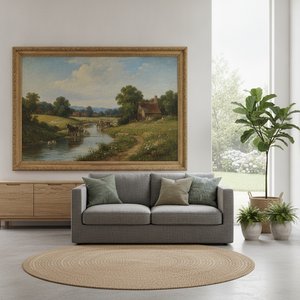
The Soul of the Stour: Bringing the Timeless Beauty of John Constable’s English Landscapes into Your Home
Transform your home with the serene beauty of John Constable’s English landscapes. Discover exquisite, hand-painted oil reproductions and bespoke commissions at ArtsDot.com. Elevate your interior decor with museum-quality artistry, expert consultation, and timeless pastoral charm.

10 Iconic Masterpieces That Defined Romantic Landscape Art
Experience the sublime emotion of Romantic landscape art. From Friedrich’s dramatic vistas to Turner’s atmospheric seascapes, explore 10 timeless masterpieces and find museum-quality reproductions for your home decor. Discover all masterpieces on ArtsDot.com.

John Constables 25 Mesterværker: En Hyldest til Englands Landskabskunst | ArtsDot.com
Oplev John Constables 25 mest ikoniske værker! Fordyb dig i engelsk romantik, betagende landskaber og tidløs skønhed. Køb museumskvalitets reproduktioner af 'The Hay Wain' & mere på ArtsDot.com – inspiration til dit hjem.


