


 Se i rummet
 Send
Send Del
Del
 Detaljer
 Studieguide til kunstværker

 Download
 Lignende værker
 Røntgenundersøgelse
 Se diasshow
 Statistik
Caryatides


 Læs mere
Håndlavet oliereproduktion
Håndmalet olie på lærred i din valgte størrelse og ramme, udført efter bestilling af vores kunstnere. ( Skift til printversion Skift til digitalt billede)




P118B Dkr10

P118H Dkr10

P118W Dkr10

P438Z Dkr10

P508JH Dkr12

P508YH Dkr12

P805H Dkr10

P805Z Dkr10

P919BZ Dkr10

P919G Dkr10

P919XJ Dkr10

P959ZH Dkr10

P968JZ Dkr12

W106C Dkr8

W218G Dkr10

W218JH Dkr8

W218Y Dkr10

W307PJ Dkr10

W316G Dkr10

W316PJ Dkr8

W316Y Dkr10

W398PJ Dkr8

W4111J Dkr10

W500HY Dkr15

W500JH Dkr15

W692G Dkr12

W849H Dkr8

W940BG Dkr15

W953PJ Dkr8




Vælg mellem vores forudindstillede størrelser, der matcher kunstværkets originale proportioner.

Indtast den bredde og højde, du har brug for, så det passer til din ramme eller din væg. Da dette er håndmalet, kan kunstneren ved en anden form på størrelsen male lidt mere rundt om billedet eller skære lidt væk — det er op til dig. Vi sender dig et digitalt mockup til godkendelse, før maleriet påbegyndes. Billedet, der vises på denne side, viser ikke det endelige resultat — det er kun mockuppet, der gør.
Efter bestilling vil ArtsDot.com team sende en e-mail til kunden for at indhente instruktioner og fremsende et udkast til gennemgang.
Levering i hele verden () på 3-4 uger i stedet for de standard 5 uger. (25 oktober). Ingen kompromiser med kvaliteten.

Gratis ekspresforsendelse til hele verden

Lærred af linned i høj kvalitet

Komplet transportforsikring

Garanti for refusion af told og importafgifter

Garanti for autentisk farvegengivelse

100 dages returret ved fabrikationsfejl

100% fuld returret

Mængderabat ved flere køb
 Glasmulighed er kun tilgængelig i størrelser under 110 cm

Caryatides
Reproduktionsmateriale
Reproduktionsstørrelse
-


Samlet pris
Dkr 1725
A Symphony in Stone: Jean Goujon’s Caryatids – Echoes of Rome and Renaissance Grace
The image before us—a meticulously rendered depiction of a classical architectural setting—offers more than just a visual pleasure; it invites us into the heart of 16th-century France, specifically to witness the masterful handiwork of Jean Goujon. This isn’t merely a scene of sculpted stone; it's a carefully constructed tableau brimming with historical resonance and artistic ambition, a testament to the enduring legacy of Roman sculpture reimagined through the lens of Renaissance ideals. The focal point, a striking caryatid figure, dominates the composition, her raised arm and draped form radiating an almost palpable sense of dignified strength and timeless beauty.
Goujon’s work, particularly as exemplified here, is deeply rooted in the classical tradition he encountered during his formative years in Italy. He wasn't simply copying; rather, he was absorbing the principles of proportion, anatomy, and drapery—the very essence of Roman sculpture—and integrating them into a distinctly French style. Notice the meticulous attention to detail – the subtle folds of her garment, the delicate carving of her features, the sense of weight and balance that anchors her within the architectural space. This is not an imitation; it’s a sophisticated synthesis, demonstrating Goujon's ability to translate Roman grandeur into a uniquely personal artistic voice.
The Louvre’s Grand Ballroom: Context and Purpose
To fully appreciate this image, one must understand its original context within the burgeoning Renaissance palace of the Louvre. Constructed under the patronage of Francis I, the palace was intended as a symbol of royal power and sophistication – a deliberate echo of the grandeur of the Italian courts. The Salle des Caryatides, where these sculptures resided, served as the heart of the royal ballroom, a space designed for lavish gatherings and courtly entertainment. Goujon’s caryatids were integral to this design, contributing not only to the aesthetic beauty but also to the overall sense of monumental scale and classical harmony.
The choice of caryatids themselves is significant. These sculpted female figures, traditionally supporting a building's roof or wall in ancient Greece, carried symbolic weight – representing strength, stability, and even mourning. In this context, they served as both decorative elements and subtle reminders of the enduring power of classical ideals within the new French monarchy.
A Study in Form and Detail: Goujon’s Technique
Goujon's skill lay not just in his understanding of classical principles but also in his masterful execution. He was renowned for his ability to render drapery with astonishing realism – each fold, pleat, and ripple appearing as if sculpted from the very fabric itself. Observe how he captures the illusion of movement and volume through subtle shifts in form and shading. The intricate detailing on the wall panels—the carved face, the winged figure, the heraldic shield—further demonstrates his technical prowess and his commitment to creating a richly layered visual experience.
The use of contrasting textures – the smooth, polished surface of the stone against the rougher details of the architectural setting – adds depth and dynamism to the composition. The overall effect is one of controlled elegance, reflecting the refined sensibilities of the Renaissance period.
Symbolism and Emotional Resonance
Beyond their purely decorative function, Goujon’s caryatids evoke a powerful sense of timeless beauty and dignified serenity. They represent an aspiration to classical ideals – a desire for order, harmony, and intellectual refinement. The raised arm of the figure suggests both strength and protection, while her serene expression conveys a sense of composure and grace. The image, therefore, is not simply a depiction of architecture; it’s a meditation on beauty, power, and the enduring legacy of classical art.
Reproductions of this artwork offer an opportunity to bring these echoes of Rome and Renaissance grace into any space, transforming interiors with a touch of historical elegance and artistic sophistication. The detail and craftsmanship are truly remarkable, making it a compelling addition to any collection or a thoughtful gift for the discerning art lover.
Spørgsmål & svar
Hvilke farver bruger "Caryatides"?
"Caryatides" af Jean Goujon benytter en Earthy farvepalette. Paletten opsummerer værkets overordnede farvekarakter.
Hvilken tone læner "Caryatides" sig mod?
En Golden Yellow Range nuance løber gennem "Caryatides" af Jean Goujon.
Hvilken farve træder mest frem i "Caryatides"?
Phthalo Green (#241c1d) er den dominerende farve i "Caryatides" af Jean Goujon.
Lignende kunstværker


Om kunstneren
Billedhuggeren, der formede parisiske elegance
Jean Goujon (ca. 1510 – ca. 1565) står som en grundsten i fransk renæssanceskulptur og arkitektur, idet han legemliggjorde manierismens stilistiske glød, samtidig med at han forankrede sit værk i klassiske idealer. Han blev født i Normandiet, og hans tidlige liv forbliver indhyllet i uklarhed, men hans omfattende produktion etablerede ham hurtigt som en af epokens fremmeste kunstneriske stemmer – et vidnesbyrd om hans enorme talent og urokkelige dedikation til sit håndværk. Goujons rejse begyndte med formative oplevelser i Italien, hvor han opsugede den romerske skulpturs storhed og integrerede dens principper i sin egen særprægede stil. Denne indflydelse er mærkbar gennem hele hans værk, især tydelig i hans mesterlige behandling af draperier og anatomiske præcision.
Hans kunstneriske opstigning begyndte i katedralen i Rouen (1541-42), hvor han påtog sig den monumentale opgave at skabe gravmonumentet for Louis de Brézé, seigneur d'Anet – en bestilling, der fremviste hans spirende færdigheder og ambitioner. Dette ambitiøse projekt cementerede hans ry som en opadgående stjerne i det franske skulpturelle landskab. Samtidig forfinede han sine arkitektoniske evner ved Saint-Maclou Kirke, hvor han demonstrerede en medfødt evne til at forene kunstnerisk vision med strukturel ingeniørkunst. Det resulterende bygningsværk står som et magnifikt eksempel på renæssancens kirkelige arkitektur og afspejler Goujons engagement i både æstetisk skønhed og funktionel integritet.
Et partnerskab af visionær storhed
Da han flyttede til Paris i 1544, indledte Goujon et afgørende partnerskab med Pierre Lescot, arkitekten bag den ambitiøse rekonstruktion af katedralen Saint-Germain-l'Auxerrois. Sammen udtænkte og udførte de betagende skulpturelle dekorationer – mest bemærkelsesværdigt prædikestolen – et mesterværk, der eksemplificerer Lescots neoklassiske sans og Goujons mesterlige teknik med draperier. Denne samarbejdsepoke definerede det visuelle sprog i den franske renæssance, da Goujon begyndte at besjæle sten med en følelse af flydende bevægelse og æterisk ynde.
Højdepunktet af hans indflydelse er måske mest synligt i hans bidrag til Louvre. Hans arbejde på Façaden af Cour Carrée (Lescot-fløjen) forbliver en ikonisk bedrift, der fremviser klassisk elegance gennem indviklede udskæringer, som afspejler fransk kunstnerisk genialitet. I disse værker kan man observere det delikate samspil mellem lys og skygge over de skulpturerede figurer, et kendetegn ved hans evne til at indgyde liv i kold marmor. Hans mesterskab strakte sig også til Louvre-facaden (detalje), hvor hans udsøgte sans for detaljen skabte et mesterværk af manieristisk stil, der forener klassisk elegance med indviklede udskæringer, som fortsat betager beskuere århundreder senere.
Arven af ynde og klassisk form
Goujons eftermæle defineres af en uovertruffen evne til at harmonisere manierismens spænding med klassicismens ro. Hans skulpturer forestiller ofte nymfer og allegoriske figurer, der synes at svæve i deres arkitektoniske omgivelser, en teknik der mest berømt blev realiseret i hans Karyatider. Disse ti mesterlige figurer repræsenterer højdepunktet af det 16. århundredes franske renæssanceskulptur og bringer en følelse af klassisk storhed og sofistikeret elegance til beskueren. Gennem disse værker gjorde Goujon mere end blot at dekorere bygninger; han skulpturerede selve identiteten for fransk æstetisk forfinelse.
Den historiske betydning af hans arbejde kan ikke overvurderes, da hans tilgang til anatomi og drapering påvirkede generationer af europæiske kunstnere. Hans evne til at transformere tung sten til flydende, rytmiske former etablerede en standard for fransk klassicisme, som ville bestå længe efter hans død. I dag tjener resterne af hans geni – fra de indviklede detaljer i Louvrens fløje til hans dybe indflydelse på arkitektonisk ornamentik – som et varigt vidnesbyrd om en mand, der for alvor formede Paris' elegance.

Jean Goujon
1510 - 1567 , Frankrig
Hurtige fakta
- Artistic Movement Or Style: Manierisme
- Artists Or Movements Influenced By This Artist: ['Fransk klassicisme']
- Artists Who Influenced This Artist: ['Michelangelo']
- Date Of Birth: ca. 1510 Normandiet, Frankrig
- Date Of Death: ca. 1567
- Full Name: Jean Goujon
- Nationality: Fransk
- Notable Artworks:
- Nymfer (detalje)
- Pietà
- Krig og fred
- Fontaine des Innocents
- Louvre-skulpturer
- Place Of Birth: Normandiet, Frankrig
Relaterede artikler

Top 10 Bronzemesterværker: Kunsthistorien Ændret for Evigt | ArtsDot.dk
Oplev de 10 mest legendariske bronzemesterværker, der har formet kunsthistorien! Fra Rodin til Degas – lær historierne bag ikoniske skulpturer og find inspiration til din indretning. Køb museumskvalitets reproduktioner på ArtsDot.com.

The Enduring Form: Sculpture Across History, Technique & Emotional Resonance
Explore the rich history of sculpture with ArtsDot. Discover key techniques, influential artists & investment potential for discerning collectors. Expert insights into valuing and collecting timeless masterpieces.
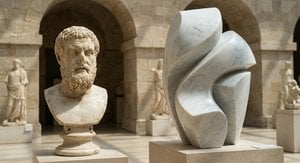
The Enduring Allure of Marble in Art History: From Classical Sculpture to Modern Abstraction
Explore the captivating history of marble sculpture from ancient Greece to modern art. Discover renowned artists like Canova & Michelangelo, carving techniques, and investment insights at ArtsDot.

The Enduring Form: Exploring Themes & Techniques in Sculpture Across Historical Periods
Explore the rich history of sculpture from ancient masterpieces to contemporary innovations. Discover key techniques, influential artists & investment potential for discerning art collectors.

Bronzeskulpturers Mestre: 10 Værker der Ændrede Kunsthistorien | ArtsDot
Oplev de 10 mest legendariske bronzeskulpturer, der har formet kunsthistorien! Fra Rodin til Vigeland – lær historierne bag mesterværkerne og find inspiration til din indretning. Køb museumskvalitets reproduktioner på ArtsDot.com.