

 Se i rummet
 Del som kort
 Del
Del
 Detaljer
 Guide
Guide

 Download
 Lignende værker
 Røntgenundersøgelse
 Diasshow
 Spørgsmål og svar
 Statistikker
Skarga`s Sermon

- 224.0 x 397.0 cm


 Vis mere
Giclée / Kunsttryk
Giclée- eller lærredstryk i museumskvalitet med hurtig produktion og fleksible muligheder for finish. ( Køb håndmalet maleri Skift til digitalt billede)




P118B Dkr10

P118H Dkr10

P118W Dkr10

P438Z Dkr10

P508JH Dkr12

P508YH Dkr12

P805H Dkr10

P805Z Dkr10

P919BZ Dkr10

P919G Dkr10

P919XJ Dkr10

P959ZH Dkr10

P968JZ Dkr12

W106C Dkr8

W218G Dkr10

W218JH Dkr8

W218Y Dkr10

W307PJ Dkr10

W316G Dkr10

W316PJ Dkr8

W316Y Dkr10

W398PJ Dkr8

W4111J Dkr10

W500HY Dkr15

W500JH Dkr15

W692G Dkr12

W849H Dkr8

W940BG Dkr15

W953PJ Dkr8




Vælg mellem vores forudindstillede størrelser, der matcher kunstværkets originale proportioner.

Indtast den bredde og højde, du har brug for, så det passer til din ramme eller din væg. Et print kan kun beskæres, aldrig gøres større end selve billedet, så en størrelse med et andet format vil medføre, at dele af motivet går tabt. Vi sender dig en digital mockup til godkendelse, før vi printer noget. Billedet vist på denne side viser ikke den faktiske beskæring — det er kun mockuppen, der gør.
Verdensomspændende levering () på 2 uger i stedet for de sædvanlige 4/5 uger. (4 november)

Gratis ekspresforsendelse til hele verden

Lærred af linned i høj kvalitet

Fuld transportforsikring

Garanti for refusion af told og importafgifter

Garanti for præcis farvegengivelse

100 dages returret ved fabrikationsfejl

100% fuld returret

Mængderabat ved flere køb
 Glasmulighed er kun tilgængelig i størrelser under 110 cm

Skarga`s Sermon
Giclée / Kunsttryk
Størrelse på reproduktion
-


Samlet pris
Dkr 420
A Dramatic Encounter in 17th-Century Poland
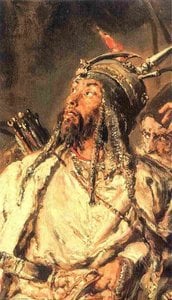
In the grand tapestry of Polish Romanticism, few works command the room with as much gravity and historical weight as Jan Matejko’s masterpiece, Skarga's Sermon. Created in 1864, this monumental oil on canvas serves as a window into a pivotal moment of spiritual and political tension. The scene captures a gathering of souls within a dimly lit room, where the air seems thick with the weight of impending change. At the heart of this composition is the Jesuit priest Piotr Skarga, whose powerful sermon acts as the catalyst for the profound emotions displayed by those gathered around him. Through his commanding presence, Matej and the artist invites us to witness not just a religious service, but a moment of intense national reflection.
The painting is a triumph of narrative depth, where every figure contributes to a larger story of duty and dissent. Dressed in the intricate, old-fashioned attire of the 17th century, the individuals present—some standing in rapt attention, others lost in somber thought—embody the various facets of a society at a crossroads. The artist masterfully utilizes body language and facial expressions to convey the underlying tensions of an era marked by upheaval. It is a scene that transcends mere historical documentation, offering instead a visceral experience of the psychological landscape of Poland during a time of great turmoil.
Mastery of Light, Color, and Texture
Technically, Skarga's Sermon is a testament to Matejko’s extraordinary skill in handling large-scale oil painting. The artist employs a somber and dramatic color palette, dominated by deep browns, heavy blacks, and striking reds. This choice of tones does more than just set the historical stage; it creates a chiaroscuro effect that pulls the viewer into the very center of the congregation. The light seems to struggle against the shadows, highlighting the textures of fine fabrics, the glint of metal, and the weathered skin of the listeners, lending an almost tactile quality to the canvas.
For the discerning collector or interior designer, this work offers an unparalleled sense of prestige and intellectual depth. The composition is dense and layered, rewarding repeated viewings with new discoveries—from the subtle interplay of light on a dining table to the quiet, brooding presence of figures tucked into the periphery. A high-quality reproduction of such a piece brings more than just decoration to a space; it introduces a profound sense of history and a sophisticated, dramatic atmosphere that can serve as the definitive focal point of a curated gallery or an elegant study.
A Legacy of National Identity
Beyond its aesthetic brilliance, Skarga's Sermon carries a heavy symbolic burden. As a work of historical painting, it was designed to stir the soul and remind the viewer of the complexities of the Polish spirit. The sermon itself, delivered by Skarga, is a metaphor for the call to conscience and the necessity of unity in the face of external threats. This emotional resonance is what has allowed the painting to endure as one of Jan Matejko's most celebrated achievements, housed within the prestigious National Museum in Warsaw.
To possess or display a reproduction of this work is to engage with a piece of cultural heritage that speaks of resilience and introspection. It is an ideal choice for those who appreciate art that tells a story, offering a sophisticated blend of historical accuracy and Romantic passion. Whether viewed as a study in light and shadow or as a profound historical narrative, Skarga's Sermon remains an enduring icon of artistic and national importance.
Spørgsmål og svar
Hvilken printstørrelse af "Skarga`s Sermon" af Jan Matejko passer til det anbefalede rum?
Den anbefalede kombination til "Skarga`s Sermon" af Jan Matejko: et tryk i størrelsen Large til et Hotel Lobby.
Hvornår blev "Skarga`s Sermon" skabt, og hvilken stilart tilhører det?
"Skarga`s Sermon" af Jan Matejko er dateret 1864 og tilhører Romanticism.
Hvad deler "Skarga`s Sermon" med resten af Jan Matejkos produktion?
I Jan Matejkos samlede værk placerer "Skarga`s Sermon" sig i Romanticism-stilen, sammen med temaerne omkring romanticism influence, polish historical narrative, counter reformation themes, political rebuke of elite, national identity preservation, key early masterpiece.
Lignende kunstværker


![The Battle Of Grunwald [tannenberg] — Jan Matejko, Romantic Historical Painting](/media/artworks/images-thumb/76/63/7663bffc0e03f3032abe818c6c091ed6.jpg)


Kunstnerbiografi
tidligt liv og uddannelse
jan alojzy matejko, en berømt polsk maler, blev født den 24. juni 1838 i kraków, polen. Hans far, franciszek ksawery matejko, var en tjekkisk-født tutor og musiklærer. jans tidlige liv var præget af kraków-revolutionen i 1846 og den østrigske belejring af kraków i 1848 – begivenheder, der senere skulle sætte dybe spor i hans kunstneriske temaer. matejko gik på st. ann's high school, men måtte forlade skolen i 1orden 1851 på grund af dårlige karakterer. dog udviste han et ekstraordinært talent for kunst fra en tidlig alder. han studerede ved skolen for skønne kunster i kraków fra 1852 til 1858, hvor han specialiserede sig i historiemaleri under vejledning af wojciech korneli stattler og władysław łuszczkiewicz.kunstnerisk karriere
matejkos første store værk, tsarerne shuyski foran zygmunt iii, blev færdiggjort i 1853. han begyndte at udstille sine historiske malerier hos krakóws selskab for venner af de skønne kunster i 1855. bemærkelsesværdige værker inkluderer:- rejtan (1866): et stort oliemaleri på lærred, der skildrer et afgørende øjeblik i polsk historie.
- unionen i lublin (1869): et betydningsfuldt værk, der fremviser matejkos evne til at indfange historiske begivenheder.
- slaget ved grunwald (1878): et mesterværk, der fremhæver hans evne til at formidle intensiteten i kampscener.
museologiske bidrag og eftermæle
matejko tilbragte det meste af sit liv i kraków, hvor han endte som direktør for jan matejko akademiet for skønne kunster, tidligere kendt som kraków akademi for skønne kunster. hans elever omfattede fremtrædende malere som maurycy gottlieb, jacek malczewski, józef mehoffer og stanisław wyspiański. bemærkelsesværdige værker tilgængelige på ArtsDot:- jan matejko: varna (romantik)
- jan matejko: stilleben (romantik)
- jan matejko: unionen i lublin (298 x 512 cm, romantik, olie på lærred)
referencer:
opdag mesterværkerne i muzeum narodowe krakow, polen (wikipedia.org)
Jan Matejko
1838 - 1893 , Polen
Kort om kunstneren
- Artistic Movement Or Style: Romantik
- Artists Or Movements Influenced By This Artist: ['Maurycy Gottlieb']
- Artists Who Influenced This Artist:
- Wojciech Korneli Stattler
- Władysław Łuszczkiewicz
- Date Of Birth: 24. juni 1838
- Date Of Death: 1. november 1893
- Full Name: Jan Alojzy Matejko
- Nationality: Polsk
- Notable Artworks:
- Slaget ved Grunwald
- Union af Lublin
- Place Of Birth: Kraków, Polen
Relaterede artikler

The Evocative Brushstroke: Exploring Emotion, Individuality & the Sublime in Romanticism's Artistic Landscape
Explore the passionate world of Romanticism! Discover masterpieces by Friedrich & Goya, delve into the sublime, and understand the movement's lasting impact on art history. Expert analysis & insights at ArtsDot.

Jan Gossaert (Mabuse): Pioneering Renaissance Style & the Birth of Netherlandish Antiquity
Explore the groundbreaking art of Jan Gossaert (Mabuse), a pioneer of Renaissance painting in the Low Countries. Discover his Romanist style, stunning portraits, and influence on Northern European art history.

Jan Matejko: Historical Narrative & National Identity in 19th-Century Polish Painting
Explore the powerful historical paintings of Jan Matejko, Poland's national artist. Discover his iconic works & learn how he shaped Polish identity in the 19th century. High-quality reproductions available.

Romantikkens Mestre: Top 10 Kunstværker der Definerede en Æra | ArtsDot.dk
Oplev romantikkens storhedstid! Dyk ned i historierne bag 10 ikoniske malerier af Caspar David Friedrich, Delacroix & Goya. Find inspiration til dit hjem med museumskvalitets kunsttryk på ArtsDot.com. Udforsk samlingen online!

Stanisław Wyspiański: Symbolism, National Identity & the Polish Secession
Explore the life & work of Stanisław Wyspiański, a pivotal figure in Polish Symbolism and the Young Poland movement. Discover his iconic paintings, dramas, and stained glass designs reflecting national identity & artistic innovation.