


 Se i rummet
 Send
Send Del
Del
 Detaljer
 Studieguide til kunstværker

 Download
 Lignende værker
 Røntgenundersøgelse
 Se diasshow
 Statistik
Landscape with Cows
 Romanticism
 39.0 x 65.0 cm
 Darlington Library
 Læs mere
Håndlavet oliereproduktion
Håndmalet olie på lærred i din valgte størrelse og ramme, udført efter bestilling af vores kunstnere. ( Skift til printversion Skift til digitalt billede)




P118B Dkr10

P118H Dkr10

P118W Dkr10

P438Z Dkr10

P508JH Dkr12

P508YH Dkr12

P805H Dkr10

P805Z Dkr10

P919BZ Dkr10

P919G Dkr10

P919XJ Dkr10

P959ZH Dkr10

P968JZ Dkr12

W106C Dkr8

W218G Dkr10

W218JH Dkr8

W218Y Dkr10

W307PJ Dkr10

W316G Dkr10

W316PJ Dkr8

W316Y Dkr10

W398PJ Dkr8

W4111J Dkr10

W500HY Dkr15

W500JH Dkr15

W692G Dkr12

W849H Dkr8

W940BG Dkr15

W953PJ Dkr8




Vælg mellem vores forudindstillede størrelser, der matcher kunstværkets originale proportioner.

Indtast den bredde og højde, du har brug for, så det passer til din ramme eller din væg. Da dette er håndmalet, kan kunstneren ved en anden form på størrelsen male lidt mere rundt om billedet eller skære lidt væk — det er op til dig. Vi sender dig et digitalt mockup til godkendelse, før maleriet påbegyndes. Billedet, der vises på denne side, viser ikke det endelige resultat — det er kun mockuppet, der gør.
Efter bestilling vil ArtsDot.com team sende en e-mail til kunden for at indhente instruktioner og fremsende et udkast til gennemgang.
Levering i hele verden () på 3-4 uger i stedet for de standard 5 uger. (25 oktober). Ingen kompromiser med kvaliteten.

Gratis ekspresforsendelse til hele verden

Lærred af linned i høj kvalitet

Komplet transportforsikring

Garanti for refusion af told og importafgifter

Garanti for autentisk farvegengivelse

100 dages returret ved fabrikationsfejl

100% fuld returret

Mængderabat ved flere køb
 Glasmulighed er kun tilgængelig i størrelser under 110 cm

Landscape with Cows
Reproduktionsmateriale
Reproduktionsstørrelse
-


Samlet pris
Dkr 2053
Lignende kunstværker


Om kunstneren
James Peel: A Painter of Northern Light
Born in Newcastle upon Tyne in 1811, James Peel’s life and artistic journey were inextricably linked to the rugged beauty of northern England – specifically, Northumberland, Yorkshire, and Wales. His early years, steeped in the industrial heritage of his father's woollen drapery business, provided a grounding in observation and an appreciation for the changing landscapes around him. Unlike many artists of his era who sought grand, idealized vistas, Peel’s work possessed a remarkable intimacy, capturing not just the scenery but also the subtle textures, atmospheric conditions, and quiet rhythms of rural life. His artistic development was nurtured by Alexander Dalziel, a skilled wood engraver, who recognized Peel's innate talent for drawing and encouraged his pursuit of painting.
Peel’s formal training began at Bruce’s School in Newcastle, where he honed his skills alongside notable figures like Sir Charles Mark Palmer and John Collingwood Bruce. However, it was a move to London in 1840 that truly propelled his career forward. Initially drawn to portraiture – producing striking copies of works by Wilkie Collins, including ‘Blind Fiddler’ and ‘The Village Festival,’ both housed within the National Gallery – Peel soon gravitated towards landscape painting. This shift reflected a deeper connection with the natural world, an impulse he would consistently pursue throughout his career.
A Palette of Northern Moods
Peel's artistic style is characterized by a remarkable sensitivity to light and atmosphere. He wasn’t interested in dramatic sunsets or sweeping vistas; instead, he meticulously rendered the subtle shifts in color and tone that defined the northern skies – the bruised purples of impending rain, the hazy greys of misty mornings, and the golden hues of late afternoon. His brushwork was precise yet fluid, conveying a sense of immediacy and spontaneity. He frequently depicted scenes of everyday rural life: shepherds tending their flocks, farmers working in their fields, and villagers engaged in their routines. These weren’t romanticized depictions; they were honest portrayals of a hardworking people living in harmony with the land.
A key element of Peel's technique was his masterful rendering of trees – an obsession that became almost synonymous with his name. He possessed an extraordinary ability to capture their intricate forms, the play of light and shadow on their bark, and the way they stood sentinel against the sky. Works like ‘A Lane in Berwickshire’ and ‘Cotherstone, Yorkshire,’ now residing in the Laing Art Gallery in Newcastle, exemplify this skill, showcasing a deep understanding of tree structure and an almost tactile quality to his brushstrokes.
Royal Recognition and Artistic Circles
Peel's dedication and talent quickly gained him recognition within the established art world. He began exhibiting at the Royal Academy in 1843 and subsequently joined the Royal Society of British Artists, a prestigious organization that championed English landscape painting. His work was consistently praised for its sincerity, technical skill, and evocative portrayal of northern landscapes. He wasn’t merely documenting scenery; he was conveying a feeling – a sense of quiet contemplation, rustic charm, and deep connection to the land.
Peel's artistic circle extended beyond the Royal Academy. He actively participated in “free” exhibitions organized by figures like Ford Madox Brown and William Bell Scott, challenging the established norms of the art market and advocating for greater accessibility to art. These initiatives demonstrated his commitment to fostering a vibrant and inclusive artistic community.
Legacy and Enduring Appeal
James Peel died in Reading in 1906, leaving behind a substantial body of work that continues to resonate with viewers today. His paintings are not grand statements but intimate glimpses into the heart of northern England – a region he loved deeply and captured with remarkable honesty and skill. His influence can be seen in subsequent generations of landscape artists who sought to emulate his sensitivity to light, his meticulous technique, and his profound appreciation for the beauty of the natural world.
Peel’s legacy extends beyond his artistic achievements. He represents a pivotal moment in British art history – a time when landscape painting moved away from idealized representations and embraced a more direct and personal approach. His work serves as a reminder that true artistry lies not just in technical skill but also in the ability to capture the essence of a place and its people.

James Peel
1811 - 1906
Hurtige fakta
- Full Name: James Peel
- Nationality: English
- Date Of Birth: 1811
- Date Of Death: 1906
- Place Of Birth: Newcastle-on-Tyne, UK
- Notable Artworks:
- A Lane in Berwickshire
- Cotherstone, Yorkshire
- Pont-y-pant, Wales
- Artistic Movement Or Style: Landscape painting
- Artists Who Influenced This Artist: ['Alexander Dalziel']
- Artists Or Movements Influenced By This Artist:
- Royal Academy
- Royal Society British Artists
Relaterede artikler

Romantikkens Landskaber: Top 10 Malerier der Definerede En Æra | ArtsDot
Oplev romantikkens storhedstid! Dyk ned i top 10 landskabsmalerier af Caspar David Friedrich, Turner & Constable. Historiske fortællinger og museumskvalitets reproduktioner på ArtsDot.com – find din inspiration til væggen her!

James Ward: A Study in British Romantic Landscape and Animal Painting
Explore the captivating world of James Ward (1769-1859), a master of British Romantic landscape & animal painting. Discover his iconic 'Gordale Scar' and exquisite portraits – a timeless art investment. Learn about his influences, style, and enduring legacy.
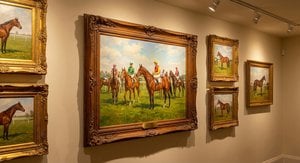
Sir Alfred James Munnings' Top 25 Værker: En Hyldest til Heste og Engelsk Landskab | ArtsDot.dk
Oplev Sir Alfred James Munnings' 25 mest ikoniske værker – fra betagende hestemalerier til engelske landskaber. Lær om kunstnerens historie, teknik og stil. Find luksus reproduktioner & inspiration til dit hjem på ArtsDot.com

James Abbott McNeill Whistler: Top 25 Kunstværker – Skønhed, Harmoni & Historie | ArtsDot
Oplev James Abbott McNeill Whistlers 25 mest ikoniske kunstværker. Fordyb dig i æstetismens verden, tonale malerier & harmoniske kompositioner. Find reproduktioner af højeste kvalitet og inspiration til din indretning på ArtsDot.com.

John Constables 25 Mesterværker: En Hyldest til Englands Landskabskunst | ArtsDot.com
Oplev John Constables 25 mest ikoniske værker! Fordyb dig i engelsk romantik, betagende landskaber og tidløs skønhed. Køb museumskvalitets reproduktioner af 'The Hay Wain' & mere på ArtsDot.com – inspiration til dit hjem.