


 Se i rummet
 Send
Send Del
Del
 Detaljer
 Studieguide til kunstværker

 Download
 Lignende værker
 Røntgenundersøgelse
 Se diasshow
 Statistik
Self-Portrait
 Acrylic On Canvas
- WallArt
- Neoclassical Portraiture
 1790
1790 63.0 x 52.0 cm
 Pushkin State Museum of Fine Arts
 Læs mere
Håndlavet oliereproduktion
Håndmalet olie på lærred i din valgte størrelse og ramme, udført efter bestilling af vores kunstnere. ( Skift til printversion Skift til digitalt billede)




P118B Dkr10

P118H Dkr10

P118W Dkr10

P438Z Dkr10

P508JH Dkr12

P508YH Dkr12

P805H Dkr10

P805Z Dkr10

P919BZ Dkr10

P919G Dkr10

P919XJ Dkr10

P959ZH Dkr10

P968JZ Dkr12

W106C Dkr8

W218G Dkr10

W218JH Dkr8

W218Y Dkr10

W307PJ Dkr10

W316G Dkr10

W316PJ Dkr8

W316Y Dkr10

W398PJ Dkr8

W4111J Dkr10

W500HY Dkr15

W500JH Dkr15

W692G Dkr12

W849H Dkr8

W940BG Dkr15

W953PJ Dkr8




Vælg mellem vores forudindstillede størrelser, der matcher kunstværkets originale proportioner.

Indtast den bredde og højde, du har brug for, så det passer til din ramme eller din væg. Da dette er håndmalet, kan kunstneren ved en anden form på størrelsen male lidt mere rundt om billedet eller skære lidt væk — det er op til dig. Vi sender dig et digitalt mockup til godkendelse, før maleriet påbegyndes. Billedet, der vises på denne side, viser ikke det endelige resultat — det er kun mockuppet, der gør.
Efter bestilling vil ArtsDot.com team sende en e-mail til kunden for at indhente instruktioner og fremsende et udkast til gennemgang.
Levering i hele verden () på 3-4 uger i stedet for de standard 5 uger. (25 oktober). Ingen kompromiser med kvaliteten.

Gratis ekspresforsendelse til hele verden

Lærred af linned i høj kvalitet

Komplet transportforsikring

Garanti for refusion af told og importafgifter

Garanti for autentisk farvegengivelse

100 dages returret ved fabrikationsfejl

100% fuld returret

Mængderabat ved flere køb
 Glasmulighed er kun tilgængelig i størrelser under 110 cm

Self-Portrait
Reproduktionsmateriale
Reproduktionsstørrelse
-


Samlet pris
Dkr 1725
A Portrait of Quiet Intensity: Jacques-Louis David’s Self-Portrait (1790)
Jacques-Louis David's Self-Portrait, painted in 1790, is not merely a likeness rendered on canvas; it’s a carefully constructed statement about an artist grappling with the seismic shifts of his time. This intimate work, measuring a modest 63 x 52 cm, offers a rare glimpse into the mind of a man poised on the precipice of revolution – a man who would become one of its most ardent and controversial figures. The painting immediately draws the viewer in with an arresting directness; David stares out from the canvas, his gaze unwavering and imbued with a subtle melancholy that belies the confident brushwork evident throughout.
The composition is rooted firmly in Neoclassical principles, a stylistic shift David championed after his early apprenticeship under François Boucher. The dark background, almost entirely devoid of detail, serves to amplify the figure’s presence, forcing us to confront his solemn expression and the carefully chosen details of his attire. He wears a meticulously tailored suit, indicative of the late 18th century, yet the wig – a deliberate stylistic choice – subtly nods towards an earlier, more formal era, creating a fascinating tension between tradition and modernity. The pipe in his hand isn’t simply a prop; it speaks to a contemplative nature, suggesting a man accustomed to quiet reflection amidst the clamor of artistic creation.
The Shadow of Revolution
Painted just two years before the execution of Louis XVI, this self-portrait is inextricably linked to the turbulent events unfolding in France. David’s early career had been marked by a flirtation with Rococo aesthetics, but he quickly embraced the ideals of Neoclassicism – an artistic movement that sought inspiration from the art and philosophy of ancient Greece and Rome. This shift reflected a broader cultural yearning for order, reason, and virtue, values increasingly championed in response to the perceived excesses of the Ancien Régime. The somber palette and restrained gestures within this portrait foreshadow the austere aesthetic that would define David’s most famous works during the Revolution – particularly his monumental depictions of heroic figures like *The Death of Marat* and *The Oath of the Horatii*.
Interestingly, the painting also hints at a personal struggle. The slight asymmetry in David's face, a physical characteristic he had dealt with since childhood, is subtly emphasized here. It’s as if he’s acknowledging his own imperfections while simultaneously projecting an image of unwavering self-assurance. This duality – vulnerability and strength – resonates deeply within the artwork and speaks to the complexities of a man navigating a period of profound social and political upheaval.
Technique and Detail: A Master's Hand
David’s technical skill is undeniable in this portrait. The meticulous rendering of fabric, particularly the texture of the suit and the folds of the wig, demonstrates his mastery of chiaroscuro – the dramatic use of light and shadow to create depth and form. Note the subtle gradations of tone, achieved through careful layering of paint, that give the figure a remarkable sense of volume. The artist’s attention to detail extends to the rendering of the hands, which are clasped together in a gesture of quiet contemplation.
- The precise brushwork reveals a deliberate control and an unwavering focus on capturing the likeness with accuracy.
- David's use of color is restrained, favoring muted tones that contribute to the overall sense of seriousness and introspection.
- The subtle modeling of the face – particularly around the eyes and mouth – conveys a remarkable degree of psychological depth.
Symbolism and Emotional Resonance
Beyond its technical brilliance, Self-Portrait is rich in symbolic meaning. The dark background can be interpreted as representing the uncertainties and anxieties of the era, while the figure’s direct gaze invites a sense of intimacy and engagement. The pipe, again, suggests a contemplative spirit, perhaps reflecting David's own internal struggles as he grappled with his role in shaping the future of France. This portrait isn’t simply a representation of a man; it’s an embodiment of the ideals – and the anxieties – of a nation on the brink of transformation. A reproduction offers a powerful way to connect with this pivotal moment in art history, bringing David's introspective gaze into your own space.
Spørgsmål & svar
Hvem sælger håndmalede kopier af "Self-Portrait" af Jacques-Louis David?
Håndmalede kopier af "Self-Portrait" af Jacques-Louis David sælges på denne hjemmeside: en håndmalet oliereproduktion på lærred af hør, bestilt via dens Håndmalet reproduktion-side.
Hvor kan jeg finde statistik om "Self-Portrait" af Jacques-Louis David?
Der findes en Statistikker-side for "Self-Portrait". Den viser de månedlige besøg for kunstværket og kunstnerens øvrige værker, opdelt efter land og sprog.
Hvor lys eller mørk fremstår "Self-Portrait" af Jacques-Louis David?
Overordnet set er "Self-Portrait" registreret som deep_shadow. Den oplevede lysstyrke beskriver, hvor lyst eller mørkt værket fremstår.
Lignende kunstværker


Om kunstneren
A Brushstroke Across Revolution: The Life and Art of Jacques-Louis David
Jacques-Louis David, født i Paris i 1748, var langt mere end blot en maler; han var en visuel skildrer af en æra præget af omvæltninger, idealisme og den utrættelige stræben efter nye ordener. Hans liv spejlede de dramatiske forandringer, der udspillede sig i hele Frankrig – fra Rococos prangende overdådighed til Neoklassicismens strenge klarhed, og endelig gennem revolutionernes turbulente år og Napoleons storhedstid. Barndommen var præget af tidlig tab af sin far og et ansigtsmæssigt anlæg, der i starten vansirede hans tale, tilsyneladende skarpe hans observationsevne og brændte en urokkelig dedikation til kunstnerisk mesterskab. Selvom han oprindeligt var lærling hos François Boucher, fandt David hurtigt sig selv tiltrukket af Joseph-Marie Viens mere moralsk resonante arbejde, hvis vægt på historie maleri og klassiske motiver resonerede med en voksende følelse af formål inden i den unge kunstner. Hans tidlige forsøg på at vinde det prestigefyldte Prix de Rome var præget af frustration, men disse gentagne fiaskoer intensiverede kun hans vilje, hvilket skabte en utrættelig perfektionisme, der ville karakterisere hele hans karriere.The Birth of Neoclassical Drama
Davids kunstneriske udvikling var ikke blot et stilistisk skift; det var en filosofisk erklæring. Han afviste Rococos overflødige dekoration og legende temaer, omfavnede i stedet klarhed, orden og moralsk alvor, der lå indbygget i den klassiske antikken. Denne engagement blev dybt påvirket af arkæologiske opdagelser ved Pompeii og Herculaneum, som afslørede en verden af romersk kunst og arkitektur, der hidtil var forsvundet i tiden. Hans gennembrud kom med “Oath of the Horatii” (1784), et maleri, der transcenderede blot kunstnerisk dygtighed til at blive et symbol på borgerpligt og patriotisk offervilje. Kompositionens stramhed, det dramatiske lys og den præcise tegning var revolutionerende, signalerede en afgørende brud med fortiden. Det var ikke *hvad* han malede, men *hvordan*, der gjorde forskellen – en bevidst konstruktion designet til at fremkalde kraftfulde følelser og inspirere til eftertanke om temaer som pligt, ære og selvopofrelse. Dette værk annoncerede ikke blot en ny stil; det forudså de ideologiske strømme, der snart ville rase gennem Frankrig.Revolution and Remembrance: Art as Political Weapon
Da den franske revolution brød ud i 1789, var David ikke blot en observatør, men en aktiv deltager. En ivrig støtter til den revolutionære sag og en tæt fortrolig med Maximilien Robespierre, så han kunst som et kraftfuldt værktøj til at forme offentlig mening og for evigt bevare idealerne om den nye republik. Hans malerier i denne periode blev stærke symboler på revolutionært martyrium og republikansk begejstring. Måske hans mest ikoniske værk fra denne æra er “The Death of Marat” (1793), et hjerteskærende realistisk billede af den myrdede journalist, forvandlet til en sekulær martyr. Maleriets stramme enkelhed – det bløde krop, skrivebordet og den klagede breve i Marats hånd – løfter scenen til et niveau af dyb følelsesmæssig resonans. David tjente på Komitéen for offentlig sikkerhed under Terrorperioden og underskrev endda Robespierres dødsdom, hvilket demonstrerer hans dybe involvering i de politiske magtkampe i tiden.From Revolution to Empire: Serving Napoleon
Den faldende af Robespierre markerede et nyt vendepunkt i Davids karriere. Med bemærkelsesværdig tilpasning navigerede han i det skiftende politiske landskab og allierede sig med Napoleon Bonaparte, blev den første konsuls officielle court maler. Denne nye patronat førte til store opgaver designet til at glorificere Napoleons sejre og præstationer. “Napoleon Crossing the Alps” (1801-1805) er måske det mest berømte eksempel – et mesterligt stykke propaganda, der præsenterer Napoleon som en heroisk, næsten mytisk figur, der overvinder både naturen og modstanden. “The Coronation of Napoleon” (1807), et enormt lærred, der fanger den overdådige og pompøse ceremoni, cementerede Davids position som den førende kunstner i Napoleons æra. I denne periode skiftede hans palet subtilt til varmere venetianske farver, mens han bevarede præcisionen og klarheden, der definerede hans stil.Exile, Legacy, and Enduring Influence
Den bourbon-restaurationsperiode i 1814 bragte ny fare for David, hvis forbindelse med den faldne Napoleon gjorde ham til et mål for forfølgelse. Han valgte eksil i Bruxelles i 1816, hvor han fortsatte at male og undervise, indtil sin død den 29. december 1825. Selv i eksilet var hans indflydelse dybtgående. Han uddannede mange elever, herunder Jean-Auguste-Dominique Ingres, der blev en af de vigtigste neoklassiske malere i det 19. århundrede. Davids vægt på tegning, komposition og historisk nøjagtighed efterlod et uforgængeligt præg på fransk kunst. *Hans arv strækker sig ud over blot imitation*; hans udtryksfulde forvrængninger af form og rum var endda en forløber for senere kunstneres innovationer som Henri Matisse og Pablo Picasso. Jacques-Louis David var ikke blot en maler af sin tid; han *definerede* den, fangede dens ånd af revolution, ambition og vedvarende idealer på lærredet for generationer fremover.- Vigtigste præstationer: Etablerede Neoklassicismen som den dominerende stil i fransk maleri.
- Historisk betydning: Skabte ikoniske billeder, der fangede ånden i den franske revolution og Napoleons æra.
- Indflydelse: Uddannede en generation af indflydelsesrige kunstnere, der videreførte hans arv.

Jacques-Louis David
1748 - 1800 , Frankrig
Hurtige fakta
- Artistic Movement Or Style: Neoklasisk kunst
- Artists Or Movements Influenced By This Artist:
- Ingres
- Matisse
- Artists Who Influenced This Artist:
- Vien
- Mengs
- Date Of Birth: 30. august 1748
- Date Of Death: 29. december 1825
- Full Name: Jacques-Louis David
- Nationality: Fransk
- Notable Artworks:
- Horatiers edd.
- Marats død
- Napoleon over Alperne
- Place Of Birth: Paris, Frankrig
Relaterede artikler
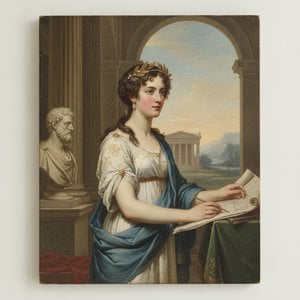
The Revival of Antiquity: Exploring Ideals of Beauty & Power in Neoclassical Portraiture
Explore the captivating world of Neoclassical portraiture! Discover the power & ideals behind masterpieces by David, Girodet & more. Expert analysis, custom reproductions & art appraisal at ArtsDot.

Illuminating the Enlightenment: Artistic Expression in 18th-Century Europe
Explore the artistic brilliance of the Enlightenment era! Discover Rococo's elegance & Neoclassicism’s virtue with expert insights into 18th-century masterpieces. Learn about David, Kauffmann & more.

Anne-Louis Girodet: Bridging Neoclassicism & Romanticism with Emotional Truth
Explore the captivating world of Anne-Louis Girodet, a pivotal figure bridging Neoclassicism & Romanticism. Discover his masterpieces and unique artistic vision with ArtsDot.

Jacques-Louis David: Neoclassical Ideals & Revolutionary Witness
Explore the life & art of Jacques-Louis David, leading Neoclassical painter of the French Revolution. Discover iconic works like 'The Death of Marat' and his lasting impact on art history. Expert analysis & high-quality reproductions at ArtsDot.

Illuminating the Enlightenment: A Comprehensive Exploration of 18th-Century Painting
Explore the captivating world of 18th-century painting! Discover Rococo's playful elegance & Neoclassicism’s Enlightenment ideals with expert insights into Fragonard, David, and more. A comprehensive guide for art enthusiasts.


