


 Se i rummet
 Send
Send Del
Del
 Detaljer
 Studieguide til kunstværker

 Download
 Lignende værker
 Røntgenundersøgelse
 Se diasshow
 Statistik
Amazon on horseback


 Læs mere
Håndlavet oliereproduktion
Håndmalet olie på lærred i din valgte størrelse og ramme, udført efter bestilling af vores kunstnere. ( Skift til printversion Skift til digitalt billede)




P118B Dkr10

P118H Dkr10

P118W Dkr10

P438Z Dkr10

P508JH Dkr12

P508YH Dkr12

P805H Dkr10

P805Z Dkr10

P919BZ Dkr10

P919G Dkr10

P919XJ Dkr10

P959ZH Dkr10

P968JZ Dkr12

W106C Dkr8

W218G Dkr10

W218JH Dkr8

W218Y Dkr10

W307PJ Dkr10

W316G Dkr10

W316PJ Dkr8

W316Y Dkr10

W398PJ Dkr8

W4111J Dkr10

W500HY Dkr15

W500JH Dkr15

W692G Dkr12

W849H Dkr8

W940BG Dkr15

W953PJ Dkr8




Vælg mellem vores forudindstillede størrelser, der matcher kunstværkets originale proportioner.

Indtast den bredde og højde, du har brug for, så det passer til din ramme eller din væg. Da dette er håndmalet, kan kunstneren ved en anden form på størrelsen male lidt mere rundt om billedet eller skære lidt væk — det er op til dig. Vi sender dig et digitalt mockup til godkendelse, før maleriet påbegyndes. Billedet, der vises på denne side, viser ikke det endelige resultat — det er kun mockuppet, der gør.
Efter bestilling vil ArtsDot.com team sende en e-mail til kunden for at indhente instruktioner og fremsende et udkast til gennemgang.
Levering i hele verden () på 3-4 uger i stedet for de standard 5 uger. (27 oktober). Ingen kompromiser med kvaliteten.

Gratis ekspresforsendelse til hele verden

Lærred af linned i høj kvalitet

Komplet transportforsikring

Garanti for refusion af told og importafgifter

Garanti for autentisk farvegengivelse

100 dages returret ved fabrikationsfejl

100% fuld returret

Mængderabat ved flere køb
 Glasmulighed er kun tilgængelig i størrelser under 110 cm

Amazon on horseback
Reproduktionsmateriale
Reproduktionsstørrelse
-


Samlet pris
Dkr 1729
A Vision of Northern Mannerist Majesty
In the delicate yet commanding lines of Jacques Bellange’s Amazon on horseback, we encounter a window into the enigmatic world of Northern Mannerism. Created in 1606, this evocative work transcends mere illustration, offering instead a dramatic tableau of power and myth. The subject—a woman clad in regal, flowing attire—perches atop her steed with an air of sovereign authority. As she grips her sword, the viewer is immediately drawn into a narrative of martial prowess and aristocratic grace. Bellange, a master of the etching needle, utilizes the medium to weave a complex tapestry of light and shadow, where every stroke contributes to a sense of psychological depth and theatrical tension that was the hallmark of his singular style.
The composition is a masterclass in stylized elegance, characteristic of the Lorraine school. The figure of the Amazon is not merely a warrior but a symbol of untamed strength refined by royal dignity. There is a surreal, almost dreamlike quality to the scene; notice the peculiar anatomical flourishes, such as the unusual positioning of the horse's features, which suggest the artist's departure from strict naturalism in favor of emotional and aesthetic impact. This intentional distortion serves to elevate the subject from the mundane to the legendary, making the piece an ideal focal point for those who appreciate art that challenges the eye and stirs the imagination.
Symbolism and the Spirit of the Era
To gaze upon this work is to engage with the complex symbolism of the early 17th century. The sword held by the Amazon serves as a potent emblem of justice, defense, and the indomitable spirit of the female warrior. In an era where much of the art focused on static religious iconography, Bellange’s exploration of a mythological figure riding through a landscape of shadows offers a refreshing sense of movement and agency. The interplay between the rider's delicate garments and the raw energy of the horse creates a profound tension between civilization and nature, a theme that continues to resonate with modern collectors.
For the discerning interior designer or art enthusiast, this piece offers more than just visual beauty; it provides a conversation piece steeped in historical intrigue. The dark, moody atmosphere of the etching lends itself beautifully to sophisticated, curated spaces—perhaps an executive study, a library, or a gallery-style hallway where the play of light on a high-quality reproduction can truly shine. It evokes a sense of timelessness, bridging the gap between the mysterious history of the Bâse-les-Vosges region and the contemporary desire for art that possesses both intellectual weight and aesthetic splendor.
A Legacy Captured in Ink
Though Jacques Bellange left behind no surviving paintings, his mastery of printmaking ensures his immortality. Amazon on horseback stands as a testament to his ability to command the etched line, creating textures that feel almost tactile. The way the light catches the folds of the queen's gown and the muscular tension of the horse invites the viewer to linger, searching for meaning in the shadows. Owning a reproduction of such a significant work allows one to bring the haunting beauty of Northern Mannerism into the home, offering a daily encounter with the sublime artistry of a forgotten master.
Spørgsmål & svar
Hvilken stemning bringer "Amazon on horseback" af Jacques Bellange til et interiør?
"Amazon on horseback" af Jacques Bellange har en Dramatic atmosfære og anbefales til et Living Room. Stemningen er det, som værket bringer til de omkringliggende omgivelser.
Hvem er kunstneren bag "Amazon on horseback", og hvornår blev værket skabt?
"Amazon on horseback" blev skabt af Jacques Bellange i 1606.
Er farverne i "Amazon on horseback" af Jacques Bellange mættede eller dæmpede?
"Amazon on horseback" af Jacques Bellange er gengivet med en Muted mætning.
Lignende kunstværker


Om kunstneren
A Shadowy Master of the Northern Mannerist Spirit
Jacques Bellange remains one of the most enigmatic and captivating figures in the history of European printmaking. A master of the Northern Mannerist style, his life was lived in the twilight of the late Renaissance, a period defined by elongated forms, theatrical tension, and an almost feverish psychological intensity. Though much of his personal biography remains shrouded in the mists of the early 17th century, his artistic legacy is vibrantly clear through the intricate lines of his etchings. Born around 1575 in the Bâse-les-Vosges region of France, Bellange emerged from a landscape of shifting borders and intense religious fervor, eventually finding his creative home within the sophisticated courtly circles of Nancy.
The traces of his early life are as delicate and elusive as his etchings. While historical records regarding his family origins are sparse, scholars often point to his rapid ascent within the Duchy of Lorraine as evidence of a significant, perhaps even noble, connection. There is much speculation that he may have been the illegitimate son of a high-ranking patron, a theory supported by the prestigious title of "knight" attributed to him and his seamless integration into the court of the Dukes of Lorraine. By 1595, he was already established in La Mothe, honing a craft that would soon transform the medium of printmaking into a vehicle for profound emotional expression.
The Elegance of the Lorraine Court
Bellange’s career reached its zenith under the patronage of Henri II and Philippe III, the Dukes of Lorraine. This period of courtly stability provided him with the luxury of time and resources, allowing him to refine a technique that was uniquely his own. Unlike many of his contemporaries who focused on the clarity of the High Renaissance, Bellange embraced the complexities of Mannerism. His work is characterized by a restless energy, where figures seem to twist and writhe with an almost supernatural grace. In the halls of Nancy, he developed a visual language that blended the sacred with the profane, creating works that were as much about the human psyche as they were about religious devotion.
His mastery of the etching needle allowed him to manipulate light and shadow with unprecedented drama. Through the meticulous use of hatching and cross-hatching, he could conjure textures ranging from the heavy folds of ancient drapery to the weathered skin of a street performer. This technical prowess is perhaps most evident in his ability to imbue even the simplest subject with a sense of profound mystery. Whether depicting a noble figure or a common musician, Bellange’s hand is unmistakable, leaving behind a trail of silvery, luminous lines that seem to vibrate with life.
A Legacy Etched in Light and Shadow
The true significance of Jacques Bellange lies in his ability to capture the ephemeral. His oeuvre serves as a window into a world of intense spiritual struggle and theatrical beauty. Some of his most enduring works demonstrate this range:
- The Three Marys at the Tomb: A striking example of his religious gravity, where dramatic figures and intricate details converge to create a moment of profound biblical tension.
- Hurdy-Gurdy Player: A masterpiece of character study, showcasing his ability to use complex linework to capture the hunched, weary essence of a street musician, imbuing a common subject with deep psychological depth.
- Gentleman in Ancient Costume: An exploration of the Mannerist obsession with historical fantasy and stylized elegance, featuring a warrior adorned in attire that evokes a sense of mythic grandeur.
Though his life was cut short in 1616, Bellange’s influence endured far beyond the borders of Lorraine. His rediscovery in the 20th century brought a renewed appreciation for the expressive potential of the etched line and the enduring power of the Mannerist aesthetic. Today, he is celebrated not merely as a court artist, but as a pioneer who pushed the boundaries of printmaking, leaving an indelible mark on the history of Western art through his hauntingly beautiful, shadow-drenched visions.

Jacques Bellange
1575 - 1616 , France
Hurtige fakta
- Full Name: Jacques Bellange
- Nationality: French
- Date Of Birth: 1575
- Date Of Death: 1616
- Place Of Birth: Bâse-les-Vosges, France
- Notable Artworks:
- Lamentation
- The Three Marys at the Tomb
- Gypsy with a Child
- Artistic Movement Or Style: Northern Mannerism
- Artists Who Influenced This Artist: ['Hendrik Goltzius']
- Artists Or Movements Influenced By This Artist: ['Renaissance']
Relaterede artikler

The Northern Renaissance: A Flourishing of Realism, Religious Reform & Artistic Innovation
Explore the Northern Renaissance! Discover Jan van Eyck's innovations, religious shifts, & key artists of this influential period. Expert analysis and insights into Early Netherlandish painting at ArtsDot.

Albrecht Altdorfer: Innovation, Spirituality & the Northern Renaissance Landscape
Explore the groundbreaking art of Albrecht Altdorfer, a pioneer of the Northern Renaissance's Danube School. Discover his innovative landscapes, spiritual symbolism & lasting influence on German painting.
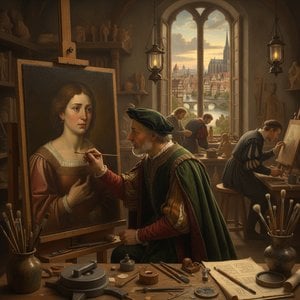
The Northern Awakening: Artistic Innovation & Cultural Transformation in the German Renaissance
Explore the artistic innovation of the German Renaissance! Discover Dürer, the Danube School & Reformation art. Learn about techniques, materials & lasting influence. Find museum-quality reproductions at ArtsDot.
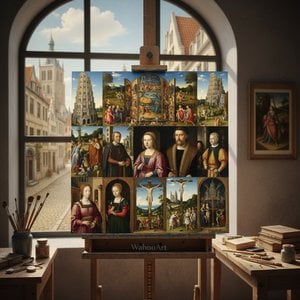
Top 10 Renæssancemestre: Kunst der Definerede Nordens Storhedstid | ArtsDot.dk
Oplev de 10 mest betydningsfulde værker fra Nordrenæssancen! Lær historierne bag Jan van Eyck, Dürer & Holbein. Find museumskvalitets reproduktioner og inspiration til dit hjem på ArtsDot.com.
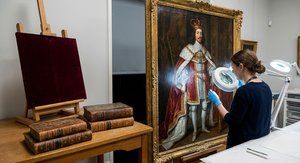
The Majesty of Representation: Exploring Regal Imagery in Art History
Explore the captivating history of royal portraiture with ArtsDot. Discover the symbolism, artistry, and enduring legacy of regal imagery in art. Expert insights for collectors & enthusiasts.