

 Se i rummet
 Del som kort
 Del
Del
 Detaljer
 Guide
Guide

 Download
 Lignende værker
 Røntgenundersøgelse
 Diasshow
 Spørgsmål og svar
 Statistikker
Page with figured initial M

- 61.0 x 40.0 cm


 Vis mere
Kunstværket vist på denne side er beskyttet af ophavsretsloven, hvilket betyder, at vi ikke lovligt kan skabe eller sælge en identisk reproduktion. Denne beskyttelse håndhæves i henhold til internationale aftaler som f.eks. den Bernerkonventionen og af nationale love, herunder de bestemmelser, der er fastlagt i Amerikansk ophavsretslov - Titel 17.
Denne metode overholder fuldt ud ophavsretsreglerne, da den ikke indebærer kopiering eller duplikering af det beskyttede kunstværk. I stedet er der tale om en kreativ nytolkning – et nyt maleri, som er inspireret af det oprindelige, men ikke identisk med det.
Giclée / Kunsttryk
Giclée- eller lærredstryk i museumskvalitet med hurtig produktion og fleksible muligheder for finish. ( Køb håndmalet maleri Skift til digitalt billede)




































Vælg mellem vores forudindstillede størrelser, der matcher kunstværkets originale proportioner.

Indtast den bredde og højde, du har brug for, så det passer til din ramme eller din væg. Et print kan kun beskæres, aldrig gøres større end selve billedet, så en størrelse med et andet format vil medføre, at dele af motivet går tabt. Vi sender dig en digital mockup til godkendelse, før vi printer noget. Billedet vist på denne side viser ikke den faktiske beskæring — det er kun mockuppen, der gør.
Verdensomspændende levering () på 2 uger i stedet for de sædvanlige 4/5 uger. (4 november)

Gratis ekspresforsendelse til hele verden

Lærred af linned i høj kvalitet

Fuld transportforsikring

Garanti for refusion af told og importafgifter

Garanti for præcis farvegengivelse

100 dages returret ved fabrikationsfejl

100% fuld returret

Mængderabat ved flere køb
 Glasmulighed er kun tilgængelig i størrelser under 110 cm

Page with figured initial M
Giclée / Kunsttryk
Størrelse på reproduktion
-


Samlet pris
Dkr 418
Lignende kunstværker


Kunstnerbiografi
A Luminary of the Lombard Gothic: Guiniforte da Vicomerchato
Guiniforte da Vimercate, a name resonating softly through the annals of 15th-century Italian art, represents a fascinating intersection of meticulous craftsmanship and devout artistic expression. Active primarily during a period of transition, he stands as a compelling figure bridging the late Gothic traditions with the burgeoning Renaissance aesthetic. While not widely celebrated in mainstream historical narratives, Guiniforte’s legacy is profoundly etched within the exquisite details of manuscript illumination, specifically his contributions to the Olivetan monastic order. Born in Vimercate, Italy, the precise dates of his birth and death remain elusive, yet his work speaks volumes about a life dedicated to embellishing sacred texts with unparalleled artistry. He wasn't merely a copyist or decorator; Guiniforte was a member of a family steeped in the profession of pen flourishing—a lineage that instilled within him not just technical skill but also an understanding of the symbolic weight carried by each stroke and flourish.Illuminating Faith: The Olivetan Anthem Books
Guiniforte’s most significant association lies with the Olivetan monastery, a religious community renowned for its liturgical music and devotion to elaborate choral performances. He is principally known for his work on two anthem books – designated ‘L’ and ‘M-N’—commissioned by this order. These were not simply functional texts; they were intended as objects of beauty, designed to elevate the spiritual experience during worship. The artistry within these volumes reflects a deep understanding of Gothic aesthetics: vibrant reds and blues dominate, often paired with an opulent use of gold leaf. This wasn't merely decorative excess; gold symbolized divine light and served to highlight key passages and intricate initial letters. Guiniforte’s skill lay in his ability to integrate complex figural scenes within these illuminated spaces, creating a harmonious blend of text and image. The marginal friezes are particularly noteworthy—delicate arrangements of foliage, animals, and miniature figures that seem to dance around the sacred words. His work on the ‘Diurnal gradual for all the time of the year’ and the ‘Common Office of the Saints’ further demonstrates his versatility and dedication to monastic patronage.Technique and Style: A Family Tradition Refined
The artistic style of Guiniforte da Vicomerchato is deeply rooted in the Gothic tradition, characterized by its emphasis on elegant line work, rich color palettes, and intricate detailing. However, he wasn’t simply replicating existing forms; his work reveals a subtle evolution within this established framework. The influence of his family's profession as pen flourishers is readily apparent—a mastery of calligraphy and decorative motifs permeates his illuminations. He possessed an exceptional ability to create depth and dimension through layering colors and employing delicate shading techniques. While the use of gold leaf was common in Gothic manuscript illumination, Guiniforte’s application stands out for its precision and luminosity. He wasn't afraid to experiment with different textures and patterns within the gold itself, creating a shimmering effect that draws the eye and enhances the overall visual impact. His frieze initial designs are particularly celebrated—complex arrangements of figures and foliage that showcase his technical prowess and artistic imagination.Historical Context: A Lombard Workshop in Transition
To understand Guiniforte’s significance, it's crucial to consider the broader historical context of 15th-century Lombardy. This region was undergoing a period of significant change—the rise of powerful ducal families like the Sforza and the increasing influence of Renaissance ideals from Florence and other Italian centers. While many artists embraced these new styles, Guiniforte remained firmly rooted in the Gothic tradition. However, this doesn’t mean he was resistant to innovation; rather, his work represents a conscious effort to preserve and refine existing artistic practices within a changing landscape. It's important to note that there is some confusion regarding the artist's identity due to the existence of another figure named Guiniforte Solari, an architect and sculptor active in Milan during the same period. While both artists shared a common name and geographical location, their respective fields of expertise were distinct—Guiniforte da Vicomerchato focused on manuscript illumination, while Guiniforte Solari was primarily involved in architectural projects.Legacy: Preserving Beauty for Future Generations
Although not as widely recognized as some of his contemporaries, Guiniforte da Vicomerchato’s legacy endures through the surviving examples of his exquisite manuscript work. His illuminations offer a rare glimpse into the artistic practices and devotional sensibilities of 15th-century Italy. The meticulous craftsmanship and vibrant colors continue to captivate viewers today, serving as a testament to his skill and dedication. His association with the Olivetan monastery highlights the importance of monastic patronage in supporting artistic production during this period. Furthermore, his work provides valuable insights into the evolution of Gothic illumination—a subtle yet significant refinement of existing forms within a changing cultural landscape. Guiniforte da Vicomerchato’s contributions remind us that artistic innovation isn't always about radical departures from tradition; sometimes, it lies in the masterful preservation and enhancement of established practices. His work continues to inspire art historians, collectors, and enthusiasts alike—a luminary of the Lombard Gothic whose artistry deserves continued recognition.
Kort om kunstneren
- Full Name: Guiniforte da Vicomerchato
- Nationality: Italian
- Place Of Birth: Vimercate, Italy
- Notable Artworks:
- Olivetan Anthem book 'L'
- Olivetan Anthem book 'M-N'
- Diurnal gradual
- Common Office of Saints
- Artistic Movement Or Style: Manuscript Illumination
Relaterede artikler
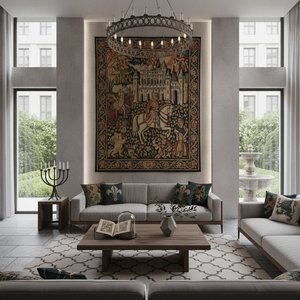
Timeless Elegance: How to Integrate High Medieval Art into Your Modern Interior Design
Discover how to infuse your modern home with the divine light of High Medieval art. From gilded illuminated manuscripts to Gothic-inspired textures, learn expert tips for integrating timeless elegance and historical grandeur into contemporary interior design.

Leonardo da Vincis 25 Mesterværker: Kunst, Historie & Inspiration til Dit Hjem
Oplev Leonardo da Vincis 25 mest ikoniske værker! Dyk ned i renæssancens kunsthistorie, fra Mona Lisa til Den Sidste Nadver. Find inspiration & køb museumskvalitets reproduktioner på ArtsDot.com – perfekt til dit hjem.

The Radiant Dusk of Medieval Vision: Exploring Late Gothic Art's Synthesis of Faith, Form & Emotionality (c. 1300-1500)
Explore the exquisite beauty & spiritual depth of Late Gothic art (c. 1300-1500). Discover key artists, symbolism, and its lasting influence on the Renaissance. Expert insights at ArtsDot.

Illuminating Faith & Power: A Journey Through Medieval Art (c. 500 – c. 1500)
Explore the rich history of Medieval Art (c. 500 – c. 1500) with ArtsDot. Discover Byzantine mosaics, Gothic cathedrals & Renaissance masterpieces. Expert insights & museum-quality reproductions.

High Medieval Art: 10 Masterpieces That Shaped an Era | ArtsDot
Journey through High Medieval Art! Explore 10 iconic masterpieces – from Giotto's frescoes to stunning Gothic cathedrals. Discover the stories behind these timeless paintings, sculptures & illuminated manuscripts. Find museum-quality art reproductions at ArtsDot.com.