


 Se i fuld skala
 Del
Del Del
Del
 Detaljer

 Download
 Lignende værker
 Røntgenundersøgelse
 Diasshow
The Three Fates
 Academic Realism
 1855
1855 82.0 x 82.0 cm
 Se mere
Håndlavet oliereproduktion
Håndmalet olie på lærred i din valgte størrelse og ramme, udført efter bestilling af vores kunstnere. ( Køb print Køb billede)




































Vælg mellem vores forudindstillede størrelser, der matcher kunstværkets originale proportioner.

Du kan indtaste dine egne mål for at passe til en bestemt ramme eller plads. Hvis den valgte størrelse ikke stemmer overens med det originale billedes proportioner, vil vi enten beskære kunstværket eller udvide maleriet med yderligere håndmalede elementer. En digital skitse sendes til din godkendelse, før produktionen påbegyndes.
Bemærk venligst, at forhåndsvisningen på skærmen ikke afspejler den faktiske beskæring eller udvidelse. Kun skitsen vil nøjagtigt vise den endelige komposition.
Selvom specialmål er mulige, anbefaler vi at vælge en dimension fra den foruddefinerede liste for at bevare de originale proportioner.
Efter bestilling vil ArtsDot.com team sende en e-mail til kunden for at få instruktioner og levere et udkast til en skitse.
Levering i hele verden () på 3/4 uger i stedet for de standard 5 uger. (26 august). Ingen kompromiser med kvaliteten.

Gratis ekspresforsendelse til hele verden

Lærred af linned i høj kvalitet

Fuld transportforsikring

Garanti for refusion af told og importafgifter

Garanti for præcis farvegengivelse

60 dages returret (kun ved fabrikationsfejl)

100% Tilfredshedsgaranti

Mængderabat tilgængelig
 Glasmulighed er kun tilgængelig i størrelser under 110 cm

The Three Fates
Reproduktionsmetode
Størrelse på reproduktion
-


Samlet pris
$ 313
Lignende kunstværker


Kunstnerens biografi
The Industrial Soul and Classical Grace
Godfrey Sykes emerged from the heart of Yorkshire as a figure who could bridge the gap between the soot-stained reality of industrial England and the ethereal elegance of the Renaissance. Born in Malton in 1824, his early life was steeped in the rigorous discipline of craftsmanship. Through his apprenticeship under the renowned engraver James Bell, Sykes developed a meticulous eye for detail that would become the hallmark of his diverse career as a designer, metalworker, sculptor, and painter. In those formative years within Sheffield, his brush first captured the raw, unvarnished truth of the industrial landscape—the rhythmic clang of blacksmith shops and the heavy, atmospheric presence of rolling mills. This early period of documentation provided him with a foundational understanding of texture and light that would later inform his more ambitious, decorative pursuits.A Renaissance Awakening
The trajectory of Sykes’s artistry underwent a profound transformation through an intellectual partnership that would redefine much of Victorian decorative art. The arrival of Alfred Stevens in Sheffield in 1850 acted as a catalyst, sparking a shared fascination with the pursuit of harmonious proportions and idealized beauty. Together, they embraced the Renaissance Revival movement, a stylistic shift that moved Sykes away from pure industrial realism toward a more sophisticated, classical aesthetic. As the chief designer for the ironfounders at Hoole & Co., he achieved a remarkable synthesis of heavy material and delicate ornament, executing monumental commissions that showcased his mastery of form:- The striking frieze created for the Mechanics Institute in 1853, which demonstrated his ability to translate classical motifs into tangible, structural art.
- The breathtaking ceiling fresco for the Telegraphic Building in 1856, an achievement that highlighted his skill in large-scale decorative painting.
- The creation of intricate terracotta sculptures and metalwork that brought a sense of historical grandeur to the burgeoning industrial architecture of the era.
The Enduring Legacy of a Victorian Visionary
Though his life was tragically short, ending in London in 1866 at the age of only forty-one, the breadth of Sykes’s contribution remains etched into the very fabric of Victorian design. His ability to navigate between the Romanticism of his portraits and the Realism of his industrial scenes allowed him to capture the dual spirit of his age—the tension between progress and tradition. Whether through the melancholic introspection found in works like 'The Pet in a Pet' or the evocative, impasto-rich depiction of daily labor in 'Grinder’s Hull', Sykes left behind a body of work that celebrates both the strength of human toil and the timeless allure of classical perfection. His legacy continues to resonate through the halls of institutions like the V&A Museum, where his decorative innovations remain a testament to an artist who saw the divine potential within the industrial machine.
Godfrey Sykes
1824 - 1866
Kort om kunstneren
- Artistic Movement Or Style: Renaissance Revival
- Artists Or Movements Influenced By This Artist: ['Raphael']
- Artists Who Influenced This Artist: ['Alfred Stevens']
- Date Of Birth: 1824
- Date Of Death: 1866
- Full Name: Godfrey Sykes
- Nationality: English
- Notable Artworks:
- Lunch Time
- The Three Fates
- Venus of Urbino (after Titian)
- Place Of Birth: Malton, North Yorkshire
Relaterede artikler
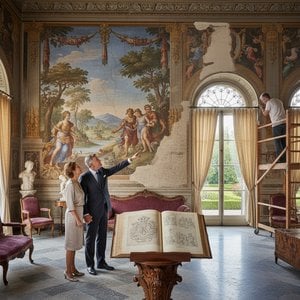
Freskoen som Familiens Arv: Bevar Din Historie på Væggene
Bevar din families historie med smukke, håndmalede vægmalerier og freskoer. Få professionel rådgivning & skræddersyede kunstværker hos – kvalitet og ekspertise garanteret!

The Enduring Legacy of Fresco Painting: Techniques, History & Contemporary Relevance
Explore the rich history & enduring artistry of fresco painting – from Giotto to Michelangelo! Discover techniques, conservation efforts, & modern applications. Learn how ArtsDot brings this timeless art form to your home.

The Enduring Legacy of Fresco: Technique, History & Artistic Expression Across Cultures
Explore the rich history & enduring legacy of fresco painting! Discover ancient techniques, Giotto's masterpieces, and modern applications. Expert insights for art lovers & professionals.

Kunsten at Bo Med Dig: Den Emotionelle Kraft i Et Skræddersyet Interiørfresko
Skab et unikt hjem med et håndmalet freskomaleri! Ekspertvejledning, skræddersyede designs & holdbare kvalitetsløsninger. Få inspiration og realiser din drømmevæg hos os.

The Enduring Legacy of Fresco: Technique, History & Artistic Expression
Explore the rich history & enduring artistry of fresco painting. Discover techniques from Giotto to Michelangelo, conservation efforts, & modern applications. Learn how ArtsDot brings this timeless art form to your home.

