


 Se i rummet
 Send
Send Del
Del
 Detaljer
 Guide
Guide

 Download
 Lignende værker
 Røntgenundersøgelse
 Se diasshow
 Statistik
Minuet


 Læs mere
Giclée / Kunsttryk
Giclée- eller lærredstryk i museumskvalitet med hurtig produktion og fleksible muligheder for finish. ( Bestil håndmalet reproduktion Skift til digitalt billede)




P118B $10

P118H $10

P118W $10

P438Z $10

P508JH $12

P508YH $12

P805H $10

P805Z $10

P919BZ $10

P919G $10

P919XJ $10

P959ZH $10

P968JZ $12

W106C $8

W218G $10

W218JH $8

W218Y $10

W307PJ $10

W316G $10

W316PJ $8

W316Y $10

W398PJ $8

W4111J $10

W500HY $15

W500JH $15

W692G $12

W849H $8

W940BG $15

W953PJ $8




Vælg mellem vores forudindstillede størrelser, der matcher kunstværkets originale proportioner.

Du kan indtaste dine egne mål for at passe til en specifik ramme eller et bestemt område. Hvis den valgte størrelse ikke stemmer overens med det originale billedes proportioner, vil vi enten beskære kunstværket eller udvide billedet med en spejlet eller ensfarvet kant. En digital mockup vil blive sendt til din godkendelse, før produktionen påbegyndes.
Bemærk venligst, at forhåndsvisningen på skærmen ikke afspejler den faktiske beskæring eller udvidelse. Kun mockuppen vil nøjagtigt vise den endelige komposition.
Selvom specialmål er tilgængelige, anbefaler vi at vælge et mål fra den foruddefinerede liste for at bevare de originale proportioner.
Verdensomspændende levering () på 2 uger i stedet for de sædvanlige 4/5 uger. (23 september)

Gratis ekspresforsendelse til hele verden

Lærred af linned i høj kvalitet

Komplet transportforsikring

Garanti for refusion af told og importafgifter

Garanti for autentisk farvegengivelse

100 dages returret ved fabrikationsfejl

100% fuld returret

Mængderabat ved flere køb
 Glasmulighed er kun tilgængelig i størrelser under 110 cm

Minuet
Giclée / Kunsttryk
Reproduktionsstørrelse
-


Samlet pris
$ 63
A Symphony of Grace: The Rococo Splendor of Tiepolo’s Minuet
In the delicate dance of light and shadow, Giovanni Domenico Tiepolo’s 1756 masterpiece, "Minuet," invites the viewer into a world where the boundaries between the earthly and the divine dissolve. As a quintessential emblem of the Rococo movement, this work captures the very essence of eighteenth-century aristocratic elegance—a period defined by a thirst for frivolity, idealized beauty, and theatrical grandeur. To gaze upon this canvas is to step into the opulent social spheres of the Habsburg court, where every gesture is choreographed with refinement and every hue whispers of luxury. The painting does not merely depict a dance; it orchestrates an immersive experience, pulling the observer into a rhythmic celebration of life itself.
The composition is a masterclass in the Rococo aesthetic, characterized by its rejection of Baroque solemnity in favor of playful asymmetry and a luminous, pastel-driven palette. Tiepolo employs a breathtaking array of delicate creams, blush pinks, and shimmering golds that seem to glow from within, mirroring the sumptuous silks and intricate ornamentation found in the grandest European interiors. Through the expert use of trompe l'oeil techniques, the artist subtly blurs the lines between the painted surface and architectural reality, creating an illusionistic depth that makes the grand classical structures feel as though they are expanding into the viewer's own space. The light does not simply illuminate the figures; it dances across them, lending a palpable sense of atmosphere and movement to the entire scene.
Mythological Echoes and Symbolic Grandeur
Beyond its surface-level charm, "Minuet" is deeply interwoven with the mythological narratives that provided the intellectual backbone of the era. At the heart of this graceful ballet stands a statue of Diana, the goddess of hunting and chastity. This inclusion serves as a profound symbol of virtue and nobility, acting as a silent, watchful guardian over the festivities. The dancers and musicians, arranged in a rhythmic semi-circle, are positioned within an architectural setting reminiscent of ancient Roman temples, a deliberate choice by Tiepolo to ground the ephemeral joy of the dance in the eternal ideals of classical harmony and proportion. This juxtaposition suggests that even the most fleeting moments of human pleasure can be imbued with divine significance.
For the discerning collector or interior designer, "Minuet" offers more than just visual beauty; it provides a profound emotional resonance. The painting captures a sense of exuberant optimism and the effortless poise of a bygone era. Whether placed in a sun-drenched gallery or as a focal point in a sophisticated living space, a high-quality reproduction of this work brings with it an air of historical prestige and timeless sophistication. It is a piece that invites conversation, evoking the spirit of an age where art was a celebration of light, movement, and the enduring pursuit of grace.
Lignende kunstværker


Om kunstneren
Giovanni Domenico Tiepolo: En Rococo Maestros Efterglans
Giovanni Domenico Tiepolo (August 30, 1727 – March 3, 1804) var en betydande italiensk målare och graverare från republikken Venedig. Han är erkänt som en av de främsta representanterna för Rococo-stilen, och vidareutvecklade sitt fars arv, Giovanni Battista Tiepolo. Hans konstnärliga karriär spände över flera decennier och lämnade efter sig ett rikt verk som präglas av livfulla färger, dynamiska kompositioner och eleganta skildringar av mytologiska scener, porträtt och landskap.Tidig Liv och Utbildning
Giovanni Domenico föddes i Venedig år 1727 och växte upp i ett konstnärligt hem där hans far, Giovanni Battista Tiepolo, var en internationellt hyllad målare känd för sina monumentala frescher. Detta gav honom en unik utbildning och exponerade honom för andra framstående konstnärer av sin tid, inklusive Sebastiano Ricci och Federico Bencovich, vilket ytterligare breddade hans konstnärliga horisonter. Som ung man assisterade han ofta sin far vid stora projekt och fick värdefull praktisk erfarenhet inom freskmålning – en disciplin som skulle forma hans egen konstnärliga utveckling. Hans förmåga att skapa detaljerade och känslomässigt engagerande verk var ett direkt resultat av denna tidiga utbildning.Konstnärlig Karriär och Stil
Giovanni Domenico etablerade sig som en skicklig konstnär under Rococo-eran och arbetade aktivt genom hela sitt liv, både självständigt och i samarbeten med andra konstnärer. Han utvecklade ett eget stilistiskt språk som var inspirerat av hans fars verk men också hade ett eget fokus på genrebilder och vardagsliv – särskilt vid dekoreringen av Villa Valmarana ai Nani i Vicenza där han skapade en fantastisk scen för publiken. Hans konstnärliga produktion omfattade frescher, målningar på duk och träsnitt, vilket visar hans mångsidighet som konstnär och hans förmåga att utforska olika konstnärliga uttryck. Han var särskilt imponerande när det gäller att skapa komplexa kompositioner och använda färger för att förmedla känslor och atmosfär – egenskaper som är karakteristiska för Rococo-konsten i sin bästa form. Giovanni Domenico Tiepolo var en av de få konstnärerna som lyckades kombinera klassiska idéer med samtida estetiska impulser, vilket säkerställde hans plats inom Rococo-rörelsen och lämnade efter sig ett arv av fantastisk kreativitet och teknisk skicklighet.Huvudverk och Inspirationskällor
Giovanni Domenico Tiepolo är främst känd för sina frescher i Palazzo Ducale och Ca' Dolfin på Grand Canal, där hans verk berättar historier om italiensk historia och kultur. Hans målningar inkluderar "Perseus och Andromeda", "Eufrosyne och Zeus" och många andra mytologiska scener som visar hans förmåga att skapa dramatiska och visuellt imponerande bilder. Han hämtade inspiration från klassisk konst och arkitektur samt från italienska dekorativa traditioner, vilket märks tydligt i hans verk. Giovanni Domenico var också en skicklig träsnittskonstnär och producerade många detaljerade och expressiva tryck som dokumenterar hans tid och hans konstnärliga vision. Hans arbete är ett viktigt exempel på Rococo-konstens utveckling och bidrar till vår förståelse av den italienska konstkulturen under senare delen av 1700-talet. Giovanni Domenico Tiepolo var en riktigt unik konstnär som lyckades skapa verk som både är tekniskt briljanta och estetiskt övertygande – egenskaper som fortsätter att fascinera publiken än idag.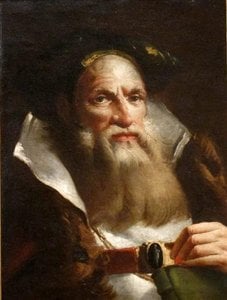
Giovanni Domenico Tiepolo
2007 - 1770 , Italien
Hurtige fakta
- Artistic Movement Or Style: Rococo
- Artists Who Influenced This Artist: ['Giovanni Battista Tiepolo']
- Date Of Birth: August 30, 1727
- Full Name: Giovanni Domenico Tiepolo
- Nationality: Italian
- Notable Artworks:
- Perseus and Andromeda
- The Rape of Europa
- Hunter with Deer
- Place Of Birth: Venice, Italy
Relaterede artikler

Francesco Guardi: Venetian Light, Atmospheric Perspective & the Rococo to Neoclassical Transition
Explore the captivating world of Francesco Guardi, master of Venetian light and atmosphere. Discover his transition from Rococo to Neoclassicism, influence on Impressionism & investment potential with ArtsDot.

Rokokomaleriet: Top 10 Mesterværker der Definerede Epoken | ArtsDot.dk
Oplev Rokoko kunstens pragt! Dyk ned i 10 mesterværker fra Boucher, Watteau og Fragonard. Historier, teknikker & inspiration til dit hjem. Find museumskvalitets reproduktioner på ArtsDot.com
Giambattista Tiepolo: A Rococo Master's Legacy of Light & Illusion
Explore the captivating world of Giambattista Tiepolo, master of Rococo art. Discover his innovative techniques, iconic frescoes, and lasting influence on Italian painting. A guide for discerning collectors.

The Rococo Aesthetic: Opulence, Rebellion & the Pursuit of Pleasure in 18th-Century Art
Explore the opulent world of Rococo art! Discover its origins, key artists like Watteau & Boucher, and lasting influence on design. Expert insights for collectors & enthusiasts.

Pietro Longhi's Venetian Scenes: A Study of Rococo Society & Domestic Life
Explore the captivating world of Pietro Longhi's Venetian scenes! Discover insightful analysis of his Rococo masterpieces & social commentary on 18th-century life. Learn about this 'Venetian Hogarth' and his lasting artistic legacy.
