

 Se i rummet
 Del som kort
 Del
Del
 Detaljer
 Guide
Guide

 Download
 Lignende værker
 Røntgenundersøgelse
 Diasshow
 Spørgsmål og svar
 Statistikker
Les Epoux


 Vis mere
Kunstværket vist på denne side er beskyttet af ophavsretsloven, hvilket betyder, at vi ikke lovligt kan skabe eller sælge en identisk reproduktion. Denne beskyttelse håndhæves i henhold til internationale aftaler som f.eks. den Bernerkonventionen og af nationale love, herunder de bestemmelser, der er fastlagt i Amerikansk ophavsretslov - Titel 17.
Denne metode overholder fuldt ud ophavsretsreglerne, da den ikke indebærer kopiering eller duplikering af det beskyttede kunstværk. I stedet er der tale om en kreativ nytolkning – et nyt maleri, som er inspireret af det oprindelige, men ikke identisk med det.
Giclée / Kunsttryk
Giclée- eller lærredstryk i museumskvalitet med hurtig produktion og fleksible muligheder for finish. ( Køb håndmalet maleri Skift til digitalt billede)




P118B Dkr10

P118H Dkr10

P118W Dkr10

P438Z Dkr10

P508JH Dkr12

P508YH Dkr12

P805H Dkr10

P805Z Dkr10

P919BZ Dkr10

P919G Dkr10

P919XJ Dkr10

P959ZH Dkr10

P968JZ Dkr12

W106C Dkr8

W218G Dkr10

W218JH Dkr8

W218Y Dkr10

W307PJ Dkr10

W316G Dkr10

W316PJ Dkr8

W316Y Dkr10

W398PJ Dkr8

W4111J Dkr10

W500HY Dkr15

W500JH Dkr15

W692G Dkr12

W849H Dkr8

W940BG Dkr15

W953PJ Dkr8




Vælg mellem vores forudindstillede størrelser, der matcher kunstværkets originale proportioner.

Indtast den bredde og højde, du har brug for, så det passer til din ramme eller din væg. Et print kan kun beskæres, aldrig gøres større end selve billedet, så en størrelse med et andet format vil medføre, at dele af motivet går tabt. Vi sender dig en digital mockup til godkendelse, før vi printer noget. Billedet vist på denne side viser ikke den faktiske beskæring — det er kun mockuppen, der gør.
Verdensomspændende levering () på 2 uger i stedet for de sædvanlige 4/5 uger. (4 november)

Gratis ekspresforsendelse til hele verden

Lærred af linned i høj kvalitet

Fuld transportforsikring

Garanti for refusion af told og importafgifter

Garanti for præcis farvegengivelse

100 dages returret ved fabrikationsfejl

100% fuld returret

Mængderabat ved flere køb
 Glasmulighed er kun tilgængelig i størrelser under 110 cm

Les Epoux
Giclée / Kunsttryk
Størrelse på reproduktion
-


Samlet pris
Dkr 418
The Enigmatic Embrace: De Chirico’s “Les Époux”
Giorgio de Chirico's "Les Époux" (1926) isn’t merely a depiction of two figures; it’s an immersion into the unsettling, dreamlike realm of his Metaphysical art. This black and white drawing, housed within ArtsDot’s meticulously crafted reproductions, immediately draws the viewer in with its stark simplicity and profound sense of isolation. The composition is deceptively straightforward: two faces, one on either side, seemingly locked in a silent, unwavering gaze. Yet, beneath this surface lies a complex tapestry of philosophical inquiry and psychological depth—a testament to de Chirico’s unique vision. The image itself, captured with an almost photographic precision, hints at the artist's fascination with urban spaces, particularly those imbued with a sense of melancholy and forgotten grandeur. The buildings in the background, rendered with a subtle yet powerful perspective, contribute to this atmosphere of detachment, suggesting a world both familiar and profoundly alien. Even the inclusion of a book—a small detail that anchors the scene—feels deliberately placed, adding another layer of enigmatic symbolism.The Roots of Metaphysical Realism
To truly appreciate “Les Époux,” one must understand de Chirico’s broader artistic project: Metaphysical art. Emerging in the early 20th century, this movement sought to capture not just what *is* seen, but what *might be* felt—the hidden anxieties and irrational desires lurking beneath the surface of everyday reality. De Chirico, born in Greece to Italian parents, drew heavily from his diverse influences: the classical architecture of Athens, the philosophical writings of Schopenhauer and Nietzsche, and the unsettling imagery of Arnold Böcklin. He deliberately manipulated perspective, creating impossible spaces and jarring juxtapositions that challenged conventional notions of representation. His work wasn’t about literal depiction; it was an attempt to evoke a specific mood—a sense of unease, nostalgia, and the feeling of being adrift in a world devoid of meaning. The stark black and white palette further amplifies this effect, stripping away any potential distractions and focusing entirely on form and emotion.Symbolism and the Silent Dialogue
The faces themselves are central to the painting’s power. They aren't expressive or animated; instead, they possess a disconcerting stillness, as if frozen in an eternal moment of contemplation. Their averted gazes suggest a profound disconnection—a silent dialogue that speaks volumes about loneliness, alienation, and perhaps even unrequited love. The mannequins, frequently appearing in de Chirico’s work, are often interpreted as representing idealized figures, devoid of genuine emotion or connection. Here, they subtly reinforce the sense of detachment, highlighting the artificiality of human relationships. The background buildings—often reminiscent of Roman facades—add to this atmosphere of timelessness and decay, hinting at a lost past and an uncertain future. The book, positioned near the bottom left corner, could symbolize knowledge, memory, or perhaps simply the futile attempt to find answers in a world filled with enigmas.A Reproduction for the Soul
ArtsDot’s hand-painted reproductions of “Les Époux” capture the essence of de Chirico's vision with remarkable fidelity. The meticulous attention to detail—from the subtle shading to the precise rendering of the architectural elements—is a testament to our commitment to preserving and celebrating this pivotal work of art. Unlike digital prints, these reproductions possess an unparalleled depth and texture, bringing the painting’s haunting atmosphere to life in a truly immersive way. Whether adorning a contemporary interior or serving as a focal point in a classic setting, “Les Époux” offers a powerful reminder of the enduring power of art to provoke thought, evoke emotion, and transport us to another realm—a realm where reality itself feels subtly distorted and profoundly unsettling. Explore the full depth of this masterpiece through ArtsDot’s exquisite reproductions – a perfect addition for collectors and admirers alike.Spørgsmål og svar
Kan man downloade "Les Epoux"?
"Les Epoux" af Giorgio de Chirico kan downloades fra værkets Download-side som et højopløseligt digitalt billeddownload.
Hvilken kunstner tilskrives "Les Epoux"?
Kunstneren bag "Les Epoux" er Giorgio de Chirico. Værket er katalogiseret under Giorgio de Chiricos navn.
Kan jeg se en forhåndsvisning af "Les Epoux" af Giorgio de Chirico, før jeg bestiller?
Siden Forhåndsvisning for "Les Epoux" giver dig mulighed for at se en forhåndsvisning af kunstværket, før du bestiller.
Lignende kunstværker


Kunstnerbiografi
Giorgio de Chirico: En Drømmende Verden af Sindet
Giorgio de Chirico, født i Volos, Grækenland i 1888 til italienske forældre – en genuesisk mor og en siciliansk far – begyndte sin kunstneriske rejse dybt forankret i både klassisk arv og en voksende følelse af moderne alienation. Hans tidlige uddannelse på Athens Polteknik lagde et fundament i traditionelle teknikker, men det var hans efterfølgende studier i München, der virkelig antændte hans kreative ånd. Der, midt i den intellektuelle ferment af før-krigstiden, mødte han værker af Arnold Böcklin og Max Klinger – kunstnere hvis symbolske landskaber og uhyggelige billeder resonerede dybt med hans egen udviklende æstetik. Lige så indflydelsesrige var de filosofiske strømninger på tidspunktet – skrifterne fra Friedrich Nietzsche, Arthur Schopenhauer og Otto Weininger – der udforskede temaer som eksistentialisme, den irrationelle menneskelige længsel og virkelighedens subjektive natur. Disse ideer ville blive centrale for de Chiricos banebrydende kunstneriske vision.Fødslen af Metaphysisk Kunst
Omkring 1909 begyndte en unik stil at dukke op fra de Chiricos udforskninger – en stil, han selv betegnede “metaphysisk” kunst. Dette var ikke blot en stilistisk innovation; det var et dybt forsøg på at fange den skjulte virkelighed under overfladen af dagligdags liv, at afsløre den urolige poesi, der gemte sig i velkendte rum. Et vendepunkt opstod under et besøg i Firenze og en oplevelse i Piazza Santa Croce, hvilket udløste hans ikoniske ‘Metaphysiske Torv’ serie. Disse malerier var karakteriseret ved deres uhyggelige stilhed, lange dramatiske skygger, logiske perspektiver og tilstedeværelsen af klassisk arkitektur sat i kontrast med foruroligende elementer som livløse statuer og truende mannekenheder. Effekten var dybt forstyrrende, der fremkaldte en følelse af nostalgi, isolation og en næsten uudholdelig længsel efter noget tabt eller uopnåeligt. De Chirico grundlagde *Scuola Metafisica*, hvilket havde en dybtgående indflydelse på Surrealismen, selvom han senere distancerede sig fra dens fortolkninger af hans arbejde. Hans malerier var ikke beregnet som illustrationer af drømme, men snarere forsøg på at skildre en virkelighed hinsides det synlige – et rige hvor tid og rum er flydende, og grænserne mellem bevidsthed og ubevidsthed udviskes. Bemærkelsesværdige værker som *The Vexations of the Thinker*, *The Enigma of an Autumn Afternoon* og *The Song of Love* eksemplificerer denne uhyggelige æstetik, inviterende betragtere til at spekulere i eksistensens mysterier og den skrøbelige natur af menneskelig perception.En Skift i Stil og Et Varigt Arv
Efter Første Verdenskrig, omkring 1919, tog de Chiricos kunstneriske vej en uventet drejning. Han forlod sin tidligere metaphysiske tilgang og omfavnede i stedet en mere traditionel neoklassisk eller neo-barok stil. Denne skift blev mødt med betydelig kontrovers; mange kritikere beklagede den tilsyneladende tilbagegang i kvalitet og beskyldte ham for at have opgivet den innovative ånd, der havde defineret hans tidlige arbejde. Alligevel holdt de Chirico fast ved sine kunstneriske valg og fortsatte med at male og udstille flittigt gennem sit liv, udforskende forskellige stilarter og emner, mens han samtidig bevarede en konsekvent forpligtelse til håndværk og teknisk dygtighed. På trods af kritikken kan hans indflydelse på efterfølgende generationer af kunstnere ikke overses. Hans innovative brug af rum, perspektiv og symbolik udfordrede konventionelle kunstneriske normer og banede vejen for nye former for udtryk.Indflydelser og Et Varigt Eftermæle
De Chiricos arbejde står som en afgørende bro mellem den sene 19. århundredes Symbolistbevægelse og Surrealismens fremkomst i det tidlige 20. århundrede. Han var direkte påvirket af kunstnere som Arnold Böcklin og Max Klinger, hvis evocative billeder resonerede med hans egen fascination for mytologi og den ubevidste sind. Filosoffer som Nietzsche og Schopenhauer gav ham et rammeværk til at udforske temaer som eksistentiel angst, alienation og søgen efter mening i en tilsyneladende meningsløs verden. Men de Chiricos indflydelse strækker sig langt ud over Surrealismen. Kunstnere som René Magritte og Salvador Dalí blev dybt inspireret af hans metaphysiske malerier, adopterede hans teknikker for juxtaposition, logisk perspektiv og symbolske billedsprog til at skabe deres egne drømmende verdener. Hans arbejde har også påvirket senere bevægelser som Magic Realism, der søgte at skildre hverdagsrealitet med en forhøjet følelse af mystik og psykologisk dybde. I dag er de Chiricos malerier udstillet i store museer over hele verden, herunder det museum, der er dedikeret til hans arbejde nær de spanske trin, hvilket sikrer, at hans arv som en af de vigtigste figurer i 20. århundredes kunst forbliver sikker. Han efterlod ikke kun et værk af kunst, men også en ny måde at se – en måde at opfatte verden som et sted for skjulte betydninger, uhyggelig skønhed og vedvarende mysterium.Nøgle Indflydelser & Kunstnerisk Slægtskab
- Påvirket af: Arnold Böcklin, Max Klinger, Friedrich Nietzsche, Arthur Schopenhauer.
- Påvirket af: Surrealismen, især kunstnere som René Magritte og Salvador Dalí. Hans arbejde har også påvirket senere bevægelser som Magic Realism.

Giorgio de Chirico
1888 - 1978 , Grækenland
Kort om kunstneren
- Artistic Movement Or Style: Metafysisk kunst
- Artists Or Movements Influenced By This Artist:
- Surrealisme
- René Magritte
- Artists Who Influenced This Artist:
- Arnold Böcklin
- Max Klinger
- Date Of Birth: 10. juli 1888
- Date Of Death: 20. november 1978
- Full Name: Giorgio de Chirico
- Nationality: Italiensk
- Notable Artworks:
- Enigma af eftermiddag
- Tænkerens plager
- Kærlighedssang
- Place Of Birth: Volo, Italien
Relaterede artikler

Goyas Mesterværker: Top 25 Kunstværker fra den Spanske Sjæl – ArtsDot.com
Oplev Francisco Goyas 25 mest ikoniske kunstværker. Fra portrætter til 'De Sorte Malerier' – dyk ned i den spanske romantiks sjæl og Goyas teknikker. Find museumskvalitets reproduktioner & inspiration til din indretning på ArtsDot.com.

Beyond Reality's Veil: Exploring the Enigmatic World of Metaphysical Art
Explore the captivating world of Metaphysical art with ArtsDot. Discover Giorgio de Chirico's iconic paintings, philosophical influences & lasting impact on Surrealism. Expert insights for collectors.

Hvide Mesterværker: Top 10 Maler der Fascinerer – Kunst til Dit Hjem | ArtsDot.dk
Oplev skønheden i hvide malerier! Fra Monet til Van Gogh – udforsk 10 ikoniske kunstværker og deres historie. Find inspiration til dit hjem & køb museumskvalitets reproduktioner på ArtsDot.com.

Sort i Kunsten: Top 10 Berømte Malerier & Deres Mystik | ArtsDot.dk
Oplev 10 berømte malerier domineret af sort – fra Rembrandts drama til Goyas mystik. Lær historierne bag disse ikoniske kunstværker og find inspiration til dit hjem. Køb museumskvalitets reproduktioner på ArtsDot.com
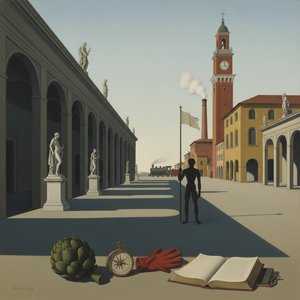
Giorgio de Chirico: Metaphysical Realities & the Poetics of Absence
Explore the captivating world of Giorgio de Chirico and his groundbreaking Metaphysical painting movement. Discover the philosophical depths & surreal imagery that influenced generations of artists. Learn more at ArtsDot.


