

- 40.0 x 32.0 cm


Billedet følger dine valg: , .
Beskrivelse af samlerobjektet
Experience Gerard David’s ‘The Annunciation’ (1520). A stunning Netherlandish masterpiece depicting the pivotal biblical scene. Hand-painted reproduction, 40x32cm. Invest in art history.
 Vis mere
Kunstnerbiografi
Gerard David (1460-1523) var en fremtrædende flamsk maler kendt for sin lysfulde farvebrug og detaljerede religiøse billeder. Han var en pioner indenfor landskabsbilleder og har stor indflydelse på den tidlige hollandske kunst.
Håndlavet oliereproduktion
Håndmalet olie på lærred i din valgte størrelse og ramme, udført efter bestilling af vores kunstnere. ( Skift til printsalg Skift til digitalt billede)
Læs mere om dette maleri
 Se i rummet
 Del som kort
 Del
Del
 Detaljer
 Guide
Guide

 Download
 Lignende værker
 Røntgenundersøgelse
 Diasshow
 Spørgsmål og svar
 Statistikker
Bestil dit maleri i fire enkle trin
Tag dig god tid. Du kan ændre alle svar; prisen i din indkøbskurv opdateres efter hvert valg.
1 Trin et af fire
Hvilken størrelse ønsker du?
Disse størrelser bevarer det originale maleris proportioner. Tegningen viser dit valg på en væg, over en to meter lang sofa.
Eller angiv dine egne mål
Vælg mellem vores forudindstillede størrelser, der matcher kunstværkets originale proportioner.

Indtast den bredde og højde, du har brug for, så det passer til din ramme eller din væg. Da dette er håndmalet, kan kunstneren ved en anden form på størrelsen male lidt mere rundt om billedet eller skære lidt væk — det er op til dig. Vi sender dig et digitalt mockup til godkendelse, før maleriet påbegyndes. Billedet, der vises på denne side, viser ikke det endelige resultat — det er kun mockuppet, der gør.
2 Trin to ud af fire
Hvordan skal det klargøres: rullet, udstrakt eller indrammet?
Priserne nedenfor gælder for den størrelse, du valgte i trin ét.
Vælg kanterne på det opspændte lærred
Vælg din ramme

Hvid kant Dkr1

Udvasket kant Dkr1

Fortsat motiv Dkr1

P118B Dkr10

P118H Dkr10

P118W Dkr10

P438Z Dkr10

P508JH Dkr12

P508YH Dkr12

P805H Dkr10

P805Z Dkr10

P919BZ Dkr10

P919G Dkr10

P919XJ Dkr10

P959ZH Dkr10

P968JZ Dkr12

W106C Dkr8

W218G Dkr10

W218JH Dkr8

W218Y Dkr10

W307PJ Dkr10

W316G Dkr10

W316PJ Dkr8

W316Y Dkr10

W398PJ Dkr8

W4111J Dkr10

W500HY Dkr15

W500JH Dkr15

W692G Dkr12

W849H Dkr8

W940BG Dkr15

W953PJ Dkr8

H24-GOLD Dkr30

H24-SILVER Dkr30

H36-GOLD Dkr45

H36-SILVER Dkr45
Indrammet
Profil: . Samlet størrelse med ramme: .
3 Trin tre ud af fire
Ønsker du at få ændret noget i maleriet?
De fleste svarer nej. Da hvert maleri er håndlavet, kan vores kunstner også tilpasse det til dig.
Efter bestilling vil ArtsDot.com-teamet sende en e-mail til kunden for at få instruktioner og levere et udkast til forhåndsvisning
4 Trin fire ud af fire
Et par forskellige efterbehandlingsmuligheder
Alle er valgfrie. De svar, der allerede er valgt, koster ikke ekstra.
Hvem har malet det?
Verdensomspændende levering () på 3-4 uger i stedet for de standard 5 uger. (5 november). Ingen kompromiser med kvaliteten.
En navneplade, ligesom på et museum?
Detaljer om indgraveret bronzeskilt
This elegant plaque features the artist's name and the title of the artwork, finely engraved for a timeless presentation.
It is made from bronze with a refined, elegant finish. The text is precisely laser-engraved for a sharp and permanent result. Measuring 9x2 cm, the plaque is compact yet easy to read. It's built to be durable and scratch-resistant, offering a professional, museum-quality look. Mounting is simple thanks to the included adhesive backing.
Detaljer om gennemsigtig akrylplade
The plaque includes essential engraved details such as the artist's name, the title of the artwork, the date it was created, the type of media used-like oil on canvas or watercolor-a brief description of the piece, and a QR code that links to the complete artwork information.
It is crafted from clear acrylic, offering a sleek, modern appearance. The text is UV-engraved in black to ensure strong visual contrast. With a size of 10x15 cm, it ensures optimal readability. It comes equipped with two metal hooks for secure wall mounting. The plaque is designed to be weather-resistant, making it suitable for various environments, and it includes interactive features that work seamlessly with smartphone scanning.
Detaljer om sort akrylplade
This elegant plaque includes engraved information such as the artist's name, the title of the artwork, the date it was created, the type of media used (like oil on canvas or watercolor), a short description of the artwork, and a QR code for quick access to more information.
The plaque itself is made from refined black acrylic with a premium finish. The text is laser-engraved in white for high contrast and readability. Its size is 10x15 cm, designed to be easy to read. It comes with two metal hooks for professional mounting. The design is sleek and fits any interior style. It is also weather-resistant and durable, with built-in digital integration for mobile compatibility.
En beskyttende lak?
Hvornår skal det leveres?
✓ Tjek og bestil
Dit maleri, præcis som du har bestilt det

The Annunciation
Reproduktionsmetode
Størrelse på reproduktion
-

Eksklusivt udvalgte senior-kunstnere
Mere detaljerigdom, finesse og ekstra produktionstid
-

Indramning af reproduktion
-
-
For kunstværker eller reproduktioner, der er større end 105 cm (ca. 41 tommer) på en hvilken som helst side, vil rammen blive leveret som et adskilt sæt. Denne metode sikrer sikker levering og forhindrer skader under transport.
Professionel montering er påkrævet – dette er ikke et gør-det-selv produkt.
Sættet skal samles, og lærredet skal opspændes af en erfaren professionel indrammer ved brug af trælim (ikke medfølger), en lærredsspænder og klemmer til at holde blindrammen vinkelret, mens limen tørrer. Forkert samling eller ujævn spænding af lærredet kan beskadige kunstværket permanent og er ikke dækket af vores garanti.
 For kunstværker eller reproduktioner, der er større end 105 cm (ca. 41 tommer) på en hvilken som helst side, vil rammen blive leveret som et adskilt sæt. Denne metode sikrer sikker levering og forhindrer skader under transport.
Alle massive trælister er inkluderet, præcist tilpasset i størrelsen.
Samles med de medfølgende skruer samt trælim til hjørneforbindelserne, som ikke medfølger og skal anskaffes af din indrammer.
Professionelt værktøj er påkrævet og medfølger ikke: en lærredsstrækker (spændetang) og klemmer til at holde blindrammen vinkelret, mens limen tørrer.
Vigtigt:
Hjørneforbindelserne kræver trælim, listerne skal holdes fast med skruetvinger, indtil limen er helt tør, og opspænding af lærredet på den samlede ramme kræver en lærredsspænder. Ingen af disse dele er inkluderet i sættet. Vi anbefaler, at du kontakter en erfaren professionel indrammer, før du bestiller denne størrelse.

Navneskilt
-
-

Beskyttende fernis
Blank lak (fremhæver farverne og beskytter mod lys og fugt)
-

Tilpas mit kunstværk
Eksempler på tilpasningsmuligheder: Udskift ansigt med kunde-foto; Tilføj kæledyr (f.eks. udskift kat med hund); Inkluder skjult besked i baggrunden; Ændr baggrundslandskab eller elementer.
-

Hurtig levering
Verdensomspændende levering () på 3-4 uger i stedet for de standard 5 uger. (5 november). Ingen kompromiser med kvaliteten.
-
Ekspreslevering
Verdensomspændende levering til inden for 5 uger. (12 november).
Inkluderet
Samlet pris
Dkr 1758
Glasmulighed er kun tilgængelig i størrelser under 110 cm
Inkluderet i hver ordre
- Gratis ekspresforsendelse til hele verden
- Lærred af linned i høj kvalitet
- Fuld transportforsikring
- Garanti for refusion af told og importafgifter
- Garanti for præcis farvegengivelse
- 100 dages returret ved fabrikationsfejl
- 100% fuld returret
- Mængderabat ved flere køb


A Moment of Divine Revelation: Gerard David’s The Annunciation
Gerard David's "The Annunciation," painted in 1520, is more than just a depiction of a biblical narrative; it’s a profound meditation on faith, humility, and the transformative power of divine grace. Measuring 40 x 32 cm, this intimate work offers a remarkably detailed glimpse into the artistic sensibilities of one of the most significant figures of the early Netherlandish Renaissance. David's meticulous attention to detail, combined with his masterful understanding of light and shadow – hallmarks of what would become known as “Flemish Light” – elevates this scene beyond mere illustration, transforming it into a deeply moving experience for the viewer.
The Composition and Symbolism
The painting portrays the pivotal moment when the Archangel Gabriel appears to Mary to announce her impending role as the mother of Jesus. The composition is carefully structured to emphasize the reverence and solemnity of the event. Mary, kneeling in prayer with a staff – a symbol of protection and devotion – occupies the lower portion of the canvas, while Gabriel stands above her, radiating an aura of celestial authority. The inclusion of the bed in the background subtly references the Virgin’s purity and virginity, central tenets of Christian belief. The book on the right side, often interpreted as representing Mary's acceptance of God's will, adds another layer of symbolic richness to the scene. David’s use of perspective, though not entirely linear, creates a believable three-dimensional space, drawing the viewer into the heart of this sacred encounter.
Technique and Artistic Influences
David was a master of oil painting, employing a technique characterized by smooth gradations of color and meticulous detail. His brushwork is remarkably delicate, particularly evident in the rendering of Mary’s garments and the angel's flowing robes. Influenced by early Italian Renaissance artists like Masaccio and Donatello, David skillfully utilized *chiaroscuro* – the dramatic contrast between light and dark – to model forms and create a sense of volume. This technique, combined with his deep understanding of Flemish artistic traditions, resulted in a painting that is both technically brilliant and emotionally resonant. The use of rich pigments, including vibrant blues and reds, further enhances the visual impact of the work.
Historical Context and Legacy
"The Annunciation" was created during a period of significant religious and intellectual ferment in Europe. The rise of humanism encouraged a renewed interest in classical antiquity, while the Protestant Reformation challenged established Catholic doctrines. Despite these turbulent times, David remained committed to producing works that celebrated Christian faith and morality. His paintings were highly sought after by wealthy patrons – including members of Bruges’ merchant elite – who commissioned them for private devotion. Following a period of relative obscurity in the 17th century, Gerard David's work was rediscovered and championed by 19th-century art historians, solidifying his place as a pivotal figure in the Northern Renaissance and ensuring that "The Annunciation" continues to inspire awe and contemplation today.
Spørgsmål og svar
Hvilken følelse vækker "The Annunciation" som gave?
Den Tranquil stemning i "The Annunciation" af Gerard David passer perfekt til den anbefalede gavelejlighed: Wedding.
Kan "The Annunciation" af Gerard David, som findes på Städelmuseet, reproduceres lovligt?
Originalen af "The Annunciation" findes på Städelmuseet, og værket er i det offentlige domæne – ophavsretten er udløbet.
Hvornår blev "The Annunciation" skabt, og hvilken stilart tilhører det?
"The Annunciation" af Gerard David er dateret 1520 og tilhører Early Netherlandish Painting.
Lignende kunstværker


Gerard David
1450 - 1523, Holland
Kunstnerbiografi
A Master of Flemish Light: The Enigmatic World of Gerard David
Gerard David, a name that resonates with the brilliance of early Netherlandish painting, remains an artist shrouded in intriguing mystery. Born around 1460 in Oudewater, Netherlands, his life story is pieced together from fragmented archival records and the eloquent testimony of his art. Unlike some contemporaries whose lives are richly documented, David’s personal narrative is sparse, allowing his paintings to speak volumes where biographical details fall silent. What is known suggests a remarkably successful career, likely managing workshops in both Antwerp and Bruges – centers of artistic innovation during the Renaissance. His reputation experienced an ebb in the 17th century, only to be gloriously resurrected by 19th-century art historians who recognized his unique contributions to the Northern Renaissance. He was inducted as a free master into the Corporation of Imagemakers and Saddlers in Bruges in 1484, marking a pivotal moment in his ascent. His later involvement with the Antwerp guild in 1515 further solidifies his standing within the artistic community.Formative Influences and Artistic Development
David’s artistic journey began under influences that shaped the very foundation of his style. Early works reveal a clear debt to painters like Jacob Janszoon, Dieric Bouts, and Geertgen tot Sint Jans – masters who instilled in him a meticulous attention to detail and a sensitivity to religious narrative. It is believed he spent time in Haarlem absorbing these lessons before relocating to Bruges, a vibrant hub of artistic exchange attracting talent from across Europe. Here, David encountered the masterpieces of Jan van Eyck, Rogier van der Weyden, and Hans Memling, absorbing their techniques while forging his own distinct path. He didn’t merely imitate; he synthesized these influences into something uniquely his own – a style characterized by luminous color, serene compositions, and an increasingly sophisticated understanding of landscape. His early paintings demonstrate this evolution, moving from the doll-like figures reminiscent of Haarlem traditions towards more sculptural forms grounded in their environment. This transition is visible in works like *Christ Nailed to the Cross*, where the influence of Bouts’ spatial construction blends with David’s emerging coloristic sensibility. The meticulous detail and realistic portrayal of textures, a hallmark of Van Eyck's work, are subtly incorporated into David’s compositions, while the emotional intensity found in Rogier van der Weyden’s paintings is echoed in his depictions of religious scenes.Innovation in Landscape and Religious Narrative
Gerard David’s artistic signature lies in his innovative approach to both landscape and religious subject matter. He wasn't simply depicting backgrounds; he was creating immersive environments that enhanced the emotional resonance of his scenes. His landscapes are not merely decorative, but integral components of the narrative, often imbued with symbolic meaning. This fascination with natural settings – dense forests, rolling hills, expansive skies – set him apart from many of his contemporaries and foreshadowed the development of landscape painting as an independent genre. Consider *View in a Forest*, outer wing of a triptych; it’s not simply a backdrop but a world unto itself, rendered with meticulous detail and atmospheric perspective. Within his religious works, David demonstrated a remarkable ability to convey both profound spirituality and human emotion. Paintings like *The Marriage of St. Catherine* exemplify this skill. The scene is rendered with exquisite detail, yet it's the subtle expressions on the figures’ faces – their piety, contemplation, or gentle joy – that truly captivate the viewer. He possessed a gift for imbuing his sacred subjects with a sense of quiet dignity and relatable humanity. *The Virgin and Child with Saints*, a cornerstone of his oeuvre, showcases this mastery, presenting a harmonious composition filled with vibrant color and delicate detail. The figures are not idealized but portrayed with a palpable sense of warmth and intimacy, reflecting David’s belief in the human element within religious narratives. His *Annunciation* (1506), also notable for its innovative use of perspective, further demonstrates his artistic prowess.Major Achievements and Artistic Style
David's career spanned several decades, during which he produced a remarkably diverse body of work. He is particularly celebrated for his altarpieces – monumental paintings designed to be viewed in sequence, each panel telling a part of the story. The *Judgment of Cambyses* (two panels, 1498) and the triptych of the *Baptism of Christ* (*c.* 1502–07) are considered masterpieces of his oeuvre, showcasing his technical skill, compositional mastery, and profound understanding of religious symbolism. His use of color was revolutionary for its time – he employed a rich palette of hues, often layering them to create luminous effects that seemed to glow from within. This technique, combined with his meticulous attention to detail and his innovative approach to landscape, resulted in paintings that were both visually stunning and emotionally resonant. David’s style can be characterized as a synthesis of late medieval traditions and Renaissance innovations. He retained the realism and symbolic richness of the Middle Ages while incorporating elements of perspective, naturalism, and humanism from the burgeoning Renaissance movement. His work is often described as “Northern Renaissance,” reflecting its unique blend of artistic influences.Legacy and Enduring Influence
Though his fame waned for a period after his death in 1523, Gerard David’s influence on subsequent generations of artists is undeniable. His innovative use of color, his masterful handling of light and shadow, and his pioneering approach to landscape all left an indelible mark on the development of Flemish painting. He paved the way for artists who would further explore the expressive potential of natural settings, such as Jacob Patinir and Jacob van Ruisdael. His work continues to be studied and admired by art historians and collectors around the world, serving as a testament to his genius and enduring legacy. The Groeninge Museum in Bruges houses an impressive collection of David’s paintings, offering visitors a unique opportunity to experience the beauty and power of this remarkable artist's vision. Exploring his oeuvre is not merely studying art history; it’s entering a world of luminous beauty, profound contemplation, and enduring human emotion – a testament to the genius of Gerard David, a master of Flemish light.


Relaterede artikler

Kunstnerisk Reproduktion: En Guide til Olie, Lærred og Papir Reproduktionsmedier
Lær alt om kunstnerisk reproduktion – fra håndmalet olie til præcise giclée-print. Få ekspertvejledning i valg af materialer og bestilling af kvalitetsreproduktioner.

Louvrens Mesterværker: Top 25 Kunstværker til Dit Hjem – ArtsDot.dk
Oplev Louvres 25 mest ikoniske kunstværker! Fra Mona Lisa til Venus de Milo – dyk ned i historien bag berømte malerier og skulpturer. Find museumskvalitets reproduktioner & inspiration til dit hjem på ArtsDot.com.
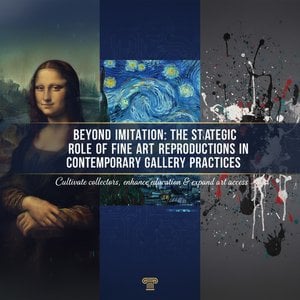
Beyond Imitation: The Strategic Role of Fine Art Reproductions in Contemporary Gallery Practices
Explore the strategic role of fine art reproductions in today's galleries. Discover how they cultivate collectors, enhance education & expand access to art. Expert insights for discerning buyers and professionals.