


 Se i rummet
 Send
Send Del
Del
 Detaljer
 Studieguide til kunstværker

 Download
 Lignende værker
 Røntgenundersøgelse
 Se diasshow
 Statistik
Aquarium

 Læs mere
Kunstværket vist på denne side er beskyttet af ophavsretsloven, hvilket betyder, at vi ikke lovligt kan skabe eller sælge en identisk reproduktion. Denne beskyttelse håndhæves i henhold til internationale aftaler som f.eks. den Bernerkonventionen og af nationale love, herunder de bestemmelser, der er fastlagt i Amerikansk ophavsretslov - Titel 17.
Denne metode overholder fuldt ud ophavsretsreglerne, da den ikke indebærer kopiering eller duplikering af det beskyttede kunstværk. I stedet er der tale om en kreativ nytolkning – et nyt maleri, som er inspireret af det oprindelige, men ikke identisk med det.
Giclée / Kunsttryk
Giclée- eller lærredstryk i museumskvalitet med hurtig produktion og fleksible muligheder for finish. ( Bestil håndmalet reproduktion Skift til digitalt billede)




P118B Dkr10

P118H Dkr10

P118W Dkr10

P438Z Dkr10

P508JH Dkr12

P508YH Dkr12

P805H Dkr10

P805Z Dkr10

P919BZ Dkr10

P919G Dkr10

P919XJ Dkr10

P959ZH Dkr10

P968JZ Dkr12

W106C Dkr8

W218G Dkr10

W218JH Dkr8

W218Y Dkr10

W307PJ Dkr10

W316G Dkr10

W316PJ Dkr8

W316Y Dkr10

W398PJ Dkr8

W4111J Dkr10

W500HY Dkr15

W500JH Dkr15

W692G Dkr12

W849H Dkr8

W940BG Dkr15

W953PJ Dkr8




Vælg mellem vores forudindstillede størrelser, der matcher kunstværkets originale proportioner.

Type the width and the height you need, to fit your frame or your wall. A print can only be cut, never made bigger than the picture, so a size with a different shape loses a part of the image. We send you a digital mockup to approve before we print anything. The picture shown on this page does not show the real cut — only the mockup does.
Verdensomspændende levering () på 2 uger i stedet for de sædvanlige 4/5 uger. (14 oktober)

Gratis ekspresforsendelse til hele verden

Lærred af linned i høj kvalitet

Komplet transportforsikring

Garanti for refusion af told og importafgifter

Garanti for autentisk farvegengivelse

100 dages returret ved fabrikationsfejl

100% fuld returret

Mængderabat ved flere køb
 Glasmulighed er kun tilgængelig i størrelser under 110 cm

Aquarium
Giclée / Kunsttryk
Reproduktionsstørrelse
-


Samlet pris
Dkr 408
A Submerged World: Decoding Braque’s ‘Aquarium’
Georges Braque’s ‘Aquarium’ is a captivating departure from his more celebrated Cubist works, offering a glimpse into a dreamlike realm of fluid forms and subtle symbolism. This piece, created sometime during his prolific career (1882-1963), showcases a softer, more intuitive side of the artist, hinting at influences beyond the rigid structures he helped pioneer. While lacking definitive dating or size information, its impact lies in its evocative power and unique stylistic blend.Subject & Composition: A Dance of Forms
The artwork presents a surreal underwater scene – though ‘aquarium’ feels almost too contained for its expansive quality. Rather than literal depictions of fish, we encounter stylized, fragmented creatures swirling within layered circular compositions. These forms aren't sharply defined; they bleed into one another, creating a sense of movement and instability. The composition is deliberately chaotic yet balanced, drawing the eye across the canvas in a continuous flow. The layering suggests depth despite the flattened perspective, evoking the shimmering distortions experienced when looking *through* water.Style & Technique: Echoes of Surrealism & Fauvism
‘Aquarium’ demonstrates Braque's versatility beyond Cubism. While echoes of his analytical approach to form remain – particularly in the fragmented figures – the work leans heavily towards Abstract Expressionism and Surrealism. The loose brushstrokes, achieved through wet-on-wet watercolor application, allow colors to mingle and blend organically. This technique creates soft edges and atmospheric effects, contributing to the ethereal quality of the piece. The use of ink adds definition and a slightly distressed texture, suggesting spontaneity and an uninhibited creative process. It’s also possible to see faint traces of his earlier Fauvist explorations in the bold, though somewhat dissonant, color palette.Color & Atmosphere: A Shifting Palette
The color scheme is complex and intriguing. Warm yellows dominate the lower portion of the painting, perhaps representing a sunlit surface or shallow waters. This transitions into cooler blues and browns in the upper sections, suggesting deeper, more mysterious depths. The diffused lighting – lacking strong highlights or shadows – further enhances the dreamlike atmosphere. The overall effect is one of gentle luminescence, as if viewing the scene through a hazy filter.Symbolism & Interpretation: Beneath the Surface
While open to individual interpretation, the fish-like forms within ‘Aquarium’ likely carry symbolic weight. Fish have long represented transformation, adaptability, and the subconscious mind. Their fragmented nature could suggest a sense of dissolution or the fluidity of identity. The circular shapes themselves are often associated with cycles, wholeness, and eternity. The artwork invites contemplation on themes of inner life, hidden emotions, and the mysteries that lie beneath the surface.Historical Context & Braque’s Evolution
Georges Braque was a pivotal figure in 20th-century art, best known as the co-creator of Cubism alongside Pablo Picasso. However, his artistic journey was far from static. ‘Aquarium’ represents a moment of exploration outside the strict confines of Cubist principles. It demonstrates his willingness to experiment with different styles and techniques throughout his career, showcasing a lifelong commitment to innovation and pushing the boundaries of artistic expression. This work offers valuable insight into Braque's broader artistic range and his enduring fascination with form, color, and emotion.Emotional Impact & Interior Design
‘Aquarium’ evokes a sense of tranquility mixed with subtle unease – a feeling of being lost in a beautiful, otherworldly space. Its fluid forms and soft colors create a calming yet stimulating visual experience. In an interior design context, this artwork would be particularly well-suited to spaces intended for relaxation or contemplation – bedrooms, meditation rooms, or living areas seeking a touch of artistic sophistication. Its abstract nature allows it to complement a wide range of décor styles, from modern minimalist to eclectic bohemian. A high-quality reproduction of ‘Aquarium’ would serve as a captivating focal point and a testament to the enduring legacy of Georges Braque.- Style: Abstract Expressionism, Surrealism
- Technique: Ink and Watercolor on Paper (Wet-on-wet application)
- Key Themes: Transformation, Subconscious, Fluidity, Dreamlike States
- Emotional Impact: Tranquility, Mystery, Contemplation
Spørgsmål & svar
Hvor intense er farverne i "Aquarium" af Georges Braque?
Farveintensiteten i "Aquarium" er Vivid. Intensitet beskriver, hvor kraftige farverne fremstår.
Er "Aquarium" et berømt Cubism-kunstværk?
"Aquarium" af Georges Braque er klassificeret som Recognized og tilhører Cubism-bevægelsen.
Hvad forestiller "Aquarium" af Georges Braque, og hvilken stemning formidler det?
"Aquarium" af Georges Braque kombinerer abstract forms, dreamlike scene, circular shapes, fish imagery, surreal composition, fluid movement, layered textures med en Ethereal atmosfære.
Lignende kunstværker


Om kunstneren
Early Life and Artistic Foundations
Georges Braque, født i Argenteuil nær Paris i 1882, begyndte sin rejse ind i kunstens verden med en baggrund, der var tæt forbundet med håndværkets praktiske side. Hans opvækst i en familie af malere og dekorationsmalere gav ham ikke blot en dyb forståelse for materialer og teknikker – han lærte at male direkte fra sin far – men også en tidlig værdsættelse af form og struktur. Selvom han oprindeligt fulgte i farens fodspor som bygningsmaler, viste Braques indre kunstneriske længsler sig hurtigt frem, hvilket førte til en formel uddannelse på École des Beaux-Arts i Le Havre. Dette fundament – en blanding af praktisk håndværk og akademisk studium – skulle senere vise sig at være afgørende, da han ville dekonstruere og genfortolke traditionelle kunstneriske konventioner.
I 1902 flyttede Braque til Paris og fortsatte sine studier ved Académie Humbert, hvor han blev opslugt af byens pulserende kunstmiljø. Her mødte han kunstnere som Marie Laurencin og Francis Picabia, hvilket skabte forbindelser, der ville forme hans tidlige udvikling. Hans tidlige værker reflekterede de dominerende indflydelser fra Impressionisme og Post-Impressionisme, men en afgørende møde med Fauvismens dristige farver og udtryksfrihed i 1905 satte en ny retning for hans kunstneriske udforskning.
The Embrace of Fauvism and the Dawn of Cubism
Braques overtagelse af Fauvistiske principper – karakteriseret ved intense, ikke-naturalistiske farver og følelsesmæssigt udtryk – illustreres tydeligt i værker som The Patience. Denne periode var præget af samarbejde med kunstnere som Henri Matisse og André Derain, hvor de eksperimenterede med levende paletter og forenklede former. Dog var Braques engagement med Fauvismen ikke blot en imitation; han infunderede bevægelsen med sin egen unikke sans for detalje, temperer dens ukontrollerede udbrud med en mere afbalanceret og analytisk tilgang.
Et vendepunkt kom i 1907 med hans eksponering for Cézannes retrospektive udstilling. Cézannes fokus på geometriske former og multiple perspektiver havde en dybtgående indflydelse på Braque, hvilket lagde grundlaget for hans banebrydende samarbejde med Pablo Picasso. Fra 1908 begyndte disse to kunstgenier at arbejde sammen om at skabe Cubisme – en revolutionerende bevægelse, der udfordrede traditionelle forestillinger om repræsentation.
Sammen udviklede Braque og Picasso Analytisk Cubisme, hvor de dekonstruerede objekter i fragmenterede geometriske former og præsenterede dem fra flere synsvinkler samtidigt. Værker som Houses at L'Estaque demonstrerer denne tidlige fase, der viser en radikal afvigelse fra konventionel perspektiv og et fokus på de underliggende strukturer af formene.
Innovation Through Fragmentation and Collage
Partnerskabet mellem Braque og Picasso fortsatte med at presse kunstens grænser, hvilket førte til udviklingen af Syntetisk Cubisme omkring 1912. Denne fase introducerede collage – inkorporeringen af virkelige materialer som avispapir, tapet og stof i malerier. Denne innovation udfordrede den traditionelle hierarkie mellem maleri og skulptur, udvisker grænserne mellem kunst og liv.
Braques banebrydende brug af papier collé (pasted paper) markerede et væsentligt vendepunkt i hans kunstneriske udvikling. Ved at integrere fragmenter af hverdagsgenstande i sine kompositioner, forstyrrede han det illusionistiske rum i traditionelt maleri og introducerede et nyt niveau af materialitet og tekstur.
Krigen i 1914 brød samarbejdet sammen, da Braque blev kaldt i militæret. Hans krigserfaringer havde en dybtgående indflydelse på hans kunstneriske vision, hvilket førte til at han udforskede mere personlige og lyriske temaer i sit post-krigsarbejde.
Later Years and Enduring Legacy
Efter krigen udviklede Braques stil sig ud over de strenge rammer af tidlig Cubisme, og omfavnede elementer fra klassisk komposition og en ny interesse for landskabsmaleri. Selvom han bevarede de geometriske indflydelser, der havde defineret hans tidligere arbejde, udviklede han en mere nuanceret og kontemplativ tilgang til malingen. Hans senere landskaber og interiører er karakteriseret ved deres rolige atmosfære og subtile harmonier af farver.
Gennem hele sin karriere forblev Braque dedikeret til at udforske de grundlæggende principper for form, rum og repræsentation. Han fortsatte med at eksperimentere med forskellige materialer og teknikker, der pressede kunstens grænser, indtil hans død i 1963. Hans indflydelse på efterfølgende generationer af kunstnere er ubestemt, og han har formet kunsthistorien og inspireret utallige malere og skulptører.
Influences and Notable Works
- Influenced By: Henri Matisse, André Derain, Paul Cézanne
- Key Works: Houses at L'Estaque, The Patience, Violin and Palette, Mandola
- Impact on Art History: Revolutionized 20th-century art through Cubism; challenged traditional notions of perspective and representation.

Georges Braque
1882 - 1963 , Frankrig
Hurtige fakta
- Artistic Movement Or Style: Kubisme, Fauvisme
- Artists Or Movements Influenced By This Artist:
- Pablo Picasso
- Moderne kunst
- Artists Who Influenced This Artist:
- Henri Matisse
- Paul Cézanne
- Date Of Birth: 13. maj 1882
- Date Of Death: 31. aug. 1963
- Full Name: Georges Braque
- Nationality: Fransk
- Notable Artworks:
- Huse ved L'Estaque
- Tålmodighed
- Violin og palet
- Place Of Birth: Argenteuil, Frankrig
Relaterede artikler

Georges Braques Mesterværker: Top 25 Kunstværker til Din Bolig
Oplev Georges Braques 25 mest ikoniske kunstværker! Dyk ned i kubismens verden, fra stilleben til analyse af form og farve. Find inspiration & køb eksklusive reproduktioner på ArtsDot.com – museumskvalitet til dit hjem.

Top 10 Abstrakt Ekspressionisme Mesterværker – Kunst der Forandrede Verden | ArtsDot.com
Oplev de 10 mest ikoniske værker inden for Abstrakt Ekspressionisme – Jackson Pollock, Mark Rothko og mere. Lær historien bag kunstnerne & teknikken. Find museumskvalitets reproduktioner på ArtsDot.com.

Georges Seurat: Top 25 Kunstværker – Impressionisme & Pointillism til Dit Hjem
Oplev Georges Seurats 25 mest ikoniske værker! Fordyb dig i impressionismens og pointillismens verden. Find inspiration til din boligindretning med museumskvalitets kunsttryk på ArtsDot.com. Udforsk samlingen online.

Kandinskys 25 Mesterværker: En Rejse Ind i Abstrakt Kunst | ArtsDot.com
Oplev Kandinskys 25 mest ikoniske værker! Dyk ned i abstrakt kunst, ekspressionisme og farvernes sprog. Find luksus reproduktioner af berømte malerier som 'Komposition VIII' på ArtsDot.com – inspiration til din vægkunst & indretning.
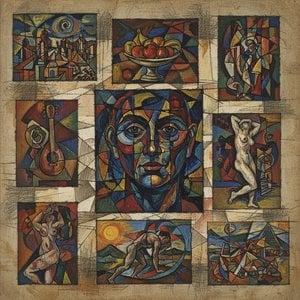
Cubistisk Ekspressionisme: 10 Mesterværker der Ændrede Kunsten | ArtsDot
Oplev kubismens og ekspressionismens 10 mest ikoniske værker! Dyk ned i Picassos, Braques & Gris' revolutionerende kunst. Find inspiration til dit hjem med ArtsDot.coms museumskvalitets reproduktioner. Udforsk samlingen online!


