


 Se i rummet
 Send
Send Del
Del
 Detaljer
 Studieguide til kunstværker

 Download
 Lignende værker
 Røntgenundersøgelse
 Se diasshow
 Statistik
Min Moder
 Akryl på lærred
- Vægkunst
- Surrealist Expressionism
 1926
1926 50.0 x 55.0 cm
 Kulturgeschichtliche Museum Osnabrück
 Læs mere
Håndlavet oliereproduktion
Håndmalet olie på lærred i din valgte størrelse og ramme, udført efter bestilling af vores kunstnere. ( Skift til printversion Skift til digitalt billede)




P118B Dkr10

P118H Dkr10

P118W Dkr10

P438Z Dkr10

P508JH Dkr12

P508YH Dkr12

P805H Dkr10

P805Z Dkr10

P919BZ Dkr10

P919G Dkr10

P919XJ Dkr10

P959ZH Dkr10

P968JZ Dkr12

W106C Dkr8

W218G Dkr10

W218JH Dkr8

W218Y Dkr10

W307PJ Dkr10

W316G Dkr10

W316PJ Dkr8

W316Y Dkr10

W398PJ Dkr8

W4111J Dkr10

W500HY Dkr15

W500JH Dkr15

W692G Dkr12

W849H Dkr8

W940BG Dkr15

W953PJ Dkr8




Vælg mellem vores forudindstillede størrelser, der matcher kunstværkets originale proportioner.

Indtast den bredde og højde, du har brug for, så det passer til din ramme eller din væg. Da dette er håndmalet, kan kunstneren ved en anden form på størrelsen male lidt mere rundt om billedet eller skære lidt væk — det er op til dig. Vi sender dig et digitalt mockup til godkendelse, før maleriet påbegyndes. Billedet, der vises på denne side, viser ikke det endelige resultat — det er kun mockuppet, der gør.
Efter bestilling vil ArtsDot.com team sende en e-mail til kunden for at indhente instruktioner og fremsende et udkast til gennemgang.
Levering i hele verden () på 3-4 uger i stedet for de standard 5 uger. (24 oktober). Ingen kompromiser med kvaliteten.

Gratis ekspresforsendelse til hele verden

Lærred af linned i høj kvalitet

Komplet transportforsikring

Garanti for refusion af told og importafgifter

Garanti for autentisk farvegengivelse

100 dages returret ved fabrikationsfejl

100% fuld returret

Mængderabat ved flere køb
 Glasmulighed er kun tilgængelig i størrelser under 110 cm

Min Moder
Reproduktionsmateriale
Reproduktionsstørrelse
-


Samlet pris
Dkr 1725
Felix Nussbaum’s “My Mother” – A Silent Testament to Displacement
“My Mother,” painted in 1926 by Felix Nussbaum, stands as an arresting example of Expressionist art—a genre characterized by its fervent emotional intensity and rejection of academic conventions. More than just a portrait, it's a profound meditation on familial bonds amidst the burgeoning anxieties of the Weimar Republic, capturing a moment frozen in time with remarkable sensitivity.
- Subject Matter: The painting depicts a woman’s profile view, bathed in soft light—a deliberate choice that prioritizes conveying emotion over precise anatomical representation. Nussbaum's wife Felka Platek served as his muse, embodying resilience and quiet dignity during a period marked by significant social upheaval.
- Style & Technique: Nussbaum employed thick brushstrokes and textured surfaces to imbue the canvas with palpable energy. Influenced heavily by Vincent van Gogh’s expressive use of color and Henri Rousseau's dreamlike landscapes, he achieved a distinctive visual language that anticipates Surrealism. The palette is muted yet luminous, dominated by earthy tones punctuated by splashes of vibrant floral hues—a symbolic gesture reflecting both beauty and fragility.
- Historical Context: Created in the shadow of rising nationalism and economic instability, “My Mother” reflects the anxieties prevalent within German society at the time. Nussbaum’s artistic exploration coincided with a broader cultural movement questioning traditional values and confronting uncomfortable truths about human existence—a response to the intellectual ferment of the era.
- Symbolism: The bouquet of flowers surrounding the woman is laden with symbolic significance. Roses represent love and remembrance, while lilies symbolize purity and mourning – elements carefully considered by Nussbaum to communicate a complex tapestry of emotions concerning family and loss.
The painting’s enduring power resides in its ability to evoke empathy and contemplation. Nussbaum's masterful technique—his deliberate manipulation of light and shadow—creates an atmosphere of intimacy, inviting viewers to consider the profound connection between mother and child. It is a visual poem about resilience, love, and the indelible mark left by experience on the human spirit.
“My Mother” exemplifies Nussbaum’s unwavering commitment to portraying psychological depth alongside aesthetic beauty—a legacy that continues to inspire artists and collectors alike. Its quiet grandeur speaks volumes about the enduring importance of capturing emotion with uncompromising honesty.
Spørgsmål & svar
Kan jeg bestille en oliereproduktion af "Min Moder"?
Du kan bestille en håndmalet reproduktion af "Min Moder" af Felix Nussbaum direkte på dens Håndmalet reproduktion-side: en håndmalet oliereproduktion på lærred af hør, lavet efter bestilling.
Hvilket rum anbefales "Min Moder" af Felix Nussbaum til?
Det anbefalede rum til "Min Moder" af Felix Nussbaum er en Stue og opholdsrum. Forslaget kan naturligvis tilpasses din indretning.
Hvilken reproduktionsstørrelse anbefales til "Min Moder" af Felix Nussbaum?
En reproduktion i størrelsen Stor anbefales til "Min Moder" af Felix Nussbaum. Størrelsen kan justeres, mens proportionerne bevares.
Lignende kunstværker


Om kunstneren
A Life Etched in Exile: The Haunting Vision of Felix Nussbaum
Felix Nussbaum’s story is a stark and profoundly moving testament to the power of art born from unimaginable suffering. Born in Osnabrück, Germany, in 1904, his life unfolded against the backdrop of rising nationalism and escalating persecution, culminating in the horrors of the Holocaust. He wasn't simply a victim *of* history; he was an artist who meticulously documented its impact on his soul, creating a body of work that stands as both a personal lament and a universal warning. Nussbaum’s paintings offer a rare, unflinching glimpse into the psychological landscape of displacement, fear, and ultimately, annihilation – a perspective often absent from broader historical narratives. His father, Philipp Nussbaum, a World War I veteran with an early passion for painting himself, recognized and nurtured his son's talent, providing encouragement that would prove vital in the darkening years to come. This initial support fostered a lifelong dedication to art, even as political realities increasingly constricted his path.Formative Years and Artistic Influences
Nussbaum’s artistic journey began with formal studies in Hamburg and Berlin in 1920, continuing for as long as circumstances allowed. His early work reveals a clear debt to the Post-Impressionist masters, particularly Vincent van Gogh and Henri Rousseau. The vibrant colors and expressive brushwork of these artists provided a foundation upon which Nussbaum would later build his unique style. However, he wasn’t content with mere imitation. He actively sought out new influences, drawn to the unsettling dreamscapes of Giorgio de Chirico and Carlo Carrà, pioneers of the *pittura metafisica* movement. The careful attention to color demonstrated by Carl Hofer's expressionist paintings also left a lasting impression on Nussbaum’s approach. These diverse inspirations coalesced into what would become known as his “New Objectivity” style – a blend of realism and surrealism, characterized by precise detail, unsettling compositions, and a pervasive sense of alienation. This period was marked by experimentation and growth, but the looming shadow of Nazi ideology soon threatened to extinguish his artistic promise.The Surrealist Vision
Nussbaum’s embrace of Surrealism wasn't merely an aesthetic choice; it represented a profound psychological response to the anxieties of his time. Influenced by Sigmund Freud’s theories on the unconscious mind, Nussbaum sought to depict inner turmoil and emotional truth—often confronting themes of loss, trauma, and existential dread. His canvases pulsate with unsettling juxtapositions and symbolic imagery, reflecting the fractured reality experienced by individuals displaced from their homes and stripped of their identities. Recurring motifs—such as figures draped in shrouds or enveloped in darkness—underscore the pervasive sense of vulnerability and despair that permeates his oeuvre. He skillfully utilized techniques honed during his formative years to convey these complex emotions with remarkable sensitivity and conviction.Exile, Isolation, and Artistic Transformation
The Nazi ascension to power in 1933 irrevocably altered Nussbaum’s life trajectory. Studying on a scholarship in Rome at the Berlin Academy of the Arts, he witnessed firsthand the chilling pronouncements of Hitler's propaganda minister, outlining the tenets of Nazi art – glorification of heroism and the Aryan race. It became painfully clear that as a Jew, his place within the German artistic establishment was untenable. This realization forced him into exile, first to Paris and then to Belgium, where he married Felka Platek in 1937. The following decade was defined by fear and isolation. Despite finding some measure of safety, Nussbaum lived under constant threat, haunted by the knowledge of his parents’ perilous situation back in Germany. They had initially resisted his pleas to join them in exile, clinging to a misguided hope that things would improve, but ultimately returned home only to face the full force of Nazi persecution. This loss – the severing of his spiritual and financial support – deeply impacted Nussbaum's work, infusing it with an increasingly desperate and melancholic tone. He continued to paint prolifically during this period, finding solace and purpose in his art even as his world crumbled around him.A Legacy of Courage and Artistic Integrity
The Nazi invasion of Belgium in 1940 marked a turning point for Nussbaum’s artistic endeavors. Arrested as a “hostile alien” and interned at Saint-Cyprien camp, he experienced firsthand the dehumanizing realities of Nazi oppression. Yet, amidst this bleak circumstance, Nussbaum persevered—producing some of his most poignant and unforgettable works during his confinement. Self-Portrait with Jewish Identity Card (1943), a haunting depiction of vulnerability and despair, stands as a testament to his unwavering artistic integrity in the face of unimaginable adversity. Alongside it, masterpieces like *Triumph of Death* and *Felka Platek Painting* grapple with themes of mortality, loss, and remembrance—reflecting Nussbaum’s profound engagement with existential questions. Tragically, Nussbaum and Felka were deported to Auschwitz in July 1944, where Felix was murdered upon arrival in August of that year. His brother and sister-in-law followed soon after, completing the annihilation of his family within a single devastating year. Despite this horrific fate, Nussbaum’s art endures as a powerful symbol of resistance—a testament to the enduring human spirit's capacity for creativity and compassion amidst the darkest chapters of history. His legacy continues to inspire artists and scholars alike, ensuring that his vision—one rooted in empathy and confronting the horrors of persecution—remains relevant for generations to come.
Felix Nussbaum
1904 - 1945 , Tyskland
Hurtige fakta
- Artistic Movement Or Style: Surrealisme, Ny Objektivitet
- Artists Who Influenced This Artist:
- Vincent van Gogh
- Henri Rousseau
- Giorgio de Chirico
- Carlo Carrà
- Carl Hofer
- Date Of Birth: 1904
- Date Of Death: 1945
- Full Name: Felix Nussbaum
- Nationality: Tysk-jødisk
- Notable Artworks:
- Selvportræt med jødisk identitetskort
- Sejrsmarch
- Felka Platek maleri
- Maskerade
- Zigeuner
- Place Of Birth: Osnabrück, Tyskland
Relaterede artikler

The Visceral Cry of a Nation: Exploring Emotion & Distortion in German Expressionism
Explore the powerful world of German Expressionism with ArtsDot. Discover Kirchner, Nolde & Die Brücke's emotive masterpieces. Learn about this pivotal art movement and its lasting impact on modern art.

Tysk Ekspressionisme: 10 Mesterværker der Definerede en Æra – Kunst til Dit Hjem
Oplev de 10 mest ikoniske værker fra Tysk Ekspressionisme! Lær historierne bag Kirchner, Nolde & Kandinsky. Find museumskvalitets kunsttryk og inspiration til din indretning på ArtsDot.com – udforsk samlingen online.
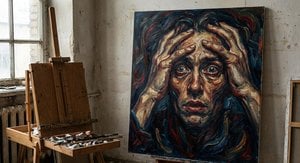
Figurative Expressionism: Emotional Intensity & Subjective Reality in 20th-Century Art
Explore the powerful world of Figurative Expressionism with ArtsDot. Discover key artists like Kirchner & Beckmann, understand its emotional depth, and learn how to collect this influential 20th-century art movement.

The Raw Emotion of Expressionism: A Deep Dive into its History, Characteristics & Enduring Influence
Explore the raw emotion of Expressionism with ArtsDot. Discover its history, key artists like Kirchner & Munch, and lasting influence on modern art. Expert insights for collectors & enthusiasts.
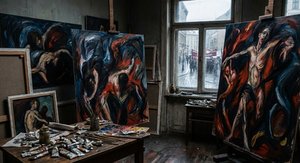
The Visceral Language of Emotion: Exploring Expressionism's Impact on 20th-Century Art
Explore the powerful world of Expressionism! Discover key artists like Kirchner & Nolde, understand its emotional impact, and learn about this revolutionary art movement's lasting legacy. Expert insights for collectors & enthusiasts.
