

 Se i rummet
 Del som kort
 Del
Del
 Detaljer
 Guide
Guide

 Download
 Lignende værker
 Røntgenundersøgelse
 Diasshow
 Spørgsmål og svar
 Statistikker
Moroccan Musicians

- 77.0 x 132.0 cm

 Vis mere
Giclée / Kunsttryk
Giclée- eller lærredstryk i museumskvalitet med hurtig produktion og fleksible muligheder for finish. ( Køb håndmalet maleri Skift til digitalt billede)




P118B Dkr10

P118H Dkr10

P118W Dkr10

P438Z Dkr10

P508JH Dkr12

P508YH Dkr12

P805H Dkr10

P805Z Dkr10

P919BZ Dkr10

P919G Dkr10

P919XJ Dkr10

P959ZH Dkr10

P968JZ Dkr12

W106C Dkr8

W218G Dkr10

W218JH Dkr8

W218Y Dkr10

W307PJ Dkr10

W316G Dkr10

W316PJ Dkr8

W316Y Dkr10

W398PJ Dkr8

W4111J Dkr10

W500HY Dkr15

W500JH Dkr15

W692G Dkr12

W849H Dkr8

W940BG Dkr15

W953PJ Dkr8




Vælg mellem vores forudindstillede størrelser, der matcher kunstværkets originale proportioner.

Indtast den bredde og højde, du har brug for, så det passer til din ramme eller din væg. Et print kan kun beskæres, aldrig gøres større end selve billedet, så en størrelse med et andet format vil medføre, at dele af motivet går tabt. Vi sender dig en digital mockup til godkendelse, før vi printer noget. Billedet vist på denne side viser ikke den faktiske beskæring — det er kun mockuppen, der gør.
Verdensomspændende levering () på 2 uger i stedet for de sædvanlige 4/5 uger. (4 november)

Gratis ekspresforsendelse til hele verden

Lærred af linned i høj kvalitet

Fuld transportforsikring

Garanti for refusion af told og importafgifter

Garanti for præcis farvegengivelse

100 dages returret ved fabrikationsfejl

100% fuld returret

Mængderabat ved flere køb
 Glasmulighed er kun tilgængelig i størrelser under 110 cm

Moroccan Musicians
Giclée / Kunsttryk
Størrelse på reproduktion
-


Samlet pris
Dkr 420
Lignende kunstværker


Kunstnerbiografi
Erich Wolfsfeld: A Life Painted in Shadows and Light
Erich Wolfsfeld, a German artist born in 1884 in the small Prussian town of Krojanke (now Krajenka, Poland), possessed an artistic journey marked by both profound personal upheaval and remarkable creative output. His life unfolded against the backdrop of shifting political landscapes – from the burgeoning anxieties of early 20th-century Europe to the devastating realities of two world wars and the rise of Nazi Germany. Wolfsfeld’s story is not simply one of a painter; it's a testament to resilience, artistic adaptation, and a deep engagement with the human condition, particularly through his evocative portrayals of marginalized figures and scenes of rural life. His career spanned several decades, evolving from early printmaking explorations to mature oil paintings imbued with social commentary and a distinctive, almost melancholic beauty.Early Years and Artistic Training
Wolfsfeld’s artistic foundation began in Berlin, where he enrolled at the prestigious Academy of Arts. There, he honed his skills under the tutelage of Konrad Böse, a follower of Adolph von Menzel, and Hans Meyer, mastering the intricate techniques of etching. A pivotal moment arrived with his studies in Paris at the Académie Julien, under Jules Lefèbvre, exposing him to the vibrant artistic currents of the French capital. This period solidified his technical abilities and broadened his stylistic horizons. Notably, he spent time in Rome between 1908 and 1909, immersing himself in the classical traditions and absorbing influences from fellow expatriate German artists like Otto Greiner and Max Klinger – a group known for their exploration of realism and social critique. Early works focused heavily on etching, producing striking images of nudes and scenes of urban poverty, demonstrating an early sensitivity to the plight of the less fortunate.Travels and Influences: North Africa and Beyond
Wolfsfeld’s artistic trajectory took a significant turn with his travels throughout Europe and, crucially, into North Africa and the Middle East beginning in 1928. These journeys proved transformative, profoundly impacting his subject matter and aesthetic sensibilities. He was particularly drawn to the stark beauty of desert landscapes and the dignity of Arab subjects – often depicted in traditional dress against dramatic skies. These experiences are reflected in paintings like “Moroccan Musicians,” a vibrant depiction of North African life that captures both its energy and its inherent melancholy. The influence of these travels is evident in his later works, characterized by earthy tones, evocative brushwork, and a heightened sense of atmosphere. He meticulously documented these expeditions through sketches and watercolors, which served as inspiration for his paintings.Political Upheaval and Exile
The rise of the Nazi regime in Germany irrevocably altered Wolfsfeld’s life and career. As a Jewish artist, he faced increasing discrimination and ultimately lost his position as professor at the Berlin Academy in 1935. Forced to flee for his safety, he emigrated to Britain in 1939, bringing with him a substantial body of work. This displacement was deeply unsettling, yet it also presented new opportunities. He initially settled in Sheffield, where he found patronage and exhibited his paintings at the Graves Art Gallery. The internment camp experience during World War II further compounded his difficulties, but he persevered, eventually establishing himself as a respected artist in London.Later Years and Legacy
Following the war, Wolfsfeld continued to paint prolifically, exploring themes of poverty, social injustice, and the enduring spirit of humanity. His work during this period is characterized by a quiet dignity and a profound empathy for his subjects. He was elected an associate member of the Royal Society of Painter-Etchers and Engravers in 1956, shortly before his death in London in 1956. His legacy endures through a significant body of work – encompassing paintings, etchings, and drawings – which is now housed in museums across England and beyond. His art offers a poignant glimpse into the lives of ordinary people, reflecting both the hardships they faced and their inherent resilience. The Ben Uri Art Gallery in London played a crucial role in preserving and promoting his legacy, organizing memorial exhibitions that brought renewed attention to his work. Erich Wolfsfeld’s paintings remain powerful testaments to the human spirit, painted with a sensitivity and depth rarely seen in contemporary art.
Erich Wolfsfeld
1884 - 1956
Kort om kunstneren
- Artistic Movement Or Style: Social realism, Portraiture
- Artists Or Movements Influenced By This Artist:
- Otto Greiner
- Max Klinger
- Lotte Laserstein
- Artists Who Influenced This Artist:
- Konrad Böse
- Hans Meyer
- Jules Lefèbvre
- Date Of Birth: 1884
- Date Of Death: 1956
- Full Name: Erich Wolfsfeld
- Nationality: German
- Notable Artworks:
- Moroccan Musicians
- Spanish Peasants
- Mother and Child
- Place Of Birth: Krojanke, Prussia
Relaterede artikler
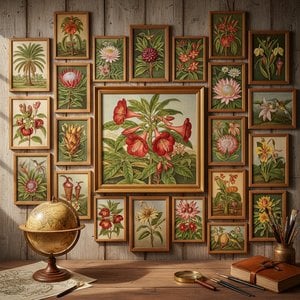
Marianne Norths Top 25 Kunstværker: En Botanisk Rejse i Farver | ArtsDot.dk
Oplev Marianne Norths 25 mest ikoniske malerier – en fascinerende rejse i botanisk kunst og victoriansk farvepragt. Find inspiration til dit hjem med smukke reproduktioner af hendes eksotiske landskaber & blomster på ArtsDot.com.

The Enduring Power of Painting: A Historical & Contemporary Exploration of Form and Emotion
Explore the rich history & enduring techniques of oil painting with ArtsDot. Discover masterpieces, learn about art collecting, and find authentic handmade reproductions crafted by skilled artists.

Oil on Canvas: A Historical & Technical Exploration of a Timeless Artistic Medium
Explore the rich history & enduring techniques of oil painting on canvas. Discover the science behind its longevity, conservation practices, and contemporary relevance. Expert insights for art enthusiasts.

The Enduring Legacy of Oil on Canvas: Technique, History & Aesthetic Impact
Explore the rich history & techniques of oil painting – from Renaissance masters to Impressionism. Discover pigments, layering methods, and why this timeless medium endures. Expert insights for artists & art enthusiasts.

Oliemaleriets Arv: Teknik, Historie og Nutidig Praksis
Dyk ned i oliemaleriets fascinerende verden! Lær om teknikker, historie og nutidige kunstnere. Få ekspertviden og inspiration til dit eget maleprojekt.