

 Se i rummet
 Del som kort
 Del
Del
 Detaljer
 Guide
Guide

 Download
 Lignende værker
 Røntgenundersøgelse
 Diasshow
 Spørgsmål og svar
 Statistikker
James Duff af Corsindae


 Vis mere
Giclée / Kunsttryk
Giclée- eller lærredstryk i museumskvalitet med hurtig produktion og fleksible muligheder for finish. ( Køb håndmalet maleri Skift til digitalt billede)




P118B Dkr10

P118H Dkr10

P118W Dkr10

P438Z Dkr10

P508JH Dkr12

P508YH Dkr12

P805H Dkr10

P805Z Dkr10

P919BZ Dkr10

P919G Dkr10

P919XJ Dkr10

P959ZH Dkr10

P968JZ Dkr12

W106C Dkr8

W218G Dkr10

W218JH Dkr8

W218Y Dkr10

W307PJ Dkr10

W316G Dkr10

W316PJ Dkr8

W316Y Dkr10

W398PJ Dkr8

W4111J Dkr10

W500HY Dkr15

W500JH Dkr15

W692G Dkr12

W849H Dkr8

W940BG Dkr15

W953PJ Dkr8




Vælg mellem vores forudindstillede størrelser, der matcher kunstværkets originale proportioner.

Indtast den bredde og højde, du har brug for, så det passer til din ramme eller din væg. Et print kan kun beskæres, aldrig gøres større end selve billedet, så en størrelse med et andet format vil medføre, at dele af motivet går tabt. Vi sender dig en digital mockup til godkendelse, før vi printer noget. Billedet vist på denne side viser ikke den faktiske beskæring — det er kun mockuppen, der gør.
Verdensomspændende levering () på 2 uger i stedet for de sædvanlige 4/5 uger. (9 november)

Gratis ekspresforsendelse til hele verden

Lærred af linned i høj kvalitet

Fuld transportforsikring

Garanti for refusion af told og importafgifter

Garanti for præcis farvegengivelse

100 dages returret ved fabrikationsfejl

100% fuld returret

Mængderabat ved flere køb
 Glasmulighed er kun tilgængelig i størrelser under 110 cm

James Duff af Corsindae
Giclée / Kunsttryk
Størrelse på reproduktion
-


Samlet pris
Dkr 420
Cosmo Alexander og James Duff af Corsindae – Et Portræt Af Tidens Ånd
Cosmo Alexander, født i Edinburgh i 1724, var en skotsk kunstner hvis navn måske ikke er lige så kendt som nogle af hans samtidige, men hvis arbejde fortjener dyb respekt og fascination. Han udgjorde et bemærkelsesværdigt eksempel på selvlært talent – en mand der formåede at skabe kunstværker af høj kvalitet uden traditionel akademisk uddannelse, hvilket var ganske usædvanligt for sin tid. Hans kunstneriske rejse begyndte langt fra de pompøse atelierer og kunstnereklubber, hvor mange andre prominente kunstnere opererede; Alexander fandt inspiration i den naturlige verden omkring ham og udviklede en unik stil, der perfekt afspejler denne interesse. Alexander var ikke blot dygtig til at male; han var også en passioneret observatør af menneskeligheden og samfundet omkring sig. Hans kunstværker er ofte præget af psykologisk indsigt og evnen til at fange essensen af sit subjekt – hvilket er særligt tydeligt i hans portrætter, hvor han formåede at skabe billeder der ikke blot gengav fysiske træk, men også afslørede personlighedens kompleksitet og følelsesliv. Dette var en kunstnerisk tilgang, der var radikal for sin tid og satte ham i kontrast til mange af hans samtidige, som fokuserede primært på tekniske færdigheder og klassiske idealer. James Duff af Corsindae er et eksempel på Alexanders stil – et portræt udført omkring 1760, hvor kunstneren har skabt en imponerende gengivelse af en ung mand i blå uniform. Maleriet udtrykker ikke blot præcision i anatomi og komposition, men også en følelse af elegance og selvtillid, hvilket var karakteristisk for den periode, hvor kunstværket blev skabt. Alexander anvendte teknikken olie på lærred med stor omhu og detaljegrad – en metode der tillod ham at opnå en fantastisk dybde og farvepalette, hvilket bidrager til portrættets følelsesmæssige kraft. Det er ikke blot et fysisk billede af James Duff; det er også et øjebliksbillede af hans tid og hans sociale status. Alexander var aktiv i kunstneriske kredse og blev støttet af James Edward Stuart, sønnen af den skotske Jakobit-prinsesse Anne Stewart, hvilket førte til hans ophold i Italien og Rom. Denne rejse havde en betydelig indflydelse på hans kunstneriske udvikling og introducerede ham til nye perspektiver og inspirationer fra klassisk kunst og arkitektur. Hans interesse for anatomi og naturvidenskab var ikke blot akademisk nysgerrighed; det var også grundlaget for hans kunstneriske metode – en metode der krævede omhyggelig observation og præcise studier af menneskekroppen og miljøet omkring ham. Dette perspektiv manifesterede sig tydeligt i hans værker, hvor han ofte inkluderede detaljer fra naturen og anvendte anatomisk korrekthed til at skabe realistiske og følelsesfulde billeder. Portrættet af James Duff af Corsindae er mere end blot et kunstværk; det er en refleksion over den tid, hvor det blev skabt – en periode præget af politisk uro og sociale omvæltninger, men også af kulturel blomstring og kunstnerisk innovation. Alexander formåede at fange denne ånd i sit billede og skabte et værk der ikke blot er teknisk imponerende, men også følelsesmæssigt resonerende – hvilket gør det til en særlig interessant investering for kunstsamlere og dekoratører, der søger inspiration og æstetisk kvalitet. Det er et kunstværk der fortsætter med at fascinere og inspirere læsere i dagens verden.Spørgsmål og svar
Hvilken placering passer bedst til formatet på "James Duff af Corsindae" af Cosmo Alexander?
Format (Portrætformat) og anbefalet rum (Stue og opholdsrum) er de to placeringsoplysninger, der er registreret for "James Duff af Corsindae" af Cosmo Alexander.
Hvilken fase i Cosmo Alexanders karriere svarer datoen 1760 for "James Duff af Corsindae" til?
"James Duff af Corsindae", skabt i 1760, tilhører Mature Period af Cosmo Alexander's karriere.
Hvilken stemning ville "James Duff af Corsindae" bringe til et rum?
Med sin Romantisk stemning foreslås "James Duff af Corsindae" til et Stue og opholdsrum.
Lignende kunstværker


Kunstnerbiografi
A Legacy of Portraiture and Pedagogy
The story of Cosmo Alexander is one of wandering brilliance and the profound influence of a master upon his pupil. Born in Scotland to the noted portrait painter John Alexander, Cosmo was destined for a life steeped in the traditions of fine art. Before his journey took him across the Atlantic, he refined his eye through extensive travels across Europe, documenting his presence in Italy between 1745 and 1751, including time in Rome. His artistic development continued in Holland, where he achieved professional recognition by joining the painters' guild at The Hague. These formative years in the great art centers of Europe provided him with a sophisticated foundation in classical techniques that would later define his work in the American colonies.
Though Alexander often referred to himself as a history painter, his enduring legacy resides in his mastery of the portrait. His style, which aligns closely with the Classical Realism later championed by John Singleton Copley, captured the essence of the Scottish community and the colonial elite with remarkable precision. As he moved through the American landscape between 1766 and 1772, his brush followed a path of significant historical importance. From the bustling streets of Philadelphia to the coastal elegance of Newport, Rhode Island, and even as far south as Charleston, South Carolina, Alexander sought to capture the likenesses of a burgeoning nation through a lens of European refinement.
The Teacher of a Master
Perhaps the most significant chapter in Alexander’s life was his role as a mentor. In Newport, Rhode Island, he encountered a young Gilbert Stuart, a meeting that would alter the course of American art history forever. Recognizing the potential in the fourteen-year-old, Alexander took Stuart on as an apprentice. This relationship was more than a mere professional arrangement; it was a passing of the torch from the Old World traditions to the New. The two traveled together through the colonies, eventually returning to Edinburgh in 1771, where the bond between master and student remained unbroken until Alexander’s sudden death.
Alexander's life was marked by both artistic triumph and personal hardship. Driven by financial debts that had forced him to leave London, he arrived in America with the hope of rebuilding his fortune through his craft. While his travels were frequent—visiting New York City, Boston, and Williamsburg—his ability to secure patrons remained a testament to his skill. In Burlington, New Jersey, he even resided within the governor's mansion, utilizing such high-profile connections to find sitters for his portraits. Though his life was cut short in Edinburgh, the impact of his work remains visible in the collections of prestigious institutions today.
- Key Artistic Contributions: Known for over twenty-five identified American portraits that showcase his skill in portraiture and historical genre painting.
- Notable Mentorship: Served as the primary teacher and mentor to the legendary American artist Gilbert Stuart.
- Geographic Reach: His career spanned Scotland, Italy, Holland, England, and various American colonies including New York, Pennsylvania, and Rhode Island.

Cosmo Alexander
1724 - 1772
Relaterede artikler

George Stubbs: Anatomical Precision & Romantic Vision in 18th-Century British Art
Explore the captivating world of George Stubbs, the 18th-century master renowned for his anatomical precision & Romantic animal paintings. Discover his legacy and investment potential.

Romantic Realism's Finest: 10 Masterpieces for Your Home | ArtsDot
Explore 10 defining masterpieces of Romantic Realism! Discover Courbet, Millet & Daumier's powerful paintings—capturing emotion and social realities. Find museum-quality reproductions for your home at ArtsDot.com.

The Equine Muse: A Historical & Artistic Exploration of Horses in Painting
Explore the captivating history of horses in painting! Discover Renaissance masterpieces, Baroque grandeur & expert insights for collecting equestrian art. Learn about symbolism, techniques & lasting value with ArtsDot.
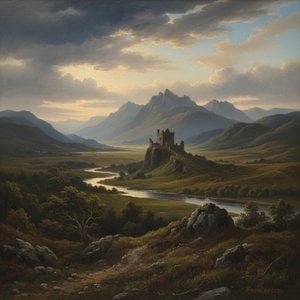
Alexander Nasmyth: Picturing Scotland's Romantic Landscape – Innovation & Identity
Explore the life & art of Alexander Nasmyth, a pivotal figure in Scottish Romantic landscape painting. Discover his iconic works, including portraits of Robert Burns, and learn about his lasting influence on national identity. Fine art reproductions available.

The Noble Steed on Canvas: A Historical & Artistic Exploration of Horse Painting Across Cultures
Explore the rich history of horse painting! Discover masterpieces from Stubbs to Munnings & learn about symbolism, techniques & artists. Find museum-quality reproductions at ArtsDot.
