


 Se i fuld skala
 Del
Del Del
Del
 Detaljer

 Download
 Lignende værker
 Røntgenundersøgelse
 Diasshow
Breakers
 Impressionism
 1870
1870 12.0 x 20.0 cm
 Se mere
Giclée / Kunsttryk
Giclée- eller lærredstryk i museumskvalitet med hurtig produktion og fleksible muligheder for finish. ( Køb håndlavet maleri Køb billede)




































Vælg mellem vores forudindstillede størrelser, der matcher kunstværkets originale proportioner.

Du kan indtaste dine egne mål for at passe til en specifik ramme eller et bestemt område. Hvis den valgte størrelse ikke stemmer overens med det originale billedes proportioner, vil vi enten beskære kunstværket eller udvide billedet med en spejlet eller ensfarvet kant. En digital mockup vil blive sendt til din godkendelse, før produktionen påbegyndes.
Bemærk venligst, at forhåndsvisningen på skærmen ikke afspejler den faktiske beskæring eller udvidelse. Kun mockuppen vil nøjagtigt vise den endelige komposition.
Selvom specialmål er tilgængelige, anbefaler vi at vælge et mål fra den foruddefinerede liste for at bevare de originale proportioner.
Verdensomspændende levering () på 2 uger i stedet for de sædvanlige 4/5 uger. (19 august)

Gratis ekspresforsendelse til hele verden

Lærred af linned i høj kvalitet

Fuld transportforsikring

Garanti for refusion af told og importafgifter

Garanti for præcis farvegengivelse

60 dages returret (kun ved fabrikationsfejl)

100% Tilfredshedsgaranti

Mængderabat tilgængelig
 Glasmulighed er kun tilgængelig i størrelser under 110 cm

Breakers
Giclée / Kunsttryk
Størrelse på reproduktion
-


Samlet pris
$ 63
Lignende kunstværker


Kunstnerens biografi
Colin Hunter (1841–1904): A Scottish Visionary of the Sea
Colin Hunter (1841–1904) was a Scottish Victorian artist, born in Glasgow, Scotland in 1841 and died at Lugar, Melbury Road, London in 1904. The majority of his works are seascapes—impressions of rugged Scottish coastlines rendered with masterful brushstrokes that captured the dynamism of the ocean and the quiet beauty of its shores. He achieved considerable renown during his lifetime as a painter of maritime subjects and became an Associate Member of the Royal Academy in 1884, cementing his place within the artistic landscape of the era. Hunter’s early artistic training focused on drawing and watercolor painting, fostering a sensitivity to light and color that would define his distinctive style. Influenced by luminism—the movement emphasizing atmospheric effects—he developed a technique characterized by subtle gradations of tone and delicate blending, prioritizing mood and emotion over precise detail. His landscapes often depicted the Scottish Highlands with an almost melancholic grandeur, reflecting a profound connection to the natural world. A prolific artist, Hunter produced nearly 100 paintings throughout his career, showcasing his versatility across various mediums and subjects. He participated in significant international exhibitions including those held in Berlin, Vienna, and Philadelphia between 1886 and 1891, gaining recognition for his artistic prowess on a global scale. These exhibitions allowed him to engage with contemporary artistic trends and further refine his approach to painting. Notably, he collaborated closely with fellow Academicians like Lord Leighton, G F Watts, and Luke Fildes—artists who shared similar aesthetic sensibilities and fostered a supportive environment for creative exploration. Among Hunter’s most celebrated works are depictions of fishing villages along the Scottish coast – scenes brimming with life and rendered with remarkable accuracy. He meticulously observed the textures of weathered stone buildings, the movement of boats on choppy waters, and the faces of fishermen engaged in their daily labor. His paintings convey not merely visual representations but also a palpable sense of place—a feeling for the atmosphere and character of specific locations. One particularly striking piece is “Boats at Rest, Coldingham,” where Hunter skillfully captures the tranquil beauty of a coastal hamlet bathed in soft afternoon light. Furthermore, Hunter ventured beyond Scotland to explore new artistic horizons, traveling to New York City where he painted the majestic Niagara Falls—a monumental landscape capturing the raw power and grandeur of nature. This ambitious undertaking demonstrated his willingness to experiment with scale and perspective, pushing the boundaries of traditional seascape painting. His legacy endures as a testament to Victorian artistic innovation and a celebration of Scotland’s maritime heritage.- Key Achievements: Associate Member of the Royal Academy (1884), Participation in Universal Exhibitions (Berlin, Vienna, Philadelphia)
- Influences: Luminism, Impressionism
- Notable Subjects: Scottish Coastlines, Fishing Villages, Niagara Falls
- Technique: Atmospheric Painting; Delicate Blending; Subtle Gradations of Tone

colin hunter
1841 - 1904
Kort om kunstneren
- Artistic Movement Or Style: Seascape
- Artists Or Movements Influenced By This Artist: ['William Leiper']
- Date Of Death: 1904
- Full Name: Colin Hunter
- Nationality: Scottish
- Notable Artworks: ['Boats at Rest, Coldingham']
- Place Of Birth: Glasgow, Scotland
Relaterede artikler

The Allure of the Horizon: A Comprehensive Exploration of Seascape Art Through History & Emotion
Explore the captivating world of seascape art! Discover its history, key artists & movements – from Dutch Masters to Impressionism. Expert insights for collectors and enthusiasts at ArtsDot.
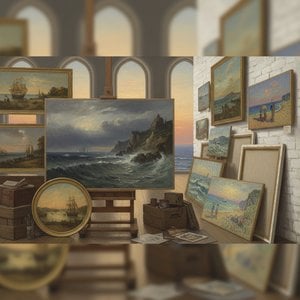
Evoking the Horizon: A Historical & Artistic Exploration of Coastal Scenes in Painting
Explore the rich history of coastal scenes in painting! Discover Impressionist masterpieces, American realism & contemporary visions. Learn about renowned artists and find your perfect seascape at ArtsDot.

The Enduring Legacy of Oil on Canvas: Technique, History & Aesthetic Impact
Explore the rich history & techniques of oil painting – from Renaissance masters to Impressionism. Discover pigments, layering methods, and why this timeless medium endures. Expert insights for artists & art enthusiasts.

Serene Fishing Village Art: Bring Coastal Charm and Seaside Magic to Your Home
Transform your home with the serene beauty of fishing village art. Discover exquisite hand-painted Impressionist seascapes and coastal landscapes designed to bring seaside magic and timeless charm to your interior decor. Explore our curated collection of masterwork reproductions today.

Oil on Canvas: A Historical & Technical Exploration of a Timeless Artistic Medium
Explore the rich history & enduring techniques of oil painting on canvas. Discover the science behind its longevity, conservation practices, and contemporary relevance. Expert insights for art enthusiasts.

