


 Se i rummet
 Send
Send Del
Del
 Detaljer
 Studieguide til kunstværker

 Download
 Lignende værker
 Røntgenundersøgelse
 Se diasshow
 Statistik
Montesquieu


 Læs mere
Giclée / Kunsttryk
Giclée- eller lærredstryk i museumskvalitet med hurtig produktion og fleksible muligheder for finish. ( Bestil håndmalet reproduktion Skift til digitalt billede)




P118B Dkr10

P118H Dkr10

P118W Dkr10

P438Z Dkr10

P508JH Dkr12

P508YH Dkr12

P805H Dkr10

P805Z Dkr10

P919BZ Dkr10

P919G Dkr10

P919XJ Dkr10

P959ZH Dkr10

P968JZ Dkr12

W106C Dkr8

W218G Dkr10

W218JH Dkr8

W218Y Dkr10

W307PJ Dkr10

W316G Dkr10

W316PJ Dkr8

W316Y Dkr10

W398PJ Dkr8

W4111J Dkr10

W500HY Dkr15

W500JH Dkr15

W692G Dkr12

W849H Dkr8

W940BG Dkr15

W953PJ Dkr8




Vælg mellem vores forudindstillede størrelser, der matcher kunstværkets originale proportioner.

Indtast den bredde og højde, du har brug for, så det passer til din ramme eller din væg. Et print kan kun beskæres, aldrig gøres større end billedet, så en størrelse med en anden form vil miste en del af motivet. Vi sender dig en digital mockup til godkendelse, før vi printer noget. Billedet vist på denne side viser ikke den faktiske beskæring — det er kun mockuppen, der gør.
Verdensomspændende levering () på 2 uger i stedet for de sædvanlige 4/5 uger. (23 oktober)

Gratis ekspresforsendelse til hele verden

Lærred af linned i høj kvalitet

Komplet transportforsikring

Garanti for refusion af told og importafgifter

Garanti for autentisk farvegengivelse

100 dages returret ved fabrikationsfejl

100% fuld returret

Mængderabat ved flere køb
 Glasmulighed er kun tilgængelig i størrelser under 110 cm

Montesquieu
Giclée / Kunsttryk
Reproduktionsstørrelse
-


Samlet pris
Dkr 414
The Stoic Scholar: An Encounter with Claude Michel (Clodion)’s “Montesquieu”
Standing before Claude Michel’s (Clodion) marble statue of Montesquieu, one is immediately struck by the profound stillness and contemplative power emanating from the figure. This isn't merely a portrait; it’s an embodiment of Enlightenment thought, a frozen moment of intellectual rigor captured in exquisitely polished white marble. The sculpture, created in 1783, resides within a museum setting, its reflective surface mirroring the surrounding space and subtly expanding the sense of grandeur. Clodion, a master sculptor working primarily in Paris during this period, expertly rendered the likeness of the influential French philosopher, Jean-Jacques Rousseau’s friend and political theorist, Charles de Montesquieu. The statue invites quiet observation, prompting reflection on the nature of reason, justice, and the complexities of governance – themes central to Montesquieu's groundbreaking work, *The Spirit of Laws*.
Neoclassical Form and Subtractive Technique
Clodion’s style firmly anchors this piece within the Neoclassical tradition. This movement, which flourished in Europe during the late 18th and early 19th centuries, sought to revive the artistic ideals of ancient Greece and Rome. The statue's composition—the seated figure, the draped garment, the carefully modeled musculature—all echo classical forms. However, Clodion’s approach transcends mere imitation; he imbues the sculpture with a distinctly modern sensibility. The technique itself is crucial to understanding the work’s impact. Marble carving is an inherently subtractive process – the sculptor begins with a massive block of stone and meticulously removes material until the desired form emerges. This painstaking method, combined with Clodion's masterful control of light and shadow, results in surfaces that appear almost impossibly smooth and luminous. The subtle variations in tone within the marble—a hint of grey near the folds of the robe, a brighter sheen on the exposed flesh—create an illusion of depth and texture, mimicking the tactile qualities of the stone itself.
Symbolism Within the Pose: Authority and Reflection
The pose of Montesquieu is deliberately powerful yet restrained. He’s seated in a classical chair, his posture erect, suggesting authority and intellectual strength. His hands rest upon a book – a clear reference to his extensive writings on law and political philosophy. However, it's not a gesture of triumphant pronouncements; rather, it conveys a sense of thoughtful deliberation. The gaze is directed slightly downward, as if lost in contemplation, inviting the viewer to join him in a shared intellectual journey. The mirrored wall behind the statue further amplifies this effect, creating an echo of the figure and suggesting a deeper level of introspection. It’s a visual metaphor for Montesquieu's own ideas – reflecting back upon society and offering insights into its structure and function.
A Legacy in Stone: Clodion’s Artistic Voice
Claude Michel (Clodion), born Benjamin West in 1738, was a pivotal figure in the transition between Neoclassicism and Romanticism. His early career in America, where he honed his skills painting portraits of prominent figures, provided him with a strong foundation in realism and observation. Later, he moved to Paris, embracing the challenges and opportunities of the European art scene. Clodion’s work is characterized by its dramatic lighting, dynamic compositions, and often theatrical flair. While “Montesquieu” represents his more restrained and contemplative side, it nonetheless showcases his exceptional technical skill and his ability to capture the essence of his subject. Reproductions of this statue offer a remarkable opportunity to experience the enduring power of Neoclassical sculpture – a testament to the artist’s vision and the timeless relevance of Enlightenment ideals. The piece stands as a powerful reminder that art can not only reflect history but also invite us to engage with its profound questions.
Spørgsmål & svar
Kan jeg se "Montesquieu" af Claude Michel (Clodion) på min egen væg, før jeg køber det?
Siden AR-forhåndsvisning for "Montesquieu" af Claude Michel (Clodion) bruger augmented reality til at vise kunstværket i dit eget rum på en kompatibel enhed.
Hvilken national oprindelse ligger bag Neoclassicism i "Montesquieu"?
"Montesquieu" forbinder Neoclassicism-bevægelsen med France gennem skaberens fødested.
I hvilket år og inden for hvilken stilart blev "Montesquieu" skabt?
"Montesquieu" af Claude Michel (Clodion) er dateret 1783 og tilhører Neoclassicism.
Lignende kunstværker


Relaterede artikler

The Enduring Form: Sculpture Across History, Technique & Emotional Resonance
Explore the rich history of sculpture with ArtsDot. Discover key techniques, influential artists & investment potential for discerning collectors. Expert insights into valuing and collecting timeless masterpieces.

Top 10 Bronzemesterværker: Kunsthistorien Ændret for Evigt | ArtsDot.dk
Oplev de 10 mest legendariske bronzemesterværker, der har formet kunsthistorien! Fra Rodin til Degas – lær historierne bag ikoniske skulpturer og find inspiration til din indretning. Køb museumskvalitets reproduktioner på ArtsDot.com.

Bronzeskulpturers Mestre: 10 Værker der Ændrede Kunsthistorien | ArtsDot
Oplev de 10 mest legendariske bronzeskulpturer, der har formet kunsthistorien! Fra Rodin til Vigeland – lær historierne bag mesterværkerne og find inspiration til din indretning. Køb museumskvalitets reproduktioner på ArtsDot.com.
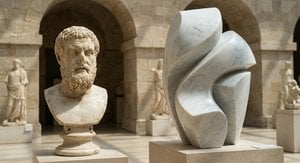
The Enduring Allure of Marble in Art History: From Classical Sculpture to Modern Abstraction
Explore the captivating history of marble sculpture from ancient Greece to modern art. Discover renowned artists like Canova & Michelangelo, carving techniques, and investment insights at ArtsDot.

The Enduring Form: Exploring Themes & Techniques in Sculpture Across Historical Periods
Explore the rich history of sculpture from ancient masterpieces to contemporary innovations. Discover key techniques, influential artists & investment potential for discerning art collectors.