


 Se i fuld skala
 Del
Del Del
Del
 Detaljer

 Download
 Lignende værker
 Røntgenundersøgelse
 Diasshow
 Stats
StatsAfterword


 Se mere
Giclée / Kunsttryk
Giclée- eller lærredstryk i museumskvalitet med hurtig produktion og fleksible muligheder for finish. ( Køb håndlavet maleri Switch to Digital Image)




































Vælg mellem vores forudindstillede størrelser, der matcher kunstværkets originale proportioner.

Du kan indtaste dine egne mål for at passe til en specifik ramme eller et bestemt område. Hvis den valgte størrelse ikke stemmer overens med det originale billedes proportioner, vil vi enten beskære kunstværket eller udvide billedet med en spejlet eller ensfarvet kant. En digital mockup vil blive sendt til din godkendelse, før produktionen påbegyndes.
Bemærk venligst, at forhåndsvisningen på skærmen ikke afspejler den faktiske beskæring eller udvidelse. Kun mockuppen vil nøjagtigt vise den endelige komposition.
Selvom specialmål er tilgængelige, anbefaler vi at vælge et mål fra den foruddefinerede liste for at bevare de originale proportioner.
Verdensomspændende levering () på 2 uger i stedet for de sædvanlige 4/5 uger. (8 september)

Gratis ekspresforsendelse til hele verden

Lærred af linned i høj kvalitet

Fuld transportforsikring

Garanti for refusion af told og importafgifter

Garanti for præcis farvegengivelse

100 dages returret (kun ved fejl og mangler)

100% Tilfredshedsgaranti

Mængderabat tilgængelig
 Glasmulighed er kun tilgængelig i størrelser under 110 cm

Afterword
Giclée / Kunsttryk
Størrelse på reproduktion
-


Samlet pris
$ 63
Lignende kunstværker


Kunstnerens biografi
Early Life and Artistic Beginnings
Chester Arnold’s fascination with art began early in life, nurtured by a father who instilled in him a deep appreciation for visual culture—a formative influence that would shape his artistic trajectory. Born June 25, 1901, in Leeton, Missouri, Arnold descended from Austrian immigrants who had settled in the Midwest seeking opportunity and stability. His childhood was marked by exposure to European intellectual traditions, thanks to his father’s role as a linguist and field agent for the United States Intelligence Unit—a connection that fostered an inquisitive spirit and broadened his worldview. Notably, Arnold's family home bordered on a dense forest reminiscent of Grimm’s fairy tales – “a wonderland for the imagination,” he recalled – providing him with a rich visual landscape to contemplate and inspire his artistic endeavors. From a young age, Arnold demonstrated a proclivity for drawing and painting, honing his skills through self-directed study and experimentation. He pursued his education at Cornell University with an intention to study agriculture, but quickly realized that his true passion lay in the realm of visual arts. This pivotal decision propelled him toward a career dedicated to artistic creation—a path he would diligently follow throughout his life.Formal Education and Artistic Influences
Arnold’s academic pursuits extended beyond Cornell University, where he earned his Bachelor of Science degree in 1924. Recognizing the importance of grounding his artistic vision in theoretical knowledge, he continued his studies at San Francisco Art Institute, securing his Master of Fine Arts degree in 1988. During this period, Arnold immersed himself in the study of art history and aesthetics—drawing inspiration from masters such as Albrecht Altdorfer, Pieter Brueghel, Leonardo da Vinci, and Caspar David Friedrich. These encounters profoundly impacted his artistic sensibilities, fostering a belief in the transformative power of painting to communicate beyond words—a conviction that would underpin his subsequent creative explorations. Furthermore, Arnold’s exposure to the vibrant art scene of San Francisco instilled in him a keen awareness of contemporary artistic trends—particularly postmodernism and its preoccupation with challenging conventions and exploring unconventional perspectives.Career Highlights and Artistic Style
Arnold established himself as a respected educator at institutions including San Francisco State University, Sonoma State University, and the College of Marin, Kentfield, California. Throughout his teaching career, he imparted knowledge and fostered creativity in generations of aspiring artists—a testament to his dedication to artistic mentorship. Simultaneously, Arnold pursued his own studio practice with unwavering commitment, producing a prolific body of work characterized by distinctive stylistic features. His paintings often blend realism with impressionistic techniques—capturing the essence of natural landscapes while simultaneously injecting them with symbolic resonance. Recurring motifs include dense forests and decaying objects—reflecting Arnold’s preoccupation with themes of abundance, waste, and the passage of time. He skillfully employs color palettes that evoke mood and emotion—creating artworks that are both visually arresting and intellectually stimulating.Scientific Contributions and Recognition
Beyond his artistic accomplishments, Chester Arnold made significant contributions to paleobotany—the study of fossil plants. He earned a Ph.D. from San Francisco Art Institute in 1988 focusing on Devonian megafloral paleobotany. During his lifetime Arnold wrote approximately 121 publications on subjects including the fossil conifers of Princeton, British Columbia, to the extinct water-fern, Azolla primaeva. His research explored the evolutionary history of plant life—investigating fossil specimens from diverse geological formations across North America and beyond. Arnold’s meticulous attention to detail and his unwavering pursuit of scientific accuracy earned him considerable acclaim within the botanical community—resulting in honors such as the Silver Medal from the Birbal Sahni Institute of Palaeobotany and the Distinguished Service Award from the Paleobotanical Section of the Botanical Society of America. Notably, a number of fossil plants have been named in Arnold’s honor including Koelruteria arnoldi and Pseudolarix arnoldi—a lasting testament to his scholarly legacy.Legacy and Artistic Significance
Chester Arnold's artistic output stands as a compelling dialogue between observation, imagination, and intellectual inquiry. His paintings grapple with complex themes—examining the relationship between humanity and nature, confronting notions of decay and renewal, and questioning conventional perspectives on visual representation. Arnold’s work embodies the spirit of postmodern art—rejecting simplistic narratives and embracing ambiguity—while simultaneously grounding itself in a profound appreciation for the beauty and intricacy of the natural world. His enduring influence can be seen in the continuing exploration of similar motifs and stylistic approaches by contemporary artists—solidifying his place as a pivotal figure in twentieth-century visual culture.
Chester Arnold
1952 - , United States of America
Kort om kunstneren
- Artistic Movement Or Style: Postmodern Painter
- Artists Or Movements Influenced By This Artist: ['']
- Artists Who Influenced This Artist: ['']
- Date Of Birth: Santa Monica, United States of America (1952)
- Date Of Death: Living
- Full Name: Chester Arnold
- Nationality: American
- Notable Artworks:
- Sic Transit Gloria Mundi
- Afterword
- Place Of Birth: Santa Monica
Relaterede artikler

The Enduring Legacy of Oil on Canvas: Technique, History & Aesthetic Impact
Explore the rich history & techniques of oil painting – from Renaissance masters to Impressionism. Discover pigments, layering methods, and why this timeless medium endures. Expert insights for artists & art enthusiasts.

Fra Koncept til Lærred: Digital Mockup-teknologi som Garant for Præcision og Kundetilfredshed i Skræddersyede Olieportræt Reproduktioner
Få et unikt, håndmalet oliemaleri baseret på dine fotos! Vi garanterer præcision med digital mockup-teknologi og museumskvalitet. Skræddersy dit drømmeportræt i dag – kontakt os for en gratis konsultation!
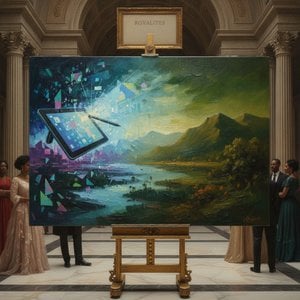
Digitale NFT‑kunstværker omdannet til håndmalede oliekopier – Museumskvalitet, høj fortjeneste og global levering for den moderne samlende kunstner
Oplev håndmalede oliekopier af digitale kunstværker med museumskvalitet hos ArtsDot. Ekspertise i reproduktion, fuld tilfredshedsgaranti og global levering sikrer din investering. Køb sikkert, værdsæt ægte kunst.

Oil on Canvas: A Historical & Technical Exploration of a Timeless Artistic Medium
Explore the rich history & enduring techniques of oil painting on canvas. Discover the science behind its longevity, conservation practices, and contemporary relevance. Expert insights for art enthusiasts.

Når Teknologi Møder Tradition: Den Moderne Proces Bag Skræddersyet Kunst – Digital Visualisering og Klassiske Olieteknikkers Samspil i Nutidens Kommissionskunst
Skræddersyet kunst af højeste kvalitet – oliemalerier, portrætmaleri & freskoer. Ekspertvejledning, digital visualisering og håndværk i verdensklasse. Få et unikt mesterværk skabt til dig!