

 Se i rummet
 Del som kort
 Del
Del
 Detaljer
 Guide
Guide

 Download
 Lignende værker
 Røntgenundersøgelse
 Diasshow
 Spørgsmål og svar
 Statistikker
neubrandenburg

 Vis mere
Giclée / Kunsttryk
Giclée- eller lærredstryk i museumskvalitet med hurtig produktion og fleksible muligheder for finish. ( Køb håndmalet maleri Skift til digitalt billede)




P118B Dkr10

P118H Dkr10

P118W Dkr10

P438Z Dkr10

P508JH Dkr12

P508YH Dkr12

P805H Dkr10

P805Z Dkr10

P919BZ Dkr10

P919G Dkr10

P919XJ Dkr10

P959ZH Dkr10

P968JZ Dkr12

W106C Dkr8

W218G Dkr10

W218JH Dkr8

W218Y Dkr10

W307PJ Dkr10

W316G Dkr10

W316PJ Dkr8

W316Y Dkr10

W398PJ Dkr8

W4111J Dkr10

W500HY Dkr15

W500JH Dkr15

W692G Dkr12

W849H Dkr8

W940BG Dkr15

W953PJ Dkr8




Vælg mellem vores forudindstillede størrelser, der matcher kunstværkets originale proportioner.

Indtast den bredde og højde, du har brug for, så det passer til din ramme eller din væg. Et print kan kun beskæres, aldrig gøres større end selve billedet, så en størrelse med et andet format vil medføre, at dele af motivet går tabt. Vi sender dig en digital mockup til godkendelse, før vi printer noget. Billedet vist på denne side viser ikke den faktiske beskæring — det er kun mockuppen, der gør.
Verdensomspændende levering () på 2 uger i stedet for de sædvanlige 4/5 uger. (12 november)

Gratis ekspresforsendelse til hele verden

Lærred af linned i høj kvalitet

Fuld transportforsikring

Garanti for refusion af told og importafgifter

Garanti for præcis farvegengivelse

100 dages returret ved fabrikationsfejl

100% fuld returret

Mængderabat ved flere køb
 Glasmulighed er kun tilgængelig i størrelser under 110 cm

neubrandenburg
Giclée / Kunsttryk
Størrelse på reproduktion
-


Samlet pris
Dkr 421
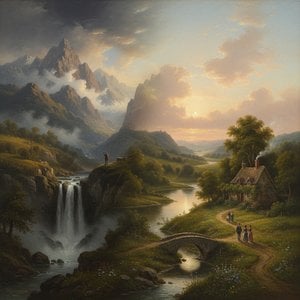
A Vista of Quietude: Exploring Caspar David Friedrich’s *neubrandenburg*
This evocative landscape by Caspar David Friedrich transports viewers to a serene yet subtly melancholic world. *neubrandenburg* is not merely a depiction of a town and its cathedral; it's an exploration of humanity’s place within the vastness of nature, a hallmark of the Romantic era. The painting presents a distant view of Neubrandenburg, dominated by the imposing spire of its cathedral, set against a dramatic skyscape.Style & Historical Context
Friedrich was a pivotal figure in the German Romantic movement (early 19th century), a period characterized by an emphasis on emotion, individualism, and the sublime power of nature. Rejecting the Enlightenment’s focus on reason, Romantics sought spiritual truth through experiencing the natural world. *neubrandenburg* exemplifies this ethos. The painting's style leans heavily into Romantic ideals – it isn’t a precise topographical rendering but rather an emotional response to the landscape. This was a time of significant societal shifts; the rise of industrialization and urbanization led many to yearn for a connection with the unspoiled beauty of nature, which Friedrich masterfully captures. His work often served as a counterpoint to the increasingly materialistic world.Composition & Technique
The composition is powerfully structured around horizontal lines – the horizon dividing the scene into foreground, middle ground and background. This reinforces the sense of expansive space. The small figures in the lower right corner are crucial; they provide a scale reference, emphasizing the immensity of the landscape and subtly suggesting human insignificance within it. Friedrich’s technique is characterized by loose brushstrokes and a muted color palette. He expertly employs atmospheric perspective – colors become paler and less saturated with distance – to create a convincing illusion of depth. The oil on canvas medium allows for rich texture and nuanced tonal variations, particularly in the swirling clouds that dominate the sky.Symbolism & Interpretation
The cathedral spire is arguably the focal point, rising above the town as a symbol of faith and spiritual aspiration. However, its distance and relative smallness within the vast landscape suggest a questioning of traditional religious authority. The dramatic sky, transitioning from dark greys to golden hues, can be interpreted as representing both hope and uncertainty – the transient nature of life itself. The figures in the foreground, seemingly lost in contemplation, invite viewers to share their quiet introspection. Friedrich frequently used landscapes not just as representations of places but as mirrors reflecting inner emotional states.Emotional Impact & Legacy
*neubrandenburg* evokes a sense of peaceful solitude and contemplative melancholy. It’s a painting that encourages viewers to pause, reflect, and connect with the natural world on a deeper level. The work's enduring appeal lies in its ability to tap into universal human emotions – awe, wonder, and a longing for something beyond the material realm. Friedrich’s influence can be seen in subsequent artistic movements, including Symbolism and Expressionism, and his landscapes continue to inspire artists and viewers alike today. A reproduction of this painting would bring a sense of tranquility and intellectual depth to any interior space.Spørgsmål og svar
Hvad er den anbefalede anvendelse af et print af "neubrandenburg"?
Det anbefales at bruge et tryk af "neubrandenburg" til Accent.
Hvor kan jeg købe et digitalt billede af "neubrandenburg" af Caspar David Friedrich?
Du kan købe en digital fil af "neubrandenburg" af Caspar David Friedrich ved at bestille et højopløseligt digitalt billeddownload på dens Digitalt billede-side.
Hvad er den overordnede stemning i "neubrandenburg" af Caspar David Friedrich?
"neubrandenburg" af Caspar David Friedrich beskrives med en Romantic stemning. Denne klassificering kan hjælpe med at matche værket til en indretning.
Lignende kunstværker


Kunstnerbiografi
En ensom vision
Født i den baltiske havneby Greifswald i 1774, var Caspar David Friedrichs tidlige år præget af en dyb følelse af tab. Dødsfaldene af hans mor og søskende kastede en lang skygge over hans ungdom, hvilket fostrede en følsomhed over for dødelighed, som blev et centralt tema i hans værk. Han begyndte sin uddannelse under sin bror Christian, før han opsøgte kunst og teologi ved universitetet i Leipzig. Selvom han ikke fuldførte nogen af de to grader, kom denne dobbelte interesse for det visuelle og det spirituelle til at definere hans kreative vej. Hans tekniske færdigheder blev yderligere forfinet i København, hvor han blev eksponeret for landskabsmaleriets traditioner, som han senere transformerede til et medie for udtryk for indre emotionelle tilstande.
Hans tilgang til landskabet bevægede sig væk fra den minutiøse detaljerigdom, som hans forgængere foretrak. I stedet søgte han at besjæle sceneriet med symbolsk betydning ved at bruge naturelementer til at repræsentere den menneskelige sjæl. Han benyttede ofte Rückenfiguren—figurer set bagfra—for at invitere beskueren til at tage del i en kontemplativ oplevelse. Hans farvepalette, ofte sammensat af dæmpede blå, grå og brune nuancer, forstærkede stemningen af introspektion og højtidelighed, der gennemstrømmer hans værk. Han malede ikke blot det, han så; han malede den menneskelige ånds indre vejr.
Det sublime sprog
Friedrichs arbejde betoner det sublime og søger en spirituel forbindelse gennem den naturlige verdens enorme skala. Hans kompositioner placerer ofte ensomme figurer mod et vidtstrakte, ofte overvældende landskab. I "Vandrer over tågehavet" (ca. 1818) konfronterer den silhuetagtige figur et hvirvlende hav af tåge, hvilket legemliggør spændingen mellem menneskelig tilstedeværelse og det uendelige. "Havets Is" (1824) præsenterer et kuldepræget arktisk ødemark, en skildring af naturens enorme kraft og dens ligegyldighed over for menneskets skæbne. Disse værker afspejler en optagethed af eksistensens skrøbelighed og søgen efter mening i landskabet.
Hans malerier benytter ofte specifikke elementer til at formidle disse indre tilstande:
- "Abbediet i egetræskoven" (1809-1810), hvor en ruineret kirkegård og nøgne træer antyder dødelighed og spirituelt forfald.
- "Kridtklinter på Rügen" (1818), som bruger atmosfærisk lys til at definere kysten.
Arv og genopdagelse
Caspar David Friedrichs karriere var ikke en jævn stigning. Selvom han opnåede anerkendelse i sin levetid, aftog hans popularitet, efterhånden som den kunstneriske smag skiftede mod andre bevægelser. Han døde i Dresden i 1840, og i en periode trådte hans navn i baggrunden af kunstverdenen. Hans ry gennemgik en betydelig genopdagelse i slutningen af det 20. århundrede, da han blev anerkendt som en central skikkelse i den tyske romantik. Hans vægtlægning af den subjektive oplevelse og emotionellet udtryk banede vejen for senere bevægelser, herunder symbolismen og surrealismen.
Hans indflydelse strakte sig til kunstnere, der søgte at udforske den indre verden gennem visuelle midler. Ved at afvise oplysningstidens rationalisme til fordel for følelse og fantasi indfangede han en hel æras ånd. Hans landskaber tjente som symboler på national identitet i en periode med politisk fragmentering i Tyskland. I dag fortsætter hans værker med at resonere og minder publikum om den dybe forbindelse mellem menneskeheden og den naturlige verden.

Caspar David Friedrich
1774 - 1840 , Tyskland
Kort om kunstneren
- Artistic Movement Or Style: Romantikken
- Artists Or Movements Influenced By This Artist:
- Symbolister
- Surrealister
- Artists Who Influenced This Artist:
- Hollandske mestre
- J.C. Dahl
- Date Of Birth: 1774
- Date Of Death: 1840
- Full Name: Caspar David Friedrich
- Nationality: Tysk
- Notable Artworks:
- Abbediet i egetræskoven
- Vandrer over tågehavet...
- Kridtklinter på Rügen
- Havets Is
- Place Of Birth: Greifswald, Tyskland
Relaterede artikler

Evoking Nature's Sublime: A Comprehensive Exploration of 19th-Century Landscape Painting
Explore the captivating world of 19th-century landscape painting! Discover renowned artists like Friedrich & Monet, key movements, and find the perfect artwork to bring nature's serenity into your home. Expert insights at ArtsDot.

The Sublime and the Picturesque: Exploring Emotion & Nature in Romantic Landscape Painting
Explore the emotional power of Romantic landscape painting! Discover the sublime & picturesque traditions, key artists like Friedrich & Cole, and find your perfect artwork at ArtsDot.

Romantikkens Landskaber: Top 10 Malerier der Definerede En Æra | ArtsDot
Oplev romantikkens storhedstid! Dyk ned i top 10 landskabsmalerier af Caspar David Friedrich, Turner & Constable. Historiske fortællinger og museumskvalitets reproduktioner på ArtsDot.com – find din inspiration til væggen her!
The Sublime and the Picturesque: Exploring Emotion & Nature in Romantic Landscape Painting
Explore the emotional power of Romantic landscape painting! Discover the sublime & picturesque aesthetics, key artists like Friedrich & Cole, and lasting influence on art history. Find your perfect piece at ArtsDot.

Caspar David Friedrich: Romanticism's Master of Landscape & the Sublimity of Inner Experience
Explore the profound landscapes of Caspar David Friedrich, a master of German Romanticism. Discover the symbolism, themes & enduring influence of this iconic artist. A deep dive into his life and work.


