


 Se i rummet
 Send
Send Del
Del
 Detaljer
 Studieguide til kunstværker

 Download
 Lignende værker
 Røntgenundersøgelse
 Se diasshow
 Statistik
Ursula von Weichs
 1531
1531- Renaissance
 69.0 x 57.0 cm
 National Gallery of Canada
 Læs mere
Håndlavet oliereproduktion
Håndmalet olie på lærred i din valgte størrelse og ramme, udført efter bestilling af vores kunstnere. ( Skift til printversion Skift til digitalt billede)




P118B Dkr10

P118H Dkr10

P118W Dkr10

P438Z Dkr10

P508JH Dkr12

P508YH Dkr12

P805H Dkr10

P805Z Dkr10

P919BZ Dkr10

P919G Dkr10

P919XJ Dkr10

P959ZH Dkr10

P968JZ Dkr12

W106C Dkr8

W218G Dkr10

W218JH Dkr8

W218Y Dkr10

W307PJ Dkr10

W316G Dkr10

W316PJ Dkr8

W316Y Dkr10

W398PJ Dkr8

W4111J Dkr10

W500HY Dkr15

W500JH Dkr15

W692G Dkr12

W849H Dkr8

W940BG Dkr15

W953PJ Dkr8




Vælg mellem vores forudindstillede størrelser, der matcher kunstværkets originale proportioner.

Indtast den bredde og højde, du har brug for, så det passer til din ramme eller din væg. Da dette er håndmalet, kan kunstneren ved en anden form på størrelsen male lidt mere rundt om billedet eller skære lidt væk — det er op til dig. Vi sender dig et digitalt mockup til godkendelse, før maleriet påbegyndes. Billedet, der vises på denne side, viser ikke det endelige resultat — det er kun mockuppet, der gør.
Efter bestilling vil ArtsDot.com team sende en e-mail til kunden for at indhente instruktioner og fremsende et udkast til gennemgang.
Levering i hele verden () på 3-4 uger i stedet for de standard 5 uger. (26 oktober). Ingen kompromiser med kvaliteten.

Gratis ekspresforsendelse til hele verden

Lærred af linned i høj kvalitet

Komplet transportforsikring

Garanti for refusion af told og importafgifter

Garanti for autentisk farvegengivelse

100 dages returret ved fabrikationsfejl

100% fuld returret

Mængderabat ved flere køb
 Glasmulighed er kun tilgængelig i størrelser under 110 cm

Ursula von Weichs
Reproduktionsmateriale
Reproduktionsstørrelse
-


Samlet pris
Dkr 1725
Lignende kunstværker


Om kunstneren
Barthel Beham (1502–1540): The Little Master of Nuremberg
Barthel Beham (1502–1540) stands as a pivotal figure in the German Renaissance printmaking tradition, earning him the moniker “Little Master” – a testament to his extraordinary skill and meticulous detail. Born in Nuremberg, Germany, he was steeped in artistic heritage from birth, inheriting talent from his elder brother Hans Sebald Beham and absorbing invaluable lessons from Albrecht Dürer himself. This formative influence shaped his distinctive style and propelled him to become one of the most celebrated engravers of his era.- Early Life & Training: Barthel’s artistic journey commenced under the tutelage of Hans Sebald, who instilled in him a profound understanding of engraving techniques – a craft that would define Beham's career. Dürer’s workshop served as another crucible for innovation and stylistic refinement, fostering Beham’s fascination with realism and compositional complexity.
- Engraving Mastery: Beham quickly established himself as a prodigious engraver, producing stunningly precise miniature prints that captivated audiences across Europe. His output during the 1520s exemplifies the “Little Masters” school – characterized by unparalleled accuracy and artistic ambition. Subjects ranged from biblical narratives to portraits of noblemen and humanist scholars, demonstrating his versatility and technical prowess.
- The Godless Painters & Exile: Beham’s unwavering skepticism regarding Lutheran dogma led to his expulsion from Nuremberg in 1525 alongside Hans Sebald and Georg Pencz – a controversial decision that nonetheless spurred him toward intellectual exploration and artistic experimentation. This exile fostered connections with humanist circles and broadened his horizons beyond the confines of Nuremberg’s religious conservatism.
- Munich & Patronage: Following papal pardon, Beham relocated to Munich where he found favor with Duke William IV and Ludwig X – securing lucrative commissions that allowed him to hone his artistic skills further. He became renowned for his portraiture, capturing the dignity and grandeur of Bavarian royalty with remarkable sensitivity and detail.
- Legacy & Influence: Barthel Beham died in Italy during a diplomatic mission under the patronage of William IV, marking the end of an illustrious career. His work continues to inspire admiration for its technical brilliance and humanist vision—a lasting contribution to German art history and a cornerstone of Renaissance printmaking.
Notable Works & Artistic Style
Beham’s artistic style is instantly recognizable by its meticulous realism, achieved through painstaking engraving processes. He prioritized capturing subtle nuances of expression and anatomical accuracy—a hallmark of Dürer's influence. His prints often incorporated complex compositions and dramatic lighting effects, elevating them beyond mere reproductions to become independent works of art. Consider his depiction of Chancellor Leonhard von Eck (1480–1550), a masterpiece showcasing the artist’s ability to convey psychological depth through portraiture. Similarly, “Portrait of a Man” exemplifies Beham's dedication to capturing human form with unparalleled precision and artistic sensitivity.Connections & Collaborations
Barthel Beham benefited greatly from collaborations with prominent artists of his time, notably Marcantonio Raimondi—with whom he worked in Bologna and Rome during the early 1530s. These partnerships exposed him to innovative techniques and broadened his artistic repertoire. Furthermore, his brother Hans Sebald’s involvement ensured a shared artistic vision and fostered a dynamic creative environment within Nuremberg's artistic community.
Barthel Beham
1502 - 1540 , Germany
Hurtige fakta
- Full Name: Barthel Beham
- Nationality: German
- Date Of Birth: 1502
- Date Of Death: 1540
- Place Of Birth: Nuremberg, Germany
- Notable Artworks:
- Portrait of a Man
- Portrait of Duke Ludwig X of Bavaria
- Artistic Movement Or Style: Little Masters
- Artists Who Influenced This Artist: ['Albrecht Dürer']
- Artists Or Movements Influenced By This Artist: ['Marcantonio Raimondi']
Relaterede artikler

Fritz von Uhde: Bridging Realism & Symbolism in Late 19th-Century German Painting
Explore the captivating world of Fritz von Uhde, a pivotal German painter bridging Realism & Symbolism. Discover his plein-air techniques, religious themes, and influence on modern art. Learn about this fascinating artist at ArtsDot.

Tysk Ekspressionisme: 10 Mesterværker der Definerede en Æra – Kunst til Dit Hjem
Oplev de 10 mest ikoniske værker fra Tysk Ekspressionisme! Lær historierne bag Kirchner, Nolde & Kandinsky. Find museumskvalitets kunsttryk og inspiration til din indretning på ArtsDot.com – udforsk samlingen online.
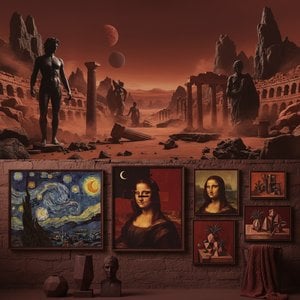
Mørkets Mestre: Top 10 Maler Domineret af Sort – Kunst & Indretning
Oplev 10 ikoniske malerier domineret af sort – fra Rembrandts dramatiske skygger til Munchs ekspressive mørke. Lær historien bag mesterværkerne og find inspiration til din indretning. Køb kunsttryk i museumskvalitet på ArtsDot.com

Anton von Werner: Imperial Painter, Historical Witness & Shifting German Identity
Explore the life & work of Anton von Werner, Imperial Germany's leading painter. Discover his dramatic depictions of war, unification, and court life – a fascinating insight into 19th-century German history & art.

Sort i Kunsten: Top 10 Berømte Malerier & Deres Mystik | ArtsDot.dk
Oplev 10 berømte malerier domineret af sort – fra Rembrandts drama til Goyas mystik. Lær historierne bag disse ikoniske kunstværker og find inspiration til dit hjem. Køb museumskvalitets reproduktioner på ArtsDot.com