

 Del som kort
 Del
Del
 Detaljer
 Guide
Guide

 Download
 Lignende værker
 Diasshow
 Spørgsmål og svar
 Statistikker
Mor og barn


 Vis mere
Kunstværket vist på denne side er beskyttet af ophavsretsloven, hvilket betyder, at vi ikke lovligt kan skabe eller sælge en identisk reproduktion. Denne beskyttelse håndhæves i henhold til internationale aftaler som f.eks. den Bernerkonventionen og af nationale love, herunder de bestemmelser, der er fastlagt i Amerikansk ophavsretslov - Titel 17.
Denne metode overholder fuldt ud ophavsretsreglerne, da den ikke indebærer kopiering eller duplikering af det beskyttede kunstværk. I stedet er der tale om en kreativ nytolkning – et nyt maleri, som er inspireret af det oprindelige, men ikke identisk med det.
Giclée / Kunsttryk
Giclée- eller lærredstryk i museumskvalitet med hurtig produktion og fleksible muligheder for finish. ( Køb håndmalet maleri Skift til digitalt billede)




































Vælg mellem vores forudindstillede størrelser, der matcher kunstværkets originale proportioner.

Indtast den bredde og højde, du har brug for, så det passer til din ramme eller din væg. Et print kan kun beskæres, aldrig gøres større end selve billedet, så en størrelse med et andet format vil medføre, at dele af motivet går tabt. Vi sender dig en digital mockup til godkendelse, før vi printer noget. Billedet vist på denne side viser ikke den faktiske beskæring — det er kun mockuppen, der gør.
Verdensomspændende levering () på 2 uger i stedet for de sædvanlige 4/5 uger. (11 november)

Gratis ekspresforsendelse til hele verden

Lærred af linned i høj kvalitet

Fuld transportforsikring

Garanti for refusion af told og importafgifter

Garanti for præcis farvegengivelse

100 dages returret ved fabrikationsfejl

100% fuld returret

Mængderabat ved flere køb
 Glasmulighed er kun tilgængelig i størrelser under 110 cm

Mor og barn
Giclée / Kunsttryk
Størrelse på reproduktion
-


Samlet pris
Dkr 421
Barbara Hepworths Elegante Udtryk af Moderlighed og Forbindelse – Et Monument over Tidløs Skønhed
Dame Barbara Hepworth var en danskfødt engelsk kunstner og skulptør, hvis arbejde definerede modernistens æra og efterlod sig et varigt præg på kunsthistorien. Hun blev født i Wakefield, Yorkshire, den 10. januar 1903, og modtog sin uddannelse ved Leeds School of Art før hun senere vandt en universitetsskolelækseskab til studier ved Royal College of Art (RCA) i London fra 1921 til hun blev uddannet i 1924. Hepworths kunstneriske rejse var præget af en konstant søgen efter nye udtryksformer og en dyb forståelse for forholdet mellem menneske og natur – kvaliteter, der manifesterede sig særligt tydeligt i hendes skulpturer.Om Skulpturen: Et Monument over Tidløs Skønhed
Denne ikoniske skulptur, kendt som "Mother and Child" fra 1934, er et eksempel på Hepworths minimalistiske stil og hendes fokus på rene geometriske former. Statuen er udført i marmor eller sten og fremstår både enkel og kraftfuld – en perfekt gengivelse af Hepworths evne til at kommunikere følelser gennem abstraktion. Skulpturen viser to figurer, hvor den ene ligger ovenpå den anden og omfavner den anden figur, hvilket skaber et billede af varme og intimitet. Statuen er placeret i en hvid ramme, hvilket fremhæver statuens detaljer og understreger dens rene æstetik. Hepworths teknik var præget af præcision og kontrol – hun brugte omhyggelige værktøjer til at forme marmoren eller stenen med stor finesse, hvilket sikrede en imponerende stabilitet og udtrykskraft.Historisk Kontekst og Surrealisme’s Påvirkning
Skulpturen blev skabt i begyndelsen af 1930'erne, hvor Hepworth var aktivt involveret i kunstneriske bevægelser som surrealismen og abstraktion-création. Disse bevægelser søgte at udfordre traditionelle kunstformer og udforske nye måder at udtrykke menneskelige følelser på – noget Hepworths arbejde tydeligt afspejler. Hepworth var en pioner inden for modernistens skulptur og blev blandt de få kvindelige kunstnere, der opnåede international anerkendelse. Hendes fokus lå på at fange essensen af menneskelige relationer og følelser gennem abstrakte former og teksturer – et mål hun nåede med stor succes.Symbolisme og Emotionel Påvirkning
"Mother and Child" er mere end blot en skulptur; den repræsenterer symbolikken omkring moderlighed, omsorg og forbindelse mellem mennesker. Statuen udtrykker følelser af tryghed og stabilitet gennem statuens rene linjer og harmoniske proportioner. Den inviterer betragteren til at reflektere over forholdet mellem mor og barn – en universel tema, der fortsat resonerer hos publikum i dag. Hepworths kunst er kendt for sin evne til at fremkalde følelser af ærefrygt og eftertænksomhed, hvilket gør "Mother and Child" til et værk, der vil fascinere kunstnere og dekoratører verden over.Spørgsmål og svar
Er Barbara Hepworth, skaberen af "Mor og barn", kendt under andre navne?
Barbara Hepworth optræder under de alternative navne Dame Jocelyn Barbara Hepworth.
Hvilken følelse formidler "Mor og barn" af Barbara Hepworth?
Den emotionelle stemning, der er registreret for "Mor og barn" af Barbara Hepworth, er Rolig. Den opsummerer den følelse, som værket udtrykker.
Hvad er den overordnede stemning i "Mor og barn" af Barbara Hepworth?
"Mor og barn" har en Seren atmosfære.
Lignende kunstværker


Kunstnerbiografi
tidligt liv og uddannelse
Dame Barbara Hepworth, en anerkendt engelsk kunstner og billedhugger, blev født den 10. januar 1903 i Wakefield, Yorkshire. Hun studerede ved Leeds School of Art fra 1920 og vandt senere et amtligt legat til at studere ved Royal College of Art (RCA) i London fra 1921, indtil hun modtog sit diplom i 1924.kunstnerisk karriere
- Dame Barbara Hepworths arbejde er et eksemplar på modernismen, især inden for moderne skulptur. Hun var en af de få kvindelige kunstnere, der opnåede international berømmelse.
- I 1933 var hun med til at grundlægge kunstbevægelsen Unit One sammen med Ben Nicholson, Paul Nash og andre, med det mål at forene surrealisme og abstraktion i britisk kunst.
- Hepworths tidlige arbejde var præget af abstraktion og hendes involvering i den parisiske kunstbevægelse Abstraction-Création.
bemærkelsesværdige værker og udstillinger
- Oval Form (Trezion), en bronzeskulptur, er en del af samlingen på Kimbell Art Museum i Fort Worth, USA. (se på ArtsDot)
- Two Forms, en skulptur, udstilles på The Hepworth Wakefield i Wakefield, Storbritannien. (se på AllPaintings_Store)
- Totem, en marmorskulptur, er også en del af samlingen på The Hepworth Wakefield. (se på ArtsDot)
eftermæle og museumsamlinger
Barbara Hepworths arbejde er vidt anerkendt, og hendes skulpturer og malerier indgår i forskellige museumsamlinger verden over. The Hepworth Wakefield, opkaldt efter kunstneren, huser talrige mesterværker fra berømte kunstnere, herunder Hepworths egne værker. (opdag mere om The Hepworth Wakefield på ArtsDot)konklusion
Dame Barbara Hepworths banebrydende arbejde inden for moderne britisk skulptur har sat et uudsletteligt præg på kunstverdenen. Hendes eftermæle fortsætter med at inspirere både kunstnere og kunstelskere, og hendes værker står som et vidnesbyrd om hendes innovative ånd og kunstneriske geni. læs mere om Barbara Hepworth på Wikipedia
Barbara Hepworth
1903 - 1975 , Storbritannien
Kort om kunstneren
- Artistic Movement Or Style: Modernisme
- Artists Or Movements Influenced By This Artist: ['Unit One']
- Artists Who Influenced This Artist: ['Henry Moore']
- Date Of Birth: 10 januar 1903
- Full Name: Jocelyn Barbara Hepworth
- Nationality: britisk
- Notable Artworks:
- Oval Form
- Two Forms
- Totem
- Place Of Birth: Wakefield, Yorkshire
Relaterede artikler
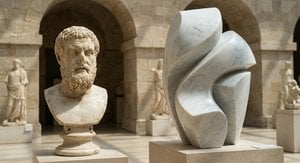
The Enduring Allure of Marble in Art History: From Classical Sculpture to Modern Abstraction
Explore the captivating history of marble sculpture from ancient Greece to modern art. Discover renowned artists like Canova & Michelangelo, carving techniques, and investment insights at ArtsDot.

The Enduring Form: Sculpture Across History, Technique & Emotional Resonance
Explore the rich history of sculpture with ArtsDot. Discover key techniques, influential artists & investment potential for discerning collectors. Expert insights into valuing and collecting timeless masterpieces.

Bronzeskulpturers Mestre: 10 Værker der Ændrede Kunsthistorien | ArtsDot
Oplev de 10 mest legendariske bronzeskulpturer, der har formet kunsthistorien! Fra Rodin til Vigeland – lær historierne bag mesterværkerne og find inspiration til din indretning. Køb museumskvalitets reproduktioner på ArtsDot.com.

Barbara Hepworth: A Sculptural Dialogue with Form, Space & the Human Condition
Explore the profound world of Barbara Hepworth's sculpture. Discover her artistic evolution, iconic forms, and lasting influence on modern art. A guide for collectors & enthusiasts.

Geometrisk Abstraktion: Top 10 Kunstværker der Definerede Bevægelsen | ArtsDot.dk
Oplev de 10 mest ikoniske værker inden for geometrisk abstraktion! Fra Kandinsky til Mondrian – lær historierne bag disse banebrydende kunstnere og deres farverige malerier. Find museumskvalitets reproduktioner & inspiration til din indretning på ArtsDot.dk.


