

 Se i rummet
 Del som kort
 Del
Del
 Detaljer
 Guide
Guide

 Download
 Lignende værker
 Røntgenundersøgelse
 Diasshow
 Q&A
Q&A Statistikker
The Baptism

- 122.0 x 150.0 cm


 Vis mere
Kunstværket vist på denne side er beskyttet af ophavsretsloven, hvilket betyder, at vi ikke lovligt kan skabe eller sælge en identisk reproduktion. Denne beskyttelse håndhæves i henhold til internationale aftaler som f.eks. den Bernerkonventionen og af nationale love, herunder de bestemmelser, der er fastlagt i Amerikansk ophavsretslov - Titel 17.
Denne metode overholder fuldt ud ophavsretsreglerne, da den ikke indebærer kopiering eller duplikering af det beskyttede kunstværk. I stedet er der tale om en kreativ nytolkning – et nyt maleri, som er inspireret af det oprindelige, men ikke identisk med det.
Giclée / Kunsttryk
Giclée- eller lærredstryk i museumskvalitet med hurtig produktion og fleksible muligheder for finish. ( Køb håndmalet maleri Skift til digitalt billede)




P118B Dkr10

P118H Dkr10

P118W Dkr10

P438Z Dkr10

P508JH Dkr12

P508YH Dkr12

P805H Dkr10

P805Z Dkr10

P919BZ Dkr10

P919G Dkr10

P919XJ Dkr10

P959ZH Dkr10

P968JZ Dkr12

W106C Dkr8

W218G Dkr10

W218JH Dkr8

W218Y Dkr10

W307PJ Dkr10

W316G Dkr10

W316PJ Dkr8

W316Y Dkr10

W398PJ Dkr8

W4111J Dkr10

W500HY Dkr15

W500JH Dkr15

W692G Dkr12

W849H Dkr8

W940BG Dkr15

W953PJ Dkr8




Vælg mellem vores forudindstillede størrelser, der matcher kunstværkets originale proportioner.

Indtast den bredde og højde, du har brug for, så det passer til din ramme eller din væg. Et print kan kun beskæres, aldrig gøres større end selve billedet, så en størrelse med et andet format vil medføre, at dele af motivet går tabt. Vi sender dig en digital mockup til godkendelse, før vi printer noget. Billedet vist på denne side viser ikke den faktiske beskæring — det er kun mockuppen, der gør.
Verdensomspændende levering () på 2 uger i stedet for de sædvanlige 4/5 uger. (2 november)

Gratis ekspresforsendelse til hele verden

Lærred af linned i høj kvalitet

Fuld transportforsikring

Garanti for refusion af told og importafgifter

Garanti for præcis farvegengivelse

100 dages returret ved fabrikationsfejl

100% fuld returret

Mængderabat ved flere køb
 Glasmulighed er kun tilgængelig i størrelser under 110 cm

The Baptism
Giclée / Kunsttryk
Størrelse på reproduktion
-


Samlet pris
Dkr 419
A Moment Frozen in Time
In The Baptism, Antonio Donghi achieves something truly extraordinary: he captures a fragment of middle-class life and suspends it in a state of eternal, quietude. The painting presents a family scene featuring three central figures, where a man in a suit and tie and a woman cradling a baby are set within a space that feels simultaneously real and profoundly abstract. There is a haunting quality to the composition; the individuals appear almost as immobile wax statues on a podium, their expressions neutral and strangely detached from the joyous occasion they are celebrating. This sense of emotional distance creates a tension between the sacred nature of the ritual and the stoic, almost frozen presence of the participants, as if they are waiting for a ritual photograph that will never quite capture their true essence.
< p>The atmosphere is charged with an unreal lack of familiarity, driven by an adamant painting style and a fixed, absorbed light that illuminates the scene with surgical precision. Donghi’s mastery lies in his ability to use light not just to reveal form, but to create a sense of mystery. The figures are set in a minimal environment that strips away the distractions of the modern world, leaving only the essential elements of the event. This deliberate reduction of detail allows the viewer to focus on the subtle interplay of texture and shadow, making the painting feel less like a mere depiction of an event and more like a dreamlike meditation on existence itself.The Artistry of Neoclassical Precision
Technically, The Baptism is a triumph of the Neoclassical movement, showcasing Donghi’s refined ability to marry meticulous detail with a powerful, structured composition. His attention to the clothing of the subjects—a skill perhaps inherited from his father, a fabric dealer—serves a deeper purpose than mere ornamentation; it functions as a way to socially characterize the roles of those portrayed. Every fold in the fabric and every sharp line in the attire contributes to the painting's sense of social order and permanence. The spatial clarity is remarkable, with each element occupying its place with absolute certainty, reminiscent of the architectural stability found in the works of Renaissance masters like Piero della Francesca.
For the discerning collector or interior designer, this work offers a unique aesthetic value. It possesses a Magical Realism that avoids the chaotic energy of much modern art, offering instead a sense of profound, meditative calm. The painting’s ability to evoke both the mundane and the monumental makes it a captivating centerpiece for any sophisticated space. Whether one is drawn to its smooth, polished surfaces or its enigmatic, quiet dignity, The Baptism stands as a testament to the power of stillness. It invites the observer to pause, to look closely, and to find beauty in the silent resonance of a single, captured moment.
Spørgsmål og svar
Hvilken epoke stammer "The Baptism" fra?
"The Baptism" stammer fra Modern-æraen.
Hvordan balancerer "The Baptism" lys og mørke?
"The Baptism" af Antonio Donghi er registreret med en lysstyrke på shadow og en luminans på Dark.
Hvor høj er kontrasten i "The Baptism" af Antonio Donghi?
Kontrastniveauet i "The Baptism" af Antonio Donghi er Balanced.
Lignende kunstværker


Kunstnerbiografi
Antonio Donghi: En Stilren Maestro af Neoklassicismen
Antonio Donghi (født 16 marts 1897 i Rom – død 16 juli 1963 i Rom) var en italiensk maler, der fik internationalt ry for sine præcise og roligere gengivelser af hverdagslivet og landskaberne udført i en distinkt neoklassicistisk stil. Han blev født i Rom og begyndte sin kunstneriske rejse på Instituto di Belle Arti før han tjente under Første Verdenskrig, hvor erfaringerne dybtgående formede hans verdensbillede og kunstneriske sanselighed. Donghis særegne tilgang – præget af rolige kompositioner, nøjagtig rumrepræsentation og diskret elegance – etablerede ham som en af Italiens førende figurer inden for neoklassicismen, der blomstrede i 1920’erne.Tidlig Liv og Kunstnerisk Uddannelse
Donghis formelle uddannelse begyndte på Instituto di Belle Arti i Rom hvor han udviklede sine færdigheder i tegning og maleri under indflydelse af dygtige undervisere. Denne grundlæggende træning gav ham disciplin og en forståelse for klassiske idealer – egenskaber der ville gennemstrømme hele hans oeuvre. Efter militærtjeneste under Første Verdenskrig fortsatte Donghi sin kunstneriske søgen i Firenze og Venedig, hvor han omgavet af den pulserende intellektuelle atmosfære af disse byer og absorberede inspiration fra mestere som Piero della Francesca og Henri Rousseau. Disse formative år udviklede en følsomhed for form og farve, der ville blive kendetegnende for hans senere arbejde.Neoklassicismen og Kunstnerisk Stil
Donghis kunstneriske karriere tog fart under neoklassicismen, hvilket søgte at genoplive den storhed og klarhed af antikken samtidig med at bevare en moderne følelse. Kritikere bemærkede ligheder mellem Donghis malerier og dem af Seurat og roste hans evne til at fange subtile nuancer af følelser og atmosfære – en egenskab, der adskilte ham fra mange af sine samtidige. Donghis teknik var bemærkelsesværdigt konsistent: han foretrak omhyggelig penselarbejde, hvilket gav mulighed for imponerende rumdybde og tonal graduer. Hans motiver drev sig ofte omkring scener fra det landlige liv – kværkøkkenarbejdere, cirkusartister og musikere – gengivet med en stille værdighed og diskret realismen. På linje med mange andre kunstnere var Donghi særligt interesseret i detaljer og præcision, hvilket førte til et arbejde hvor fokus lå på enkelhed og naturlig skønhed. Hans stil blev karakteriseret af klare linjer og rene former, hvilket efterlignede klassiske modeller og fremhævede symmetri og orden.Påvirkninger og Inspirationskilder
Donghi fandt inspiration i både italiensk kunsthistorie og europæisk kunstnerliv. Han studerede intensivt værker af Piero della Francesca og Henri Rousseau, hvilket førte til hans egen stil og teknik. Hans interesse for klassiske idealer var tydelig i hans brug af lys og farve samt hans kompositioner, hvor han søgte at efterligne klassiske skoler og udtrykke menneskelighed med ærlighed og følsomhed. Han blev også påvirket af kunstnere som Georges Seurat og Claude Monet, hvis teknikker fokuserte på atmosfærisk perspektiv og brug af små penselstrøg til at skabe dybe tonal graduer. Disse kunstnere var blandt Donghis største inspirationskilder og bidrog til hans evne til at skabe værker, der både var teknisk præcise og følelsesmæssigt resonerende.Bemærkelsesværdige Arbejder og Anerkendelse
Donghi opnåede betydelig succes som kunstner under sin levetid og blev rost af kritikere og offentligheden for hans evne til at skabe værker, der var både æstetisk imponerende og psykologisk indsigtfulde. Han vandt første præmie ved International Exhibtion i Carnegie Institute i Pittsburgh i 1927 og cementerede dermed sin position blandt Italiens mest fremtrædende kunstnere inden for neoklassicismen. Denne pris gav ham mulighed for at udstille sit arbejde bredt og blev fejret af kunstneriske kredse i hele Europa. Hans største værker inkluderer "Lavagnino" fra 1926, hvor han udførte et studie efter Piero della Francesca og Henri Rousseau, samt "Det Store Kanal og Salutationskirken" fra 1930, hvor han præsenterede en ikonisk gengivelse af Venediges kanalidyl med stor præcision og varme. Hans kunst blev placeret i nogle af Italiens største museer og galerier og er fortsat et fokuspunkt for kunsthistorikere og kunstelskere verden over. Donghi efterlod sig et betydeligt kunstnerisk arv, hvor hans stille og præcise stil vil fortsætte med at fascinere publikum i mange år fremover. Hans værker repræsenterer en unik fusion af klassiske idealer og moderne teknikker og er et eksempel på italiensk kunstnerskabs højeste niveau.
Antonio Donghi
1897 - 1963 , Italien
Kort om kunstneren
- Artistic Movement Or Style: Neoclassicism
- Artists Or Movements Influenced By This Artist: ['Naive Art']
- Artists Who Influenced This Artist:
- Henri Rousseau
- Georges Seurat
- Date Of Birth: March 16, 1897
- Date Of Death: July 16, 1963
- Full Name: Antonio Donghi
- Nationality: Italien
- Notable Artworks:
- The Baptism
- Woman in a Cafe
- Place Of Birth: Rome, Italien
Relaterede artikler

The Enduring Legacy of Family Portraiture: A Historical & Artistic Exploration
Explore the rich history of family portraiture with ArtsDot. Discover artistic styles, symbolism & collecting insights. Commission a custom oil painting or appraise your existing artwork today!

Raphaels 25 Mesterværker: Kunst, Historie & Inspiration til Dit Hjem | ArtsDot
Oplev Raphaels 25 mest ikoniske værker! Dyk ned i renæssancens kunsthistorie, fra 'Skolen i Athen' til smukke madonna-malerier. Find inspiration & køb museumskvalitets reproduktioner på ArtsDot.com.
Neoklassicismens Mestre: Top 10 Kunstværker der Definerede en Æra | ArtsDot.com
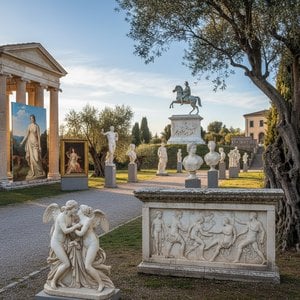
Oplev neoklassicismens storhedstid! Dyk ned i historien bag 10 ikoniske kunstværker af David, Ingres og andre mestre. Find inspiration til din indretning & køb museumskvalitets reproduktioner på ArtsDot.com. Udforsk samlingen online!

Claude Monet: Top 25 Mesterværker – Impressionisme til Dit Hjem | ArtsDot.dk
Oplev Claude Monets 25 mest ikoniske malerier! Fordyb dig i impressionismens verden, fra vandliljer til solnedgange. Find inspiration og køb museumskvalitets kunsttryk på ArtsDot.com – perfekt til dit hjem. Udforsk samlingen online!

Familieportrættets Udvikling: En Krønike af Personlig Kunst og Generationer
Oplev familieportrættets udvikling og bestil et unikt, håndmalet portræt hos dygtige kunstnere. Bevar minder for generationer – invester i personlig kunst af høj kvalitet.