


 Se i rummet
 Send
Send Del
Del
 Detaljer
 Studieguide til kunstværker

 Download
 Lignende værker
 Røntgenundersøgelse
 Se diasshow
 Statistik
Study for Dance


 Læs mere
Giclée / Kunsttryk
Giclée- eller lærredstryk i museumskvalitet med hurtig produktion og fleksible muligheder for finish. ( Bestil håndmalet reproduktion Skift til digitalt billede)




P118B Dkr10

P118H Dkr10

P118W Dkr10

P438Z Dkr10

P508JH Dkr12

P508YH Dkr12

P805H Dkr10

P805Z Dkr10

P919BZ Dkr10

P919G Dkr10

P919XJ Dkr10

P959ZH Dkr10

P968JZ Dkr12

W106C Dkr8

W218G Dkr10

W218JH Dkr8

W218Y Dkr10

W307PJ Dkr10

W316G Dkr10

W316PJ Dkr8

W316Y Dkr10

W398PJ Dkr8

W4111J Dkr10

W500HY Dkr15

W500JH Dkr15

W692G Dkr12

W849H Dkr8

W940BG Dkr15

W953PJ Dkr8




Vælg mellem vores forudindstillede størrelser, der matcher kunstværkets originale proportioner.

Indtast den bredde og højde, du har brug for, så det passer til din ramme eller din væg. Et print kan kun beskæres, aldrig gøres større end billedet, så en størrelse med en anden form vil miste en del af motivet. Vi sender dig en digital mockup til godkendelse, før vi printer noget. Billedet vist på denne side viser ikke den faktiske beskæring — det er kun mockuppen, der gør.
Verdensomspændende levering () på 2 uger i stedet for de sædvanlige 4/5 uger. (20 oktober)

Gratis ekspresforsendelse til hele verden

Lærred af linned i høj kvalitet

Komplet transportforsikring

Garanti for refusion af told og importafgifter

Garanti for autentisk farvegengivelse

100 dages returret ved fabrikationsfejl

100% fuld returret

Mængderabat ved flere køb
 Glasmulighed er kun tilgængelig i størrelser under 110 cm

Study for Dance
Giclée / Kunsttryk
Reproduktionsstørrelse
-


Samlet pris
Dkr 410
A Study in Fluidity: Alphonse Mucha’s ‘Study for Dance’
Alphonse Maria Mucha's “Study for Dance,” a pastel drawing of remarkable delicacy and dynamism, offers a captivating glimpse into the heart of Art Nouveau. Dating from around 1900, this piece transcends mere representation; it is an embodiment of movement, beauty, and the spirit of a burgeoning artistic era. The artwork’s immediate impact lies in its depiction of a nude woman – a recurring motif in Mucha's oeuvre – caught in a swirling, almost ecstatic pose, reminiscent of a dancer lost within her own rhythm. This isn’t a study for a grand salon painting; rather, it feels intensely personal, a concentrated exploration of form and emotion.
Style & Technique: The Essence of Art Nouveau
Mucha's distinctive style is immediately recognizable. “Study for Dance” exemplifies the flowing lines, organic forms, and decorative elements that defined Art Nouveau. The composition prioritizes graceful curves over rigid realism, creating a dreamlike atmosphere where perspective is subtly flattened to emphasize the figure’s movement. The pastel technique itself is crucial – layers of color are meticulously built up to achieve a velvety texture and luminous quality. Notice how loose brushstrokes contribute to the ethereal effect, while delicate linework defines the contours of the woman's body and the intricate details of the circular frame. The use of hatching and cross-hatching adds depth and dimension, particularly in rendering the folds of her dress, which appears to ripple with movement.
Symbolism & Composition
Beyond its aesthetic beauty, “Study for Dance” is rich in symbolic meaning. The swirling lines that dominate the composition represent fluidity – not just physical movement but also ideas and emotions. The ornate circular frame, a frequent element in Mucha’s work, suggests eternity or a celestial realm, elevating the figure to something almost divine. The warm color palette—dominated by reds, golds, and muted greens—evokes feelings of sensuality and warmth. Considering Mucha's influences – particularly his admiration for Gustave Moreau – we can see echoes of classical mythology and allegorical themes within this intimate study. The pose itself, with the woman’s arms outstretched, speaks to a yearning for freedom and expression, aligning perfectly with the core values of Art Nouveau.
Historical Context & Mucha's Legacy
Created during a period of immense artistic innovation, “Study for Dance” reflects the broader cultural shift towards embracing beauty, nature, and decorative arts. Mucha’s work was instrumental in establishing Art Nouveau as a dominant style, influencing designers, architects, and artists across Europe. His commissions for Parisian department stores and exhibitions helped to popularize his distinctive aesthetic. As a precursor to Cubism and other modern movements, Mucha's emphasis on flattened perspective and stylized forms paved the way for new approaches to representation. Studying “Study for Dance” allows us to appreciate not only Mucha’s individual genius but also his pivotal role in shaping the course of 20th-century art.
Spørgsmål & svar
Hvordan relaterer farverne i "Study for Dance" af Alphonse Mucha sig til værkets følelsesmæssige udtryk?
I "Study for Dance" ledsages en Ethereal følelse af Pastels farver.
Hvad er den farvemæssige identitet i "Study for Dance" af Alphonse Mucha?
Farveidentiteten i "Study for Dance" af Alphonse Mucha: en Pastels palet, domineret af Khaki (#dcd17e).
Viser "Study for Dance" stærke lys-mørke kontraster?
Lys-mørke-kontrasten i "Study for Dance" er registreret som Serene. Kontrast beskriver, hvor kraftigt lyse og mørke områder adskiller sig fra hinanden.


Om kunstneren
Alphonse Mucha: En Art Nouveau-legende fra Prag
Alphonse Maria Mucha, en kunstner hvis navn er synonymt med elegance og dekadens, blev født i den lille tjekkiske by Ivanačice i 1860. Hans barndom var præget af en stærk kærlighed til musik – han var en talentfuld fløjtenist – og et tidligt engagement i kunstnerisk udtryk. Selvom hans familie ikke havde råd til at finansiere en formel uddannelse, viste Alphonse fra ung alder en evne til at tegne og male, der hurtigt fangede opmærksomheden hos lokale handelsfolk. Denne tidlige anerkendelse førte til et tilbud om at studere på kunstakademiet i Prag, hvor han dog snart blev skuffet over de traditionelle metoder og besluttede at søge sin egen vej mod Paris, centrum for den spirende Art Nouveau-bevægelse.Paris og Sarah Bernhardt: En Karrierestart
I 1887 ankom Alphonse Mucha til Paris, en by fuld af muligheder og inspiration. Han begyndte at arbejde som assistent i et teaterdesignfirma, men det var hans samarbejde med den berømte skuespillerinde Sarah Bernhardt, der virkelig satte gang i hans karriere. I 1894 designede han plakaten til hendes forestilling *Gismonda*, og denne plakat blev en øjeblikkelig sensation. Dens flydende linjer, overdådige blomstermotiver og den idealiserede kvinde i centrum tiltrak opmærksomhed fra alle kanter, og Mucha blev hurtigt anerkendt som en af de mest lovende Art Nouveau-kunstnere i Frankrig. Denne succes førte til et langvarigt samarbejde med Bernhardt, hvor han skabte plakater til hendes mange forestillinger, hvilket cementerede hans stil og popularitet.Art Nouveau’s Æstetik: Blomster, Kvinder og Bevægelse
Mucha’s kunst er karakteriseret af en unik blanding af elementer fra Art Nouveau-bevægelsen. Han var kendt for sine elegante plakater, der ofte fremstillede idealiserede kvinder omgivet af blomster og andre organiske former. Hans stil var præget af flydende linjer, pastelfarver og en følelse af bevægelse – et forsøg på at fange den skønhed og harmoni, der findes i naturen. Han blev også kendt for sine dekorative paneler, der prydede bygninger og interiører, og for sine illustrationer til bøger og tidsskrifter. Hans arbejde var ikke blot æstetisk tiltalende, men også en form for social kommentar, hvor han ofte fremhævede de traditionelle værdier i det tjekkiske folk.Det Slaviske Epos: Et Nationalt Monument
I 1912 begyndte Mucha et af sine mest ambitiøse projekter: *Det Slaviske Epos*. Dette monumentale værk bestod af tyve store symbolistiske malerier, der fortalte historien om alle de slaviske folk i verden. Projektet blev støttet af Charles Richard Crane, en amerikansk filantrop, og det var et udtryk for Mucha’s patriotisme og hans ønske om at fremhæve den slaviske identitet. *Det Slaviske Epos* er ikke blot et kunstværk, men også en vigtig historisk dokumentation over de slaviske folks rige kulturarv. Det blev anset som en af Mucha’s mest betydningsfulde bidrag til kunsten og har siden været udstillet i hele verden.Arvet og Indflydelse
Alphonse Mucha døde i Prag i 1939, men hans kunst fortsætter med at inspirere kunstnere og designere over hele verden. Hans unikke stil har haft en enorm indflydelse på Art Nouveau-bevægelsen og har bidraget til at forme den moderne æstetik. Han er stadig kendt for sine elegante plakater, der er blevet ikoniske symboler på skønhed og elegance. Muchos arbejde er et vidnesbyrd om hans talent, hans passion og hans evne til at fange essensen af det menneskelige sind og sjæl. Hans kunst er en levende påmindelse om den tjekkiske kunstners betydning for kunsten og designet i det 20. århundrede.
Alphonse Mucha
1860 - 1939 , Tjekken
Hurtige fakta
- Artistic Movement Or Style: Art Nouveau
- Artists Or Movements Influenced By This Artist: ['Prokopcová']
- Artists Who Influenced This Artist:
- Renoir
- Moreau
- Date Of Birth: 15. juli 1860
- Date Of Death: 14. juli 1939
- Full Name: Alphonse Maria Mucha
- Nationality: Tjekkisk
- Notable Artworks:
- Slavisk Opstand
- Salon des Cent
- De slaviske episoder
- Place Of Birth: Brno, Tjekkiet
Relaterede artikler
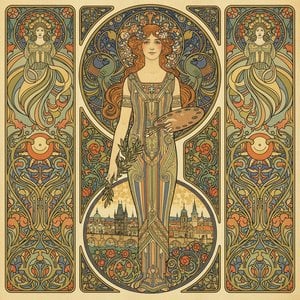
Alphonse Mucha: A Comprehensive Exploration of Art Nouveau's Master of Decorative Symbolism
Explore the life & art of Alphonse Mucha, master of Art Nouveau! Discover his iconic posters, stunning illustrations, and the monumental Slav Epic. A comprehensive guide for collectors & enthusiasts.

The Enduring Allure of the Nude: A Historical & Artistic Exploration of the Human Form
Explore the captivating history of nude art! Discover iconic paintings & artists from classical to modern eras. Uncover symbolism, techniques & find museum-quality reproductions at ArtsDot.

The Subtleties of Pastel: A Comprehensive Exploration of Technique, History & Emotional Resonance
Explore the captivating world of pastel art! Discover its rich history, Impressionistic masters like Degas, emotional power & unique techniques. Find museum-quality reproductions at ArtsDot.

The Eloquent Form: A Historical & Aesthetic Exploration of the Nude in Art
Explore the captivating history of the nude in art! From ancient Greece to modern masters, discover its evolving symbolism, techniques & enduring beauty. Expert insights for collectors and enthusiasts.

The Subdued Radiance of Pastel: Exploring Nuance & Emotion in Art
Explore the nuanced world of pastel art! Discover its history, techniques & emotional power with expert insights from ArtsDot.com. Find museum-quality reproductions and learn about collecting this delicate medium.