


 Odeslat
 Sdílet
 Podrobnosti
 Průvodce

 Stáhnout obrázek
 Podobné kousky
 Slideshow
 Statistiky
Mask


 Přečíst si více
Giclée / Umělecký tisk
Giclée nebo plátěný tisk muzeální kvality s rychlou výrobou a širokou nabídkou povrchových úprav. ( Objednat ručně malovanou reprodukci Přepnout na digitální verzi obrazu)




































Vyberte si z našich přednastavených velikostí, které odpovídají původním proporcím díla.

Můžete zadat vlastní rozměry tak, aby výtvor odpovídal konkrétnímu rámu nebo prostoru. Pokud zvolená velikost nebude odpovídat poměru stran původního obrazu, dílo buď ořížeme, nebo obraz rozšíříme pomocí zrcadlového efektu či jednobarevného okraje. Před zahájením výroby vám bude zaslán digitální náhled k schválení.
Mějte prosím na paměti, že náhled na obrazovce neodráží skutečné oříznutí nebo rozšíření. Pouze digitální náhled přesně zobrazí finální kompozici.
Ačkoliv jsou k dispozici i vlastní rozměry, pro zachování původních proporcí doporučujeme vybrat si rozměr z předdefinovaného seznamu.
Celosvětové doručení () do 2 týdnů namísto standardních 4/5 týdnů. (25 září)

Zdarma celosvětová expresní doprava

Vysoce kvalitní lněné plátno

Úplné pojištění přepravy

Záruka vrácení celního poplatku

Záruka věrného barevného shodu

100dení lhůta pro vrácení zboží (pouze při vadách výroby)

100% garance vrácení peněz

Sleva při více objednávkách
 Skleněná varianta je dostupná pouze u rozměrů menších než 110 cm

Mask
Giclée / Umělecký tisk
Velikost reprodukce
-


Celková cena
$ 62
The Silent Presence of Form
In the quietude of modern sculpture, few works command the room with as much understated power as Barbara Hepworth’s “Mask,” created in 1928. This piece is not merely an object to be viewed; it is an experience to be felt. At first glance, the viewer is met with a deceptively simple geometric shape—a soft, oval form that seems to float within its wooden frame. Yet, as one lingers, the sculpture reveals a profound depth, inviting a meditative dialogue between the observer and the stone. Hepworth, a titan of British Modernism, possessed an unparalleled ability to distill the complexities of human emotion into the purest essence of organic abstraction.
The sculpture’s physical presence is defined by its exquisite material choice: alabaster. This medium provides a milky, ethereal translucence that allows light to penetrate the very heart of the stone, creating an inner glow that breathes life into the inanimate. The surface is a masterclass in tactile precision, where meticulous polishing and grinding have achieved a smooth, luminous finish, yet subtle irregularities remain to remind us of the earth from which it was carved. This interplay of light and texture creates a sense of movement within a static form, making the piece feel as though it is caught in a moment of eternal transformation.
A Dialogue Between Tradition and Modernity
To understand “Mask,” one must look to the historical currents that shaped Hepworth’s vision. Emerging from the vibrant artistic landscape of the early 20th century, Hepworth was deeply influenced by Surrealist thought and the burgeoning movement toward abstraction. While her contemporaries often sought to break entirely from the past, Hepworth found inspiration in the ancient. The title itself evokes the primal significance of ceremonial masks—objects used throughout human history to facilitate ritual, disguise, and spiritual transition. By blending these ancestral echoes with a modern, geometric sensibility, she created a work that feels both timeless and avant-garde.
The sculpture serves as a bridge between the seen and the unseen. In its carved features, there is a haunting quality—a subtle tension between concealment and revelation. It asks the viewer to contemplate what lies beneath the surface of our own identities. For the collector or the interior designer, this piece offers more than mere decoration; it provides a focal point for intellectual curiosity and emotional reflection. Whether placed in a sunlit gallery or a sophisticated contemporary living space, “Mask” acts as an anchor of serenity, its silent strength capable of transforming the atmosphere of any environment.
The Essence of Modernist Elegance
For those seeking to curate a collection that celebrates the pinnacle of 20th-century sculpture, a high-quality reproduction of this masterpiece offers an unparalleled opportunity. The beauty of Hepworth’s work lies in its ability to harmonize with diverse interior aesthetics—from the minimalist rigor of modern architecture to the warm, organic textures of mid-century design. Owning a piece that captures the spirit of Unit One and the legacy of St Ives is an invitation to live alongside history.
A reproduction of “Mask” allows the subtle play of light and the profound stillness of Hepworth’s vision to inhabit your personal space. It is a tribute to the enduring power of form, a celebration of the artist's ability to find the infinite within the finite, and a timeless addition for anyone who finds beauty in the quiet, powerful language of abstraction.
Související díla


Biografie umělce
Barbara Hepworth: Pioneer of Organic Abstraction
Barbara Hepworth (1903–1975) stands as one of the most influential figures in British modern sculpture, a sculptor whose groundbreaking approach fundamentally reshaped artistic expression during the interwar years and beyond. Born Jocelyn Barbara Hepworth in Wakefield, Yorkshire, her formative years were marked by an early fascination with natural forms—particularly the rugged landscapes of her native Yorkshire—which would become central to her artistic vision. Her father, Herbert Hepworth, was a civil engineer for the West Riding County Council, fostering a practical sensibility alongside an appreciation for geometric precision.- Early Education & Influences: Hepworth’s education at Wakefield Girls' High School instilled in her a belief in the importance of intellectual curiosity and artistic exploration. Notably, she befriended Henry Moore during her studies at Leeds School of Art, forging a collaborative relationship that would endure throughout their careers. This connection to Moore—a fellow devotee of exploring natural forms through abstraction—proved pivotal in shaping Hepworth’s aesthetic sensibilities.
- Royal College of Art & Formal Experimentation: Hepworth's enrollment at the Royal College of Art in 1921 represented a decisive step toward establishing herself as an artist. There, she honed her sculptural skills and embraced the burgeoning modernist movement, experimenting with techniques like direct carving—a method championed by Skeaping—that prioritized working directly with raw materials to achieve organic forms.
Marriage & Artistic Partnership with Ben Nicholson
Her marriage to sculptor John Skeaping in 1925 solidified her artistic life, providing a supportive environment for collaborative endeavors and fostering a shared commitment to exploring the expressive potential of abstraction. The couple moved into Hampstead’s Mall studio in 1926, where Hepworth and Nicholson cultivated an intense creative dialogue that would define their artistic output for decades. Their relationship was marked by both intellectual stimulation and personal challenges, culminating in divorce in 1933. However, Hepworth continued her partnership with Nicholson until 1951, producing some of her most celebrated works during this period—including the monumental *Pierced Hemisphere I* and *Two Forms*, which embody the core principles of their artistic vision.The St Ives Period & Monumental Sculpture
Following World War II, Hepworth relocated to St Ives, Cornwall, where she established herself as a leading figure in the burgeoning St Ives School of Artists—a collective dedicated to capturing the essence of Cornish landscape and exploring the interplay between form and space. This period witnessed Hepworth’s artistic evolution toward larger-scale sculptures that responded directly to the environment, reflecting her profound connection with nature. Her masterpiece, *Winged Figure*, commissioned by John Lewis for Oxford Street, London, stands as a testament to her ambition and technical prowess—a towering aluminum sculpture that embodies the spirit of modernist abstraction while simultaneously honoring the beauty of the Cornish coastline.Legacy & Recognition
Barbara Hepworth’s contribution to modern art is undeniable. Her pioneering exploration of organic abstraction challenged conventional artistic norms, establishing a new aesthetic language characterized by sensual materiality and geometric precision. She received numerous accolades throughout her life—including Commander of the Order of the British Empire (CBE) in 1958—and was honored as Dame in 1965 for her enduring influence on art history. Today, Hepworth’s sculptures reside in prominent museums worldwide—most notably The Hepworth Wakefield—where they continue to inspire viewers and scholars alike, cementing her place as one of Britain's most revered artists."
Barbara Hepworthová
1903 - 1975 , Spojené království
Rychlé informace
- Artistic Movement Or Style: Modernisme
- Artists Or Movements Influenced By This Artist: ['Abstraction Création']
- Artists Who Influenced This Artist: ['Henry Moore']
- Date Of Birth: 10 janvier 1903
- Full Name: Jocelyn Barbara Hepworth
- Nationality: Britannique
- Notable Artworks:
- Oval Form
- Deux formes
- Place Of Birth: Wakefield, Angleterre
Související články
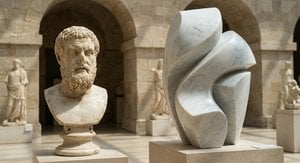
The Enduring Allure of Marble in Art History: From Classical Sculpture to Modern Abstraction
Explore the captivating history of marble sculpture from ancient Greece to modern art. Discover renowned artists like Canova & Michelangelo, carving techniques, and investment insights at ArtsDot.

The Enduring Form: Exploring Themes & Techniques in Sculpture Across Historical Periods
Explore the rich history of sculpture from ancient masterpieces to contemporary innovations. Discover key techniques, influential artists & investment potential for discerning art collectors.

The Enduring Form: Sculpture Across History, Technique & Emotional Resonance
Explore the rich history of sculpture with ArtsDot. Discover key techniques, influential artists & investment potential for discerning collectors. Expert insights into valuing and collecting timeless masterpieces.

10 legendárních bronzových soch, které změnily umění | ArtsDot
Objevte 10 legendárních bronzových soch od Michelangela, Rodina a dalších mistrů! Ponořte se do historie umění, technik a příběhů za těmito nadčasovými díly. Najděte inspiraci pro váš interiér s ArtsDot.com – repliky nejvyšší kvality.

Barbara Hepworth: A Sculptural Dialogue with Form, Space & the Human Condition
Explore the profound world of Barbara Hepworth's sculpture. Discover her artistic evolution, iconic forms, and lasting influence on modern art. A guide for collectors & enthusiasts.


