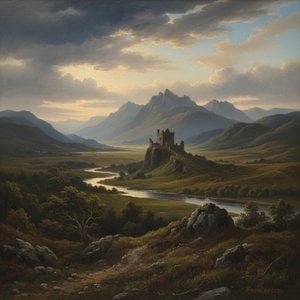
William York MacGregor: Pioneer of Scottish Landscape Painting
William York MacGregor (1855-1923) stands as a cornerstone figure in the Glasgow School, arguably its most celebrated landscape painter and one whose innovative approach to plein air painting profoundly shaped the artistic landscape of Scotland. Born in Edinburgh, MacGregor’s early life was marked by familial hardship – his father died when he was young, leaving him to care for his mother and siblings. Despite these challenges, Macregor possessed an unwavering passion for art from a formative age, nurtured by visits to London's Tate Gallery where he encountered the Impressionists firsthand. This encounter proved pivotal in shaping his artistic vision.- Early Influences: MacGregor’s initial training encompassed traditional academic instruction at Edinburgh College of Art, grounding him in classical techniques. However, it was the burgeoning Impressionist movement spearheaded by Monet and Renoir that truly captivated him. He absorbed their emphasis on capturing fleeting moments of light and color, rejecting the meticulous detail favored by earlier generations.
- Glasgow School Formation: MacGregor joined Robert Greenlees and John Angus Campbell in establishing the Glasgow School around 1883. This collective championed a distinctly Scottish aesthetic—a blend of Realism and Impressionistic techniques—that sought to depict the rugged beauty of Scotland’s highlands and lochs with unprecedented vibrancy.
MacGregor's Artistic Style & Technique
MacGregor’s distinctive style was characterized by a masterful command of color and light. Unlike many of his contemporaries who adhered to studio-based methods, MacGregor embraced plein air painting—working directly from nature—a revolutionary practice at the time. He meticulously observed atmospheric conditions, painstakingly mixing pigments to reproduce subtle tonal variations and capturing the ephemeral effects of sunlight on water surfaces and heather moorlands. His canvases pulsate with an immediacy that distinguishes them from more formally rendered landscapes.- Notable Paintings: MacGregor produced a prolific oeuvre encompassing over 300 paintings, many of which are housed in prominent Scottish institutions including the National Galleries of Scotland and Kelvingrove Art Gallery and Museum. Among his most celebrated works include “The Loch” (1895), “Ben Nevis” (1897) and “Heather Moorland” (1903). These paintings exemplify his ability to convey not merely visual representation but also emotional resonance.
- Composition & Color Palette: MacGregor’s compositions often employed asymmetrical arrangements, creating dynamic visual interest. He favored a palette dominated by muted greens, blues, and browns—colors derived from the Scottish landscape—but skillfully punctuated with splashes of vibrant hues to heighten expressive impact.
Legacy & Historical Significance
William York MacGregor’s contribution to Scottish art history extends far beyond his individual paintings. He served as a mentor and inspiration to younger artists, fostering the development of a distinctive Glasgow School aesthetic that endured for decades after his death. His pioneering use of plein air painting established a precedent for subsequent generations of Scottish landscape painters and solidified the Glasgow School's reputation as one of Britain’s foremost artistic movements. MacGregor’s unwavering dedication to capturing the spirit of Scotland—its dramatic landscapes, its atmospheric conditions, and its profound connection to nature—continues to resonate with audiences today.- Influence on Subsequent Artists: Artists like George Leslie Pearce and Francis Grant benefited greatly from MacGregor's guidance, adopting his techniques and furthering the Glasgow School’s expressive vision.
问答详情
我可以通过色谱来探索 William York Macgregor 的作品吗?
William York Macgregor 的 色彩索引 是一个按色彩对艺术家作品进行分类整理的页面。
William York Macgregor 的创作时期属于哪个历史阶段?
William York Macgregor 的创作时期处于 19th Century 时期。这一时期确立了艺术家在历史中的地位。
是否有关于William York Macgregor作品的3D虚拟展厅巡览?
您可以进行虚拟参观:William York Macgregor 的 3D 博物馆 页面在三维画廊中展示了艺术家的作品。