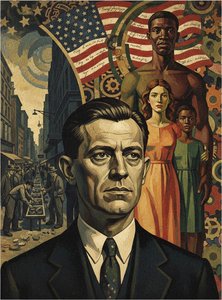
The Legacy of Paul E. Harney: A Master of the Munich School Influence
Born in the vibrant atmosphere of New Orleans on October 21, 1850, Paul Edward Harney Jr. emerged as a significant figure in the American art landscape of the late nineteenth and early twentieth centuries. His journey from the southern United States to the prestigious academies of Europe reflects a profound dedication to the classical traditions of fine art. After his family relocated to St. Louis during his youth, Harney began his artistic apprenticeship under notable masters such as Alban Jasper Conant and James Reeve Stuart. These early mentors, steeped in the tradition of portraiture, provided him with a foundational understanding of light and character that would later define his mature style.
The evolution of Harney’s technique was deeply shaped by his rigorous academic training across two continents. His time at the National Academy of Design in New York City allowed him to absorb the burgeoning American artistic sensibilities, but it was his period of study at the Royal Bavarian Academy of Fine Arts in Munich that truly transformed his aesthetic vision. Immersed in the teachings of Barth and Lindenschmit, Harney embraced the hallmarks of the Munich School. This influence is most palpable in his mastery of a dark, muted, and earthy palette, which lent a sense of gravity, depth, and psychological realism to his compositions.
A Versatile Vision: From Portraits to Pastoral Scenes
While Harney was celebrated for his technical precision, his artistic repertoire was remarkably diverse, spanning various genres that captured both the dignity of man and the quiet beauty of nature. He gained particular renown as a portrait painter, an art form in which he was both adept and highly sought after by the social elite. His ability to capture the essence of his subjects through the somber, dramatic lighting characteristic of his German training made his work a staple in many distinguished St. Louis homes.
Beyond the formal confines of portraiture, Harney possessed a keen eye for the charm of everyday life and the natural world. His creative output included:
- Genre Paintings: Evocative canvases depicting monks and intimate fireside scenes that invited viewers into moments of quiet contemplation.
- Naturalistic Sketches: Highly detailed and charming studies of poultry, showcasing his ability to find artistry in the mundane.
- Academic Instruction: A commitment to passing on his knowledge through his long tenure as a faculty member and Director of Art at Shurtleff College.
A Pillar of the St. Louis Artistic Community
Harney’s significance extended far beyond the canvas; he was a cornerstone of the Midwestern art community. His life was characterized by a dual devotion to creation and education. As a professor, he helped shape the next generation of American artists, ensuring that the classical techniques he mastered in Munich would endure in the United States. His leadership roles, including his involvement with the St. Louis Artists' Guild and the Society of Western Arts, solidified his position as a foundational figure in the regional art movement.
Even as his career took him from Alton, Illinois, to the prestigious St. Louis School of Fine Arts at Washington University, Harney remained a beloved figure known for his wit, humor, and storytelling prowess. When he passed away in 1915, he left behind a legacy of technical excellence and a profound contribution to the cultural fabric of the American Midwest. His work remains a testament to a period when the rigorous traditions of European academies met the burgeoning spirit of American artistry.
问答详情
Paul E. Harney 来自哪里?
Paul E. Harney 出生于 United States。
我可以通过色调来浏览 Paul E. Harney 的作品吗?
您可以在Paul E. Harney的按色调浏览页面上,按色调浏览其作品。
在哪里可以浏览 Paul E. Harney 的全部作品?
您可以在 Paul E. Harney 的 全部作品 页面上浏览其在 本站 上的所有作品。
如何按特定主题查找 Paul E. Harney 的作品?
您可以通过艺术家关键词分类页面,按关键词探索Paul E. Harney的作品。每个关键词都汇集了相关的艺术品。