A Legacy Forged in Lacquer: The World of Oanh Phi Phi
Born in Houston, Texas, in 1979, Phi Phi Oanh embodies a fascinating intersection of cultures—a Vietnamese heritage deeply interwoven with an American upbringing. This duality isn’t merely biographical; it is the very foundation upon which her compelling artistic practice rests. Oanh's journey began with formal training at Parsons School of Design, culminating in a BFA in 2002, followed by a Masters in Art and Investigation from the Universidad Complutense de Madrid in 2012. However, it was a Fulbright Grant in 2004 that proved pivotal, sending her to Hanoi to immerse herself in the ancient art of lacquer painting—a medium that would not only define her aesthetic but also become a conduit for exploring personal and collective histories.
The Revival of Són Mài
Vietnamese lacquer, known as són mài, possesses a rich and complex past. Originally used to adorn temples and palaces, it underwent a significant transformation during the 20th century, becoming a powerful tool for artistic expression and national identity. Oanh’s work isn't simply about *using* lacquer; it’s about actively participating in its ongoing evolution. She sees herself as continuing a process of “acculturation,” blending traditional techniques with contemporary materials and formats to push the boundaries of what lacquer can be—both sculpturally and conceptually. This is not preservation, but rather a dynamic reimagining.
Meditative Spaces and Cultural Hybridity
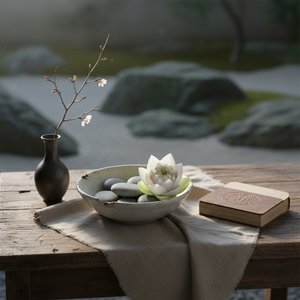
Oanh’s art frequently evokes a sense of quiet contemplation, creating “pictorial installations of evocative meditative spaces.” These aren't literal representations of places, but rather carefully constructed environments that resonate with memory and emotion. She masterfully reconfigures culturally specific signs and symbols—often drawn from Vietnamese history and ritual—to create works that are both familiar and unsettlingly new. This deliberate juxtaposition invites viewers to question their own cultural assumptions and explore the complexities of identity. Her pieces often feel like fragments of a dream, imbued with a haunting beauty and a sense of longing.
Major Achievements and International Recognition
Oanh’s dedication to her craft has garnered significant international recognition. She has exhibited extensively across Asia, Europe, and the Americas, including notable shows at the National Gallery Singapore, Kadist in San Francisco, and participation in the prestigious 10th Asia Pacific Triennial of Contemporary Art (APT10) in Brisbane. Her monumental installation *Specula*, featured in the 2013 Singapore Biennale, demonstrated her ability to create immersive environments that challenge conventional notions of space and perception. More recently, her inclusion in APT10 solidified her position as a leading voice in contemporary Vietnamese art.
Historical Significance and Future Directions
Phi Phi Oanh’s work is significant not only for its aesthetic qualities but also for its contribution to the broader discourse surrounding craft, cultural identity, and artistic innovation. She challenges the traditional boundaries between painting, sculpture, and installation, creating a unique visual language that speaks to the complexities of the modern world. Her commitment to preserving and reimagining són mài ensures that this ancient art form will continue to thrive for generations to come. Currently based in Hanoi, Oanh continues to explore new avenues within her practice, pushing the limits of lacquer while remaining deeply rooted in the rich cultural heritage that informs her vision.
问答详情
可以按心情浏览 Oanh Phi Phi 的作品吗?
艺术家的 情境空间 页面按氛围分类展示了 Oanh Phi Phi 的艺术作品。
Oanh Phi Phi 的创作时期属于哪个历史阶段?
Oanh Phi Phi 的创作活跃于 Contemporary 时期,这一时期确立了艺术家在艺术史上的地位。
Oanh Phi Phi 的艺术生涯是如何划分为不同时期的?
您可以在艺术家的 艺术历程 页面上查阅 Oanh Phi Phi 作品的编年史,其作品按创作顺序分章节依次呈现。
是否有关于Oanh Phi Phi所创作的所有主题的概览?
Oanh Phi Phi 的 主题索引 旨在通过主题对艺术家的作品进行分类索引。