The Artistic Evolution of Domenico Mondo
Born in Capodrise, Italy, Domenico Mondo was a painter who navigated the shifting tides of the late Baroque and Neoclassical eras. His early training was shaped by the teachings of Francesco Solimena, a foundation that led him to blend the tenebrism and solidity of Mattia Preti with a compositional freedom reminiscent of Luca Giordano. During the 1760s and 1770s, Mondo focused on small-format secular compositions characterized by a spontaneous vision of reality. His work from this period, such as Mercury Appearing to Dido, is noted for its chromatic refinement and Rococo preciosity. Even when commissioned for sacred subjects, such as the altarpiece for the confraternity of the Rosario, he often applied a pastoral and Arcadian interpretation to his religious themes.
Academic Leadership and Late Style
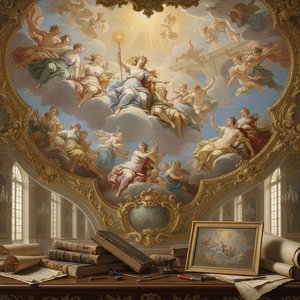
As his career progressed into the mid-1770s, Mondo transitioned toward the classical style of the late Rococo, experimenting with elements of Roman classicism. His significant contributions to the royal palace of Caserta included decorations for the Salone degli Alabardieri, such as the Apotheosis of the Bourbon Arms. In 1789, he achieved a position of high academic standing when he won the competition for the directorship of the Accademia di Belle Arti di Napoli, serving as co-director and later as sole director. While his later paintings remain largely unknown, his drawings—executed in pen, watercolour, and white lead—are distinguished by a frenetic draughtsmanship and a flowery style that closely approaches the quality of a finished painting.
问答详情
Domenico Mondo 出生于何时何地?
Domenico Mondo 于 1723 出生于 Capodrise。
Domenico Mondo 的作品传达了怎样的情绪?
艺术家的 情境空间 页面按氛围分类展示了 Domenico Mondo 的艺术作品。
Domenico Mondo 的创作时期属于哪个历史阶段?
Domenico Mondo 的创作活跃于 Early Modern 时期,这一时期确立了艺术家在艺术史上的地位。