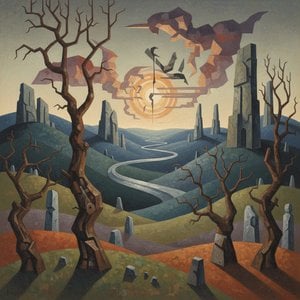
A Visionary of Light and Shadow
Born Hermann Wilhelm Brandt in Hamburg, Germany, the man who would become known to the world as Bill Brandt possessed a lens capable of capturing the profound complexities of the human condition and the stark beauty of the natural world. His journey was one of movement and transformation, shaped by the turbulent winds of early twentieth-century Europe. After spending much of his youth in a sanatorium in Switzerland, Brandt found himself drawn to the artistic pulse of Paris in the late 1920s. It was here, within the legendary studio of Man Ray, that he encountered the surrealist movement—a profound influence that would later manifest in his celebrated, distorted studies of the human form.
Moving to London in 1933, Brandt began a period of intense social documentation. Inspired by the socio-political writings of figures like George Orwell, he turned his camera toward the deep contrasts of the British class system. He traversed the landscapes of the United Kingdom, from the bustling West End and the sprawling suburbs to the gritty, industrial slums. His work for influential magazines such as Lilliput and Picture Post allowed him to capture the raw emotion of the era, documenting everything from the heavy atmosphere of the 1930s depression to the ghostly, blackout-shrouded streets of London during the Second World War.
The Evolution of a Photographic Master
As his career progressed, Brandt’s focus shifted from the social realism of the streets to more experimental and evocative territories. He became a master of the monochrome landscape, finding a haunting rhythm in the textures of the earth. His photographic studies of places like the Isle of Skye, the Giant's Causeway in Ireland, and the rugged terrain of Connemara showcase an incredible ability to use light and shadow to evoke isolation and timelessness. In these works, the landscape is not merely a setting but a character, imbued with a sense of drama and scale.
Beyond his landscapes and photojournalism, Brandt achieved significant renown for his later explorations of the human figure. His series Perspective of Nudes remains a cornerstone of twentieth-century photography, utilizing unique techniques—such as working with a pinhole aperture set to infinity—to create images that challenge perception and celebrate the sculptural qualities of the body. Through this diverse body of work, Brandt established himself as one of the most important photographers of his century, leaving behind a legacy defined by:
- Social Documentation: Capturing the stark realities of the British class system and industrial landscapes.
- Surrealist Influence: Utilizing distortion and shadow to explore the psychological depths of portraiture and the nude.
- Landscape Mastery: Creating evocative, textured monochrome studies of the British and Irish countryside.
- Technical Innovation: Experimenting with light, scale, and unconventional camera settings to redefine photographic boundaries.
问答详情
是否有关于Bill Brandt所创作的所有主题的概览?
主题索引 页面按主题对 Bill Brandt 的作品进行了分类索引。
是否有关于 Bill Brandt 的生平年表?
Bill Brandt 的 艺术历程 是一个随滚动条变化的艺术时间轴,按创作时期进行章节划分,并按时间顺序呈现艺术家的作品。
Bill Brandt 出生于何时何地?
Bill Brandt 于 1904 出生于 Hamburg。
目前目录中共有多少件 Bill Brandt 的作品可供浏览?
您可以在 全部作品 页面浏览由 Bill Brandt 创作的 27 件作品 件作品。