


 效果预览
效果预览
 分享
分享 分享
分享
 详情
详情 指南
指南

 下载
下载
 相似作品
相似作品 X射线
X射线 幻灯片播放
幻灯片播放 统计数据
统计数据Bamboo
 Ink On Paper
 1700
1700- Early Modern
 105.0 x 30.0 cm
 Hwajeong Museum
 展开详情
展开详情
手工油画复制品
由我们的艺术家按需定制,为您提供您所选尺寸及画框的布面手工油画。 ( 切换至版画销售渠道 切换至数字图像销售渠道)




P118B $10

P118H $10

P118W $10

P438Z $10

P508JH $12

P508YH $12

P805H $10

P805Z $10

P919BZ $10

P919G $10

P919XJ $10

P959ZH $10

P968JZ $12

W106C $8

W218G $10

W218JH $8

W218Y $10

W307PJ $10

W316G $10

W316PJ $8

W316Y $10

W398PJ $8

W4111J $10

W500HY $15

W500JH $15

W692G $12

W849H $8

W940BG $15

W953PJ $8




从与原作比例一致的预设尺寸中进行选择。

您可以输入自定义尺寸,以适配特定的画框或空间。如果所选尺寸与原图比例不符,我们将通过裁剪作品或添加手绘元素来扩展画面。数字样稿将在制作开始前发送给您确认。
请注意,屏幕预览无法准确反映实际的裁剪或扩展效果,只有样稿才能真实呈现最终的构图。
虽然我们提供定制尺寸服务,但为了保留原作比例,建议您从预设列表中选择尺寸。
下单后,ArtsDot.com 团队将通过电子邮件联系客户获取具体要求,并提供效果预览图。


 玻璃选项仅适用于110厘米以下的尺寸。

Bamboo
复制材质
复制品尺寸
-


最终总价
$ 263
相似艺术品


艺术家简介
John Michael Wright: A Baroque Portraitist of the Stuart Court
John Michael Wright, born in London around 1617 and passing away in 1694, remains a fascinating figure within English art history – an artist whose talent was often overshadowed by his time, yet now recognized as a significant voice during the late 17th century. Initially trained under George Jamesone in Edinburgh, Wright’s artistic journey took him to the heart of Europe, specifically Rome, where he immersed himself in the vibrant atmosphere of the Accademia di San Luca and cultivated connections with some of the era's most influential artists. This international experience profoundly shaped his style and perspective, contributing to a unique blend of influences that distinguished his work from many of his contemporaries. His life was inextricably linked to the tumultuous political landscape of England, particularly during the Restoration period, and he navigated this environment as a loyal servant – and secret sympathizer – to the Catholic Stuart court.- Early Influences: Wright’s initial training in Edinburgh exposed him to Scottish artistic traditions, while his time in Rome immersed him in the grandeur of Baroque painting, characterized by dramatic lighting, rich colors, and a focus on theatrical composition.
- Rome and the Accademia: Admission to the Accademia di San Luca was a remarkable achievement for a British artist at this time, signifying recognition of his skill and potential within the artistic community.
- The Cromwell Commission: His involvement in the 1655 commission to acquire artworks from the estates of Oliver Cromwell proved pivotal, providing him with valuable experience and access to a wider range of patrons.
Style and Technique: Realism and Baroque Influence
Wright’s style can be characterized as a sophisticated synthesis of realism and Baroque influence. He demonstrated a keen eye for detail, meticulously rendering fabrics, textures, and facial features with remarkable accuracy. However, he avoided slavish imitation, instead employing a looser brushstroke and a subtle use of color to create a sense of atmosphere and mood. His compositions often featured dynamic diagonals and asymmetrical arrangements, drawing inspiration from the theatricality of Baroque painting while maintaining a distinctly English sensibility. The influence of George Jamesone is also evident in his early works, particularly in their use of light and shadow, though Wright quickly developed his own unique voice, characterized by a greater emphasis on psychological realism.- Realism: Wright’s portraits were notable for their realistic portrayal of subjects, capturing subtle nuances of expression and individual character.
- Baroque Elements: He incorporated Baroque techniques such as dramatic lighting (chiaroscuro) and dynamic compositions to create a sense of drama and movement.
- Psychological Depth: Wright’s portraits were distinguished by their ability to convey the inner thoughts and emotions of his subjects, rather than simply presenting outward appearances.
The Stuart Court and Catholic Patronage
Wright's career was inextricably linked to the political and religious upheavals of 17th-century England. Following the Restoration, he found himself in a precarious position as a Catholic artist within a predominantly Protestant society. However, his loyalty to the Stuart court – both Charles II and James II – secured him patronage and recognition, despite the inherent risks associated with his faith. He became a favored portraitist of these monarchs, capturing their personalities and projecting an image of regal authority. His association with the Catholic elite provided him with access to influential circles and allowed him to continue producing art during a period when many other artists faced persecution or exile.Legacy and Recognition
Despite facing periods of neglect after his death, John Michael Wright’s work has experienced a significant revival in recent decades. Scholars now recognize him as one of the most important indigenous British portraitists of his generation, praising his unique blend of realism, psychological insight, and Baroque influence. His paintings are held by prestigious collections around the world, including those at Tate Britain and the Fitzwilliam Museum in Cambridge, testament to their enduring artistic merit. Wright’s story serves as a compelling reminder of the challenges faced by artists during times of political and religious turmoil, and his legacy continues to inspire appreciation for the rich diversity of English art history. His portraits offer a rare glimpse into the lives and minds of England's elite, providing valuable insights into the social and cultural dynamics of the Stuart era.
yu deok-jang
1694 - 1774 , South Korea
艺术家简介
- Artistic Movement Or Style: Baroque portraiture
- Artists Or Movements Influenced By This Artist: ['None known']
- Artists Who Influenced This Artist: ['George Jamesone']
- Date Of Birth: May 1617
- Date Of Death: July 1694
- Full Name: John Michael Wright
- Nationality: English
- Notable Artworks: ['Portrait of Mrs Salesbury']
- Place Of Birth: London, England
相关文章

Xie Zhiliu: A Legacy of Ink Wash Painting & Modern Chinese Literati Tradition
Explore the legacy of Xie Zhiliu, a master of Chinese ink wash painting & prominent figure in modern art. Discover his techniques, influences, and contributions to literati tradition. A guide for discerning collectors.

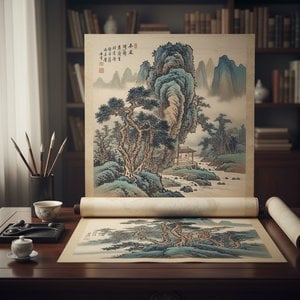
Pu Xinyu's 'Puru': A Legacy of Literati Painting & Emotional Resonance
Explore the captivating world of Pu Xinyu (Puru), the last great literati painter. Discover his imperial heritage, masterful ink wash techniques & enduring legacy – a valuable addition to any discerning art collection.

Yi Eungro: Bridging East & West in the Landscape of Korean Modernism
Explore the captivating world of Yi Eungro (Lee Ungno), a pivotal figure in Korean modernism. Discover his unique fusion of Eastern and Western artistic traditions, abstract masterpieces, and lasting legacy. A must-read for discerning art collectors.

Ephemeral Lines: Exploring Emotional Resonance in Ink Sketching Traditions
Explore the profound art of ink sketching! Discover techniques to express emotion, master line work, and cultivate artistic sensitivity. Learn from historical masters & unlock your creative potential.