实景预览
实景预览
 分享
分享 分享
分享
 详情
详情 指南
指南

 下载作品
下载作品
 相似作品
相似作品 X射线
X射线 幻灯片播放
幻灯片播放 问答
问答 统计数据
统计数据Easter Monday


 展开全文
展开全文
艺术微喷/版画
博物馆级艺术微喷或帆布版画,制作高效,并提供多种饰面选择。 ( 订购纯手工绘制画作 切换至数字图像销售渠道)




P118B ¥10

P118H ¥10

P118W ¥10

P438Z ¥10

P508JH ¥12

P508YH ¥12

P805H ¥10

P805Z ¥10

P919BZ ¥10

P919G ¥10

P919XJ ¥10

P959ZH ¥10

P968JZ ¥12

W106C ¥8

W218G ¥10

W218JH ¥8

W218Y ¥10

W307PJ ¥10

W316G ¥10

W316PJ ¥8

W316Y ¥10

W398PJ ¥8

W4111J ¥10

W500HY ¥15

W500JH ¥15

W692G ¥12

W849H ¥8

W940BG ¥15

W953PJ ¥8




您可以从与原作比例一致的预设尺寸中进行选择。

请输入您所需的宽度和高度,以适配您的画框或墙面。由于印刷品只能进行裁剪,无法超出原图尺寸,因此若比例不一致,画面的一部分将会被裁切。在正式印刷之前,我们会为您发送一份数字效果图供您确认。本页面显示的图片并非最终裁剪后的效果——只有效果图才能展示真实的裁剪情况。


 玻璃选项仅适用于110厘米以下的尺寸。

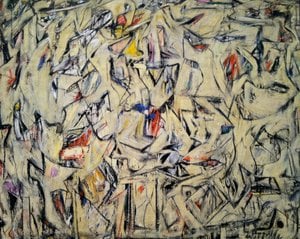
Easter Monday
艺术微喷/版画
复刻品尺寸
-


最终结算价
¥ 422
A Study in Contrast: De Kooning’s ‘Easter Monday’
Willem de Kooning's 1956 painting, “Easter Monday,” is not merely a depiction of faces; it’s an intensely psychological exploration rendered with the artist’s signature blend of aggression and vulnerability. The work immediately confronts the viewer with two figures, dramatically differentiated in scale and presence. One face, boldly positioned and adorned with a white hat, dominates the canvas, its gaze direct and seemingly challenging. This figure embodies a forceful assertion, a deliberate engagement that draws us into the painting’s turbulent emotional landscape. The other face, partially obscured and wearing spectacles, offers a quieter, more contemplative response – a subtle acknowledgement of the dominant presence. This juxtaposition immediately establishes a dynamic tension, reflecting perhaps the complexities of human interaction and the struggle for self-expression.
De Kooning's Abstract Expressionist Technique
Executed in oil on canvas, “Easter Monday” exemplifies de Kooning’s mastery of Abstract Expressionism. His technique is characterized by broad, gestural brushstrokes – thick impasto applied with a raw energy that suggests both control and unrestrained emotion. The painting isn't about precise representation; instead, it utilizes fragmented forms and distorted perspectives to convey feeling rather than objective reality. Notice the layering of paint, particularly around the prominent face, creating a sense of depth and texture that adds to the work’s visceral impact. De Kooning’s use of color is equally significant – muted tones punctuated by flashes of white and darker shades contribute to the painting's overall mood of unease and intensity. The horse heads, seemingly placed almost arbitrarily, further disrupt any potential for serene observation, adding another layer of unsettling symbolism.
Symbolism and Context within De Kooning’s Oeuvre
Created during a pivotal period in de Kooning’s career, “Easter Monday” reflects his ongoing exploration of the human figure – often rendered with a deliberately confrontational style. The painting's title, ‘Easter Monday,’ while seemingly straightforward, adds another layer of complexity. Easter, traditionally associated with rebirth and renewal, is juxtaposed with the raw emotional intensity of the scene. This tension speaks to de Kooning’s broader concerns about identity, alienation, and the anxieties of modern life. His work during this period was heavily influenced by Surrealism, particularly its exploration of the subconscious and dreamlike imagery, though he rejected the movement's emphasis on automatic drawing.
A Legacy of Emotional Intensity
“Easter Monday” stands as a powerful example of de Kooning’s ability to translate personal turmoil into universally resonant art. Its enduring appeal lies in its unflinching portrayal of human vulnerability and conflict. The bicycle, a symbol of freedom and movement, adds an element of irony to the composition, suggesting perhaps a futile attempt to escape internal struggles. This painting is more than just a reproduction; it’s a window into the mind of one of America's most influential artists – a testament to his relentless pursuit of emotional truth through bold, expressive brushwork. A hand-painted reproduction offers an unparalleled opportunity to experience the full force of de Kooning’s vision.
常见问题与解答
威廉·德·库宁 的《Easter Monday》 的创作年份是哪一年?
威廉·德·库宁 的《Easter Monday》创作于1956年。
威廉·德·库宁 的《Easter Monday》 在艺术史上的地位如何?
威廉·德·库宁 的《Easter Monday》 属于 Modern 时期的 Abstract Expressionism 流派。两者共同确立了该作品在艺术史上的地位。
威廉·德·库宁 的《Easter Monday》 的对比度有多强?
"Easter Monday" 的明暗对比度记录为 Statement。对比度描述了亮部与暗部之间的差异强度。
相似作品


艺术家简介
威廉·德·库宁的一生
1904年的鹿特丹,荷兰的空气中弥漫着一种家庭变迁的沉重感。4月24日,威廉·德·库宁降生在莱恩德特·德·库宁与科内莉亚·诺贝尔之间。他早年的生活被家庭的分裂所定义——那场离婚在他心中留下了一种永无止境的、不安的探索感。这种内在的流离失所感伴随着他跨越了大西洋。1926年,他抵达美国时并非以游客的身份,而是作为一名偷渡者,搭乘一艘英国货轮,在弗吉尼亚州的纽波特纽斯登岸。作为一个在全新景观中寻找立足点的局外人,他的旅程就此展开。
纽约市的粗粝成为了他的现实。为了维持艺术理想,他在繁杂的都市扩张中通过体力劳动求生,做过油漆工,也当过木匠。这段生存时期并非艺术之路的偏离,而是其创作的基石。他吸收着这座城市的脉搏,从建筑工地的体力劳作,逐渐转向画布上那种强烈且具手势感的表达需求。他的存在变成了一场持续的博弈,在严谨的专业训练世界与纽约画派那狂放不羁的能量之间寻找平衡。
作为抽象表现主义运动的核心人物,他的身影在数十年的风格演变中始终清晰可见。他的创作从描绘都市景象逐渐转向一种更加直觉、更加碎片化的形式语言。这种艺术轨迹一直延续到他92岁那年,即1997年3月19日。他留下的艺术遗产,深刻地反映了一场试图通过色彩与笔触来阐释人类心灵深处的终身斗争。
早年生活与艺术训练
1916年的鹿特丹,教室成为了被遗忘的场所。年仅十二岁的威廉·德·库宁便告别了正规学校,一头扎进了商业艺术的世界。他在一家商业艺术公司开始了他的学徒生涯,学习着这项手艺中严谨的技术机制。那是一个专注于精准度与颜料实际应用的时代,也是一段充满纪律性的劳作岁月,为他日后即便转向抽象风格也依然清晰可见的工艺底蕴,奠定了坚实的基石。
而他的夜晚则属于图像艺术与技术科学学院。从青少年时期直到1924年,他一直在鹿特丹参加这些课程,在繁重的工作需求与正式艺术研究之间寻找着微妙的平衡。他正在磨炼自己的观察力,学习如何勾勒形态,并试图理解视觉世界的内在结构。当他离开学院时,他已不再仅仅是一名学徒,而是一位能够以日益娴熟的技术掌控力,精准捕捉主体神韵的肖像画家。这段专注的训练时期,为他即将跨越重洋所面临的艺术风格剧变,提供了不可或缺的工具。
抵达与纽约生活
跨越英吉利海峡的航程是一场在阴影中进行的豪赌。1926年,威廉·德·库宁抵达美国时,并非以乘客的身份,而是作为一名偷渡者,蜷缩在英国货轮Shelley号的舱室中。1926年8月15日,这艘船在弗吉尼亚州的纽波特纽斯靠岸。自此,他的人生轨迹便转向了充满尘嚣与磨砺的纽约市。这座城市为他提供了一片生存与劳作的荒原,他在城市丛林中穿梭,通过从事油漆工、木匠和商业艺术家等工作来维系生计。这些体力劳动将他紧紧锚定在城市的物理现实之中,而与此同时,他从未停止过对艺术愿景的追寻。
到了1934年,这种对自我认同的挣扎开始呈现出更具组织性的形态。他加入了艺术家联盟(Artists Union),这一举动使他融入了纽约艺术界那股集体性的澎湃能量之中。生活是艰辛的,他在商业艺术的严谨精确与各种体力活带来的沉重劳作之间不断切换。这段岁月被定义为在城市中永无止境的日常磨砺,而这座城市最终成为了他的精神家园。作为一个局外人,他正从纽约生活的精密齿轮内部,默默地进行着着着创作与生存的博弈。
核心作品与重大系列
在20世纪30年代的早期岁月里,威廉·德·库宁始终在具象表现与初露端倪的抽象冲动之间,进行着一场持久的拉锯。大约在1938年,他创作了《两个站立的人》,这件作品在形式被彻底瓦解之前,精准地捕捉到了人体形态的某种神韵。这段实验性的探索期,最终导向了50年代初的一场激进变革。在1950年至1953年间,他创作了著名的“女人”系列,这一系列绘画以碎片化且充满原始生命力的女性形象,直面观众的视觉冲击。这些作品并非为了追求理想化的美感,而是通过极具侵略性的笔触,去挖掘人类情感与性欲中那份复杂的本质。
在这段充满张力的创作巅峰期,《女人一》应运而生,其创作跨越了1950年至1952年。画布在此刻化作了一场搏斗的场域,人物形象被困在厚重的堆漆与令人心惊的色彩交织而成的网路之中。这种对人体形态的痴迷,最终让位于一种全新的空间张力。到了1955年,他完成了《交错》(Interchange)。这部作品标志着他告别了此前那种充满具象张力的风格,转而投向一种宏大且抽象的都市景观。这种转变在他在处理空间与色彩的方式中清晰可见——从“女人”系列中那种肉欲的聚焦,转向了更具建筑感与手势性的中世纪抽象构图。
- 《两个站立的人》(约1938年)
- 《女人一》(1950–1952年)
- “女人”系列(1950–1953年)
- 《交错》(1955年)
技法与艺术风格
画布成为了肉体搏斗的竞技场。威廉·德·库宁以极具侵略性的笔触冲击着画面表面,通过层层堆叠厚重的肌理,营造出一种沉重且具有触感的拓扑地形。他不仅仅是在涂抹颜料,更是在操纵它们;他经常在颜料中加入食用油,利用湿画法(wet-on-wet)进行创作。这种技法让色彩之间产生了一种流动且不可预测的交织,边缘在不断的笔触运动中变得模糊,全新的纹理随之涌现。他的笔迹鲜少是受控或静止的,取而代之的是充满手势感的表达,留下如书法般苍劲的黑色线条,以一种突发且果决的力量划破整个构图。
他拒绝被单一的范畴所安抚。当许多同辈艺术家转向纯粹的抽象时,威廉·德·库宁却在可识别的形象与混沌的混乱之间,维持着一种躁动不安的张力。他频繁地将抽象与具象融合,将人体元素的碎片拉入一个破碎且非线性的空间。一张面孔可能刚刚从乱如麻的笔触中浮现,便随即被下一层颜料所拆解。这种拒绝定型、拒绝确立最终形态的倾向,创造出一种“永恒生成”的动态感。他的作品始终处于一种不断的修正状态之中,绘画的行为本身,既是对寻找形式的挣扎,也是对形式本身的重塑。
- 《女人一》(1950–1952)
- 《挖掘》 (1950)
- 《交错》 (1955)
影响与艺术圈子
从具象表现向抽象领域的跨越,是在与志同道合者的共鸣中完成的。在纽约,威廉·德·库宁在 阿什利·戈尔基 的引领下找到了精神导师。这段关系影响深远;戈尔基这位大师不断推动他进行实验,并试图瓦解传统的表现形式。正是这种连接,在威廉·德·库宁早期的城市景观与定义了他晚年艺术风格的直觉式抽象之间,架起了一座桥梁。他在思想的丛林中穿行,吸收着 斯图亚特·戴维斯 和约翰·格雷厄姆的影响,他们的存在帮助他的艺术语言逐渐摆脱了对写实描绘的依赖。
他所构建的视觉语言,本质上是各种异质力量的激烈碰撞。他从立体主义中汲取结构性的教训,又从超现实主义中挖掘心理深度。毕加索的影响体现在他处理形式的方式中,而 弗兰兹·克莱恩 的作品则为他的创作实践引入了全新的维度。从克莱恩那里,他采纳了一种更具书法感的表现手法,利用黑白珐洛颜料的构图以及极具手势感的笔触来取代狂暴的笔触。这种演变标志着他告别了早期那种更为厚重、笨拙的创作方式。
他逐渐成为了纽约画派的核心人物。这群艺术家——包括 杰克逊·波洛克 和 李·克拉斯纳 等杰出代表——重新定义了世界艺术的创作中心。他们拒绝以往艺术运动中那种枯燥的形式主义,转而开辟出一个全新的空间:让画布成为展现自发性与情感真理的竞技场。在这个圈子里,威廉·德·库宁的作品在具象与抽象之间不断摇摆,从未完全沉溺于其中任何一种状态。
婚姻与个人生活
1943年,威廉·德·库宁的私人生活领域发生了转折,他与伊莱恩·弗里德(Elaine Fried)步入了婚姻殿堂。两人的结合是一场复杂的交织,既包含了艺术上的相互扶持,也伴随着个人层面的挣扎。他们共同分享着工作室空间,在纽约艺术界那高压且激烈的氛围中并肩前行。这段婚姻的底色是开放的伴侣关系以及对各自事业的共同承诺,然而,酒精带来的阴影也始终如影随形。这种张力定义了他们共度的岁月——那是一个创作产出极度旺盛,却又伴随着私人生活动荡不安的时期。
1956年,随着女儿丽莎·德·库宁(Lisa de Kooning)的出生,家庭结构得到了扩展。然而,婚姻内部的裂痕却在不断加深。到1957年,这对夫妇最终分居。在长达近二十年的时间里,两人之间始终保持着距离,这成为了他们共同历史中一段漫长的停顿。即便他们的职业生涯在相同的艺术圈子中不断交汇,这种分离的状态依然如影随形。直到1976年,他与伊莱恩最终重归于好,这段裂痕才得以弥合。
遗产与全球影响
艺术世界的中心发生了历史性的转移,从巴黎传统的沙龙转向了美国充满实验性的前沿阵地。威廉·德·库宁正处于这场变革的核心。作为抽象表现主义运动的中流砥柱,他助力纽约市确立了其作为全球艺术中心的地位。他在纽约画派中的存在,重新定义了20世纪中期的视觉语言,将艺术从前几十年那种刻板的形式主义中解放出来,转向一种更加直觉、更具手势感的画布表达方式。
他的影响力远远超出了战后初期的范畴。由于能够巧妙地弥合抽象与具象之间的鸿沟,他被公认为20世纪最重要的美国艺术家之一。他的作品因拒绝顺从既定规范,始终在引发辩论并激发敬畏。在那些画布上,混乱与秩序之间的张力始终如一,挑战着观众去直面其主题中那原始、未驯服的本质。
- 《女人一》(1950–1952)
- 《交错》(1955)
- 《挖掘》(1950)
- 《无题 XII》 (1983)

威廉·德·库宁
1904 - 1997 , 荷兰
艺术家简介
- Artistic Movement Or Style: 抽象表现主义
- Artists Or Movements Influenced By This Artist: ['纽约画派']
- Artists Who Influenced This Artist:
- 阿什利·戈尔基
- 斯图亚特·戴维斯
- 约翰·格雷厄姆
- 毕加索
- 弗朗兹·克莱恩
- Date Of Birth: 1904年
- Date Of Death: 1997年
- Full Name: 威廉·德·库宁
- Nationality: 荷兰裔美国人
- Notable Artworks:
- 《女人一》
- 《挖掘》
- 《交错》
- 《玻璃工》
- Place Of Birth: 荷兰鹿特丹
相关文章

抽象表现主义:十幅定义艺术史的杰作
探索抽象表现主义的十幅经典杰作!波洛克、罗斯科等大师作品,揭秘艺术史上的重要瞬间。ArtsDot.com为您呈现高品质艺术品复制和精选家居装饰方案,感受现代艺术的力量与魅力。立即浏览全系列!

Willem de Kooning: Abstraction, Gesture & the Evolution of Post-War American Painting
Explore the evolution of Willem de Kooning's iconic Abstract Expressionist paintings. Discover his signature style, key themes & investment potential with expert insights for discerning art collectors.

Mastering Abstraction: The 25 Most Iconic Works by Wassily Kandinsky
Explore 25 iconic Kandinsky masterpieces and the birth of abstraction. Discover the full collection online at ArtsDot.com.

戈雅大师25幅杰作:西班牙灵魂的艺术之旅| ArtsDot
探索戈雅大师的25幅杰作!深入了解西班牙绘画巨匠Francisco Goya的艺术世界,从洛可可到浪漫主义风格,感受黑加仑时代的情感力量。ArtsDot.com提供高品质油画复制品和家居装饰灵感。立即在线发现所有名画!