

 购买版画
购买版画 分享
分享 分享
分享
 详情
详情

 下载
下载
 相似作品
相似作品 X射线检测
X射线检测 幻灯片播放
幻灯片播放Boat Trip
 Oil On Canvas
- WallArt
- Expressionism
 1910
1910- Modern
 98.0 x 105.0 cm
 展开详情
展开详情




P118B $10

P118H $10

P118W $10

P438Z $10

P508JH $12

P508YH $12

P805H $10

P805Z $10

P919BZ $10

P919G $10

P919XJ $10

P959ZH $10

P968JZ $12

W106C $8

W218G $10

W218JH $8

W218Y $10

W307PJ $10

W316G $10

W316PJ $8

W316Y $10

W398PJ $8

W4111J $10

W500HY $15

W500JH $15

W692G $12

W849H $8

W940BG $15

W953PJ $8




从与原作比例一致的预设尺寸中进行选择。

您可以输入自定义尺寸,以适配特定的画框或空间。如果所选尺寸与原图比例不符,我们将通过裁剪作品或添加手绘元素来扩展画面。数字样稿将在制作开始前发送给您确认。
请注意,屏幕预览无法准确反映实际的裁剪或扩展效果,只有样稿才能真实呈现最终的构图。
虽然我们提供定制尺寸服务,但为了保留原作比例,建议您从预设列表中选择尺寸。
下单后,ArtsDot.com 团队将通过电子邮件联系客户获取具体要求,并提供效果预览图。


 玻璃选项仅适用于110厘米以下的尺寸。

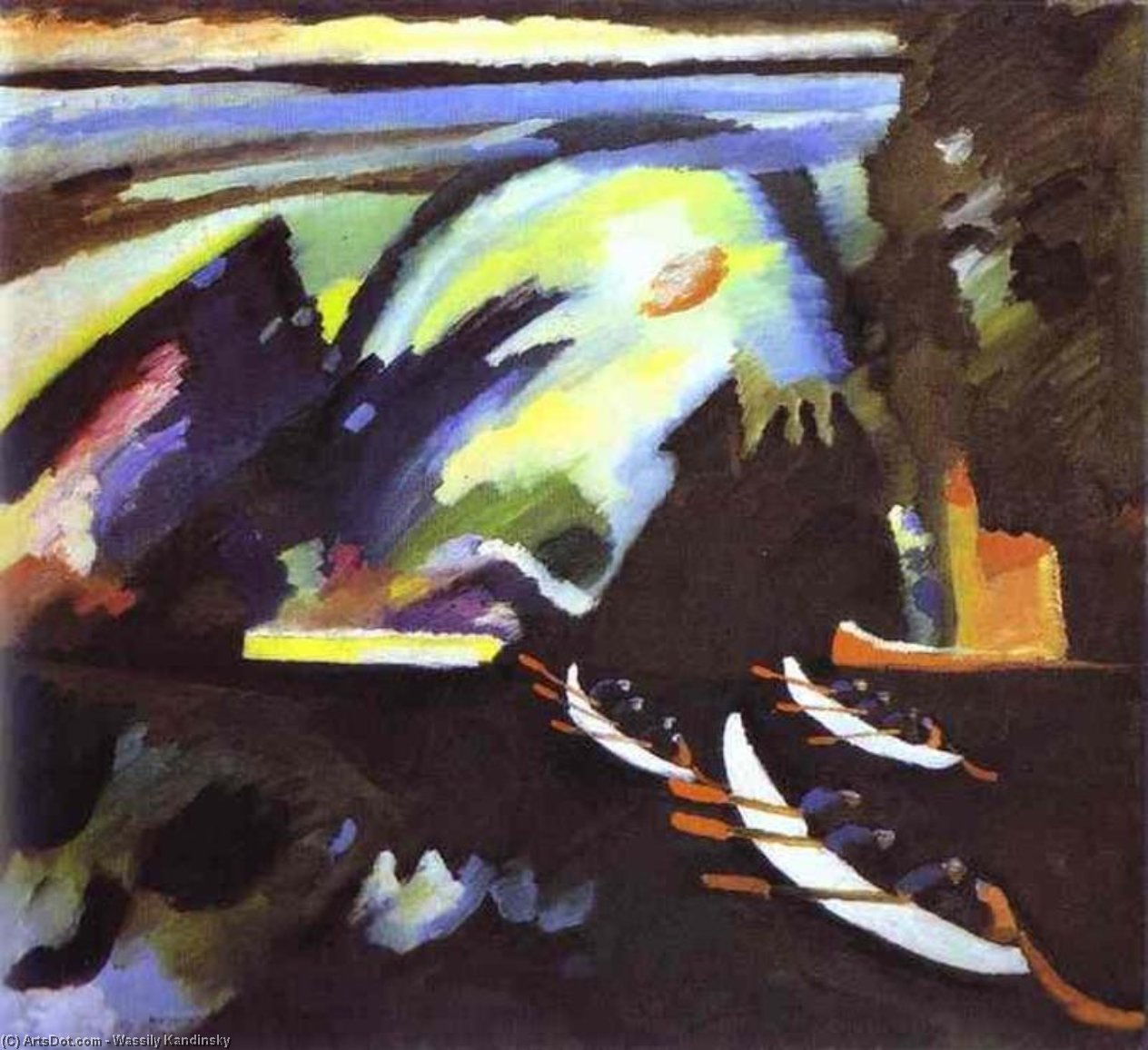
Boat Trip
复制材质
复制品尺寸
-


最终总价
-
作品详情
The Genesis of Abstraction: Exploring “Boat Trip”
Wassily Kandinsky's "Boat Trip," painted in 1910, isn’t merely a depiction of a water scene; it’s a profound exploration of the inner world, a visual manifestation of emotion rendered through the nascent language of abstraction. Created during a pivotal period in his artistic development, this oil on canvas work represents a radical departure from traditional representational art and firmly establishes Kandinsky as one of the pioneers of modernism. The painting captures a serene moment – boats gliding across water – but it’s far more than a simple landscape. It's an invitation to engage with pure feeling, a testament to Kandinsky’s belief that color and form could directly evoke spiritual experiences.
The composition itself is deceptively simple. Several boats, varying in size and distance, float on the water’s surface, creating a sense of depth and movement. Two figures are present – one near the center, suggesting a point of focus, and another positioned to the right, adding a subtle element of human presence within this otherwise tranquil environment. However, it's not the literal depiction that matters most; rather, it’s the way Kandinsky employs color and shape to create an atmosphere of profound peace and introspection. The palette is dominated by blues and greens, hues associated with water, serenity, and spirituality – colors he himself described as having a powerful emotional resonance.
Expressionism and the Language of Feeling
“Boat Trip” stands firmly within the realm of Expressionism, a movement that prioritized subjective experience over objective reality. Kandinsky, along with artists like Edvard Munch and Ernst Ludwig Kirchner, sought to convey inner states – joy, sorrow, anxiety – through distorted forms and intense colors. In this painting, those emotions aren’t explicitly stated; instead, they are suggested through the dynamic interplay of shapes and hues. The boats themselves become symbols, perhaps representing journeys, transitions, or even the fleeting nature of life. Kandinsky's use of bold, non-naturalistic color is key to this effect – he wasn’t interested in accurately portraying the appearance of the water or the boats; he was focused on capturing their *feeling*.
The brushstrokes are loose and expressive, contributing to the painting’s overall sense of movement and energy. Kandinsky's technique is characterized by layering colors and applying them with a gestural quality, as if he were attempting to translate his inner thoughts directly onto the canvas. This approach reflects his belief that art should be an active process of creation, rather than a passive imitation of reality. The painting’s surface isn’t smooth or polished; it feels alive, brimming with energy and emotion.
Contextualizing “Boat Trip”: Munich and Beyond
“Boat Trip” was created in Munich during a period of intense artistic experimentation and intellectual ferment. Kandinsky's time in the city exposed him to a diverse range of influences, including Impressionism, Fauvism, and the burgeoning field of psychology. The painting’s creation coincided with his growing interest in spirituality and his exploration of non-objective art – art that didn’t represent recognizable objects but instead communicated through pure color and form. This period marked a significant shift in Kandinsky's artistic trajectory, leading him away from traditional representational techniques and toward the development of his own unique style.
The painting is now housed in the Museum Stadtische Galerie im Lenbachhaus und Kunstbau in Munich, providing visitors with the opportunity to experience it within its historical context. It’s also part of a broader collection of Expressionist works that showcases the movement's influence on 20th-century art. Furthermore, examining “Boat Trip” alongside other paintings by Kandinsky, such as "Rapallo boats" and "Rapallo Grauer day," reveals his consistent fascination with water scenes and his ability to capture their evocative qualities through color and composition. These works demonstrate a deliberate exploration of the emotional power inherent in natural landscapes.
Bringing “Boat Trip” Home: Reproductions and Artistic Legacy
Wassily Kandinsky’s "Boat Trip" is more than just a painting; it's an invitation to contemplate the relationship between art, emotion, and spirituality. ArtsDot.com offers meticulously crafted hand-painted reproductions that faithfully capture the essence of this iconic work. These high-quality reproductions allow you to bring the serenity and emotional depth of “Boat Trip” into your own home or office, serving as a constant reminder of Kandinsky’s artistic vision. Explore our collection of Wassily Kandinsky prints and oil paintings for a unique opportunity to connect with one of the most influential artists of the 20th century.
相似艺术品


艺术家简介
A Life Immersed in Color and Spirit
Wassily Wassilyevich Kandinsky, born December 4, 1866, in Moscow, Russia, was a revolutionary figure who irrevocably altered the course of modern art. His journey wasn’t one of immediate artistic calling; initially destined for a career in law and economics at the University of Moscow, it was a profound encounter with Impressionist painting – specifically Claude Monet's “Haystacks” – and a deeply moving experience witnessing Wagner’s opera "Lohengrin" that ignited within him an irrepressible desire to pursue art. This pivotal moment, occurring around age thirty, marked not merely a career change but a complete transformation of perspective, setting him on a path toward pioneering abstraction. He soon relocated to Munich, enrolling at the prestigious Academy of Fine Arts and studying under Franz von Stuck, though even within formal training, Kandinsky’s spirit yearned for exploration beyond conventional boundaries. Early Influences: Russian Folk Art and Impressionism's Embrace Kandinsky’s formative years were marked by exposure to diverse cultural influences. His fascination with Russian folk art stemmed from an ethnographic expedition to the Vologda region in 1889, fostering a deep appreciation for vibrant color palettes and symbolic imagery—elements that would permeate his early artistic endeavors. Simultaneously, Monet's “Haystacks” captivated him with its masterful depiction of light and atmosphere, introducing him to the principles of Impressionism and prompting an initial foray into representational painting. This dual influence laid the groundwork for his evolving artistic sensibilities. The Dawn of Abstraction: Expressionism and Beyond His early works exhibited a pronounced expressionistic style—characterized by bold colors and emotional intensity—exemplified by “Papeln (Poplars)” from 1902. However, Kandinsky swiftly recognized that mere visual representation couldn’t fully capture the complexities of inner experience. Driven by an unwavering conviction that color possessed inherent psychological effects, he embarked on a transformative journey away from representational art toward abstraction. This quest was profoundly shaped by his burgeoning interest in Theosophy—a spiritual movement emphasizing esoteric knowledge and universal brotherhood—inspiring him to explore visual language as a conduit for expressing profound spiritual truths.- He believed that art should not aim to imitate nature but rather to reveal the artist’s inner world.
- His theoretical writings articulated these beliefs, laying the groundwork for a new understanding of abstract art.

卡林斯基
1866 - 1944 , 俄罗斯
艺术家简介
- Artistic Movement Or Style: 抽象艺术、表现主义
- Artists Or Movements Influenced By This Artist: ['抽象表现主义']
- Artists Who Influenced This Artist:
- 克劳德·莫奈
- 理查德·瓦格纳
- Date Of Birth: 1866年12月4日
- Date Of Death: 1944年12月13日
- Full Name: Wassily Wassilyevich Kandinsky
- Nationality: 俄罗斯、法国
- Notable Artworks:
- Murnau与虹
- 多个圆
- 圣洁的宴会
- Place Of Birth: 莫斯科,俄罗斯
相关文章

Morris Louis: Pioneering Color Field Painting & Abstract Expressionism's Legacy
Explore the groundbreaking abstract expressionism of Morris Louis, a pioneer of Color Field painting. Discover his innovative techniques, influential series & lasting legacy in post-war American art. Learn more at ArtsDot.

Henry Wolf: A Legacy of Abstract Expressionism & Emotional Resonance in Post-War Art
Explore the profound legacy of Henry Wolf, a pivotal figure in Abstract Expressionism and post-war visual culture. Discover his impact on graphic design, photography, and art collecting with ArtsDot.

Beyond Representation: Exploring Emotional Resonance & Formal Innovation in Abstract Art
Explore the profound emotional depth & formal innovations of abstract painting. Discover key artists like Rothko & Kandinsky, understand art collecting insights, and elevate your space with timeless masterpieces. Expert analysis for discerning collectors.

Fluid Reflections: Exploring Water's Symbolism in Art History – From Myth to Impressionism
Explore the rich symbolism of water in art history – from ancient myths to Impressionism's fleeting beauty. Discover masterpieces & find your perfect serene artwork with ArtsDot.com.
Beatrice Parsons: A Study in Abstract Expressionism & the Poetics of Color Field Painting
Explore the captivating world of Beatrice Parsons, a pioneering British abstract expressionist. Discover her journey from garden watercolors to evocative color field paintings and learn about her place within art history.



