

 实景预览

 分享
 分享
 详情
 指南


 下载作品
 相似作品
 X射线
 幻灯片播放
 问答
 统计数据
Sem título


 展开全文
艺术微喷/版画
博物馆级艺术微喷或帆布版画,制作高效,并提供多种饰面选择。 ( 订购纯手工绘制画作 切换至数字图像销售渠道)
































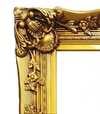
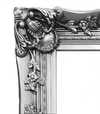
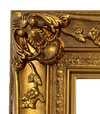
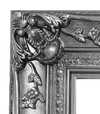
您可以从与原作比例一致的预设尺寸中进行选择。

请输入您所需的宽度和高度,以适配您的画框或墙面。由于印刷品只能进行裁剪,无法超出原图尺寸,因此若比例不一致,画面的一部分将会被裁切。在正式印刷之前,我们会为您发送一份数字效果图供您确认。本页面显示的图片并非最终裁剪后的效果——只有效果图才能展示真实的裁剪情况。


 玻璃选项仅适用于110厘米以下的尺寸。

Sem título
艺术微喷/版画
复刻品尺寸
-


最终结算价
¥ 422
相似作品


艺术家简介
A Polymath of Form and Sound: The Life of Walter Lenck
Walter Lenck, born into the vibrant cultural landscape of Berlin as Walter Lewy, was an artist who refused to be confined by the boundaries of a single medium. His life was a symphony of diverse disciplines, where the precision of architecture met the fluid emotion of cello performance and the tactile strength of sculpture. Born on September 2, 1873, to a banker and his wife, Lenck’s early years were marked by a profound curiosity about the natural world. As a young boy, he could be found wandering the Berlin Zoo, translating the raw energy of animals onto paper, or lost in the epic tales of Greek mythology. This early fascination with the Argonauts and the wild essence of creatures would later manifest in his monumental bronze works, bridging the gap between classical myth and modern expression. His path to artistic mastery was as multifaceted as his talent. While he initially pursued musical studies—eventually becoming a virtuoso cellist—the call of the visual arts proved irresistible. At the Royal Academy in Berlin, he studied sculpture under the esteemed Paul Friedrich Meyerheim, while simultaneously honing his understanding of structure through architectural training. His education was not limited to Germany; his travels took him to Paris, where the influence of Antoine-Louis Barye’s animalier style left an indelible mark, and to Brussels, where the social realism of Constantin Meunier provided new perspectives on form and human struggle.The Sculptural Triumph and the Shift of Identity
The turn of the century brought a pivotal moment in Lenck's career, marked by both professional glory and a personal transformation. In 1910, his monumental sculpture, Jason, was selected by the German government to be showcased at the International Exhibition in Buenos Aires. This achievement, which earned him a Grand Prix, solidified his reputation on the global stage. It was during this era of international travel—moving between Hamburg, Vienna, and beyond—that he began to transition from the name Walter Lewery to the more permanent Walter Lenck. This change in surname, occurring between 1911 and 1913, mirrored a broader evolution in his artistic identity as he moved away from his family's banking roots toward a life defined solely by creative pursuit. His sculptural repertoire was characterized by a dynamic tension, often capturing the struggle of gladiators or the ferocity of battling animals. These works were not merely representations but explorations of movement and anatomical truth. Whether working in bronze to create lasting monuments or utilizing drawing to capture fleeting impressions, Lenck’s hand was always guided by a desire to convey the internal spirit of his subjects. His ability to balance the heavy, grounded nature of sculpture with the lyrical grace of a composer allowed him to create pieces that felt both physically present and poetically resonant.Legacy Amidst Shadows and Displacement
The later years of Lenck’s life were shadowed by the tumultuous political tides of the twentieth century. As a member of a Jewish family, the rise of Nazi persecution in Germany made his continued presence in Berlin impossible. In 1936, Lenck embarked on a profound journey of displacement, emigrating to Johannesburg, South Africa. This relocation marked the end of his European era but began a new chapter of survival and quiet persistence in a vastly different landscape. Though far from the academies of Berlin and Paris, the essence of his training—the meticulous observation learned at the zoo and the structural discipline of architecture—remained the foundation of his spirit. Lenck passed away in Johannesburg in 1952, leaving behind a legacy that defies simple categorization. He remains a significant figure for those studying the intersection of German Expressionism and Impressionism, as well as the broader movement of polymathic artists who sought unity across different art forms. His life serves as a testament to the resilience of the creative soul, proving that even when stripped of homeland and name, the fundamental drive to capture beauty, myth, and motion remains unextinguishable.- Key Artistic Disciplines: Sculpture, Painting, Architecture, Music Composition, and Dramaturgy.
- Notable Works: The bronze monument Jason (1910) and various mythological studies.
- Major Influences: Paul Friedrich Meyerheim, Antoine-Louis Barye, and Constantin Meunier.
- Historical Context: A survivor of the era's great displacements, moving from Berlin to South Africa.

Hendrik Jan Wolter
1873 - 1952 , Netherlands
艺术家简介
- Artistic Movement Or Style: Expressionism and Impressionism
- Artists Who Influenced This Artist:
- Paul Friedrich Meyerheim
- Antoine-Louis Barye
- Constantin Meunier
- Full Name: Walter Lenck
- Nationality: German
- Notable Artworks:
- Jason
- Jason and the Bulls
- Place Of Birth: Berlin, Germany
- Date Of Birth: 1873
- Date Of Death: 1952
相关文章

Colonial Splendor: The Baroque and Dutch Masterpieces of Brazil
Explore the history of Brazilian Baroque art and Frans Post's landscapes. Discover colonial masterpieces with our expert guide.