


 实景预览
实景预览
 发送
发送 分享
分享
 详情
详情 指南
指南

 下载图片
下载图片
 相似作品
相似作品 X射线
X射线 幻灯片播放
幻灯片播放 统计数据
统计数据Abstract Composition 16

 阅读全文
阅读全文
艺术微喷/版画
博物馆级艺术微喷或帆布版画,制作高效,并提供多种饰面选择。 ( 订购此收藏品的纯手工复刻画作 切换至数字图像销售渠道)




P118B ¥10

P118H ¥10

P118W ¥10

P438Z ¥10

P508JH ¥12

P508YH ¥12

P805H ¥10

P805Z ¥10

P919BZ ¥10

P919G ¥10

P919XJ ¥10

P959ZH ¥10

P968JZ ¥12

W106C ¥8

W218G ¥10

W218JH ¥8

W218Y ¥10

W307PJ ¥10

W316G ¥10

W316PJ ¥8

W316Y ¥10

W398PJ ¥8

W4111J ¥10

W500HY ¥15

W500JH ¥15

W692G ¥12

W849H ¥8

W940BG ¥15

W953PJ ¥8




您可以从与原作比例一致的预设尺寸中进行选择。

您可以输入自定义尺寸,以适配特定的画框或空间。如果您选择的尺寸与原图比例不符,我们将对作品进行裁剪,或通过镜像填充/纯色填充边缘的方式来扩展图像。在开始制作之前,我们会向您发送一份数字效果图供您确认。
请注意,屏幕上的预览并不能反映实际的裁剪或扩展效果。只有效果图才能准确展示最终的构图。
虽然我们提供定制尺寸,但为了保持原图比例,我们建议您从预设列表中选择尺寸。


 玻璃选项仅适用于110厘米以下的尺寸。

Abstract Composition 16
艺术微喷/版画
复刻品尺寸说明
-


总计金额
¥ 417
A Symphony of Form and Color: Exploring Victor Vasarely’s Abstract Composition 16
- Introduction: Immerse yourself in the dynamic world of Op Art with Victor Vasarely's *Abstract Composition 16*. This captivating painting is a prime example of Vasarely’s pioneering work, showcasing his mastery of geometric abstraction and optical illusion. It’s not merely a visual experience; it’s an invitation to perceive reality anew.
Deconstructing the Visual Language
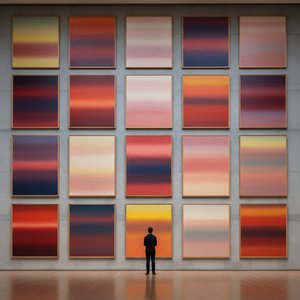
The composition is built upon a carefully orchestrated arrangement of shapes – predominantly circles, squares, and rectangles – rendered in a vibrant palette of red, green, blue, yellow, black, white, and orange. The painting is intuitively divided into distinct sections: a fiery upper register dominated by reds and greens; a central zone pulsing with cool blues and yellows; and a grounding base featuring the stark contrast of blacks, whites, and oranges. The strategic placement of circles, particularly a prominent one on the left and a smaller counterpart on the right, creates a sense of visual balance while simultaneously suggesting movement and depth.Vasarely and the Birth of Op Art
Victor Vasarely (1906-1997) was a Hungarian-French artist who became synonymous with the Op Art movement. His artistic journey began with traditional training, but he quickly diverged, influenced by Bauhaus principles and a fascination with scientific concepts like perception and illusion. *Abstract Composition 16*, likely created during his mature period, embodies this evolution. Vasarely wasn’t interested in representing reality; he sought to *create* a new visual reality through the manipulation of form and color. His work, including early pieces like “Zebra” (1937), laid the groundwork for an entire artistic movement that challenged conventional notions of painting.Technique and Materials
While the specific materials used in *Abstract Composition 16* are unknown, Vasarely frequently employed acrylics on canvas. His technique was meticulous, relying on precise calculations and a systematic approach to color application. He often built up layers of paint to achieve subtle variations in tone and texture, enhancing the illusionistic effects. The clean lines and sharp edges characteristic of his style were achieved through careful masking and precise brushwork.Symbolism and Interpretation
Vasarely’s work isn't laden with traditional symbolism. Instead, its power lies in the purely visual experience it evokes. The geometric forms can be interpreted as representing underlying structures of the universe, while the vibrant colors stimulate emotional responses. The optical illusions created by his compositions challenge our perception and invite us to question what we see. It’s a celebration of the act of seeing itself.Emotional Impact & Interior Design
*Abstract Composition 16* is an energizing and intellectually stimulating artwork. Its dynamic composition and bold colors create a sense of movement and vitality, making it a striking focal point in any space. This piece would be particularly well-suited for modern interiors, minimalist settings, or spaces where a touch of artistic sophistication is desired. The interplay of warm and cool tones offers versatility, complementing a range of color schemes. Consider pairing this artwork with neutral furnishings to allow its vibrant energy to truly shine.
问答详情
在维克多·瓦萨雷利反复探讨的主题中,"Abstract Composition 16"处于怎样的地位?
"Abstract Composition 16" 描绘了 abstract art, geometric shapes, color field, optical illusion, modern design, vibrant colors, op art style,而 维克多·瓦萨雷利 记录在案的主题则是 op art influence, geometric abstraction, visual illusion, 20th century design, hungarian modernism, international style, color & form exploration, early kinetic art。通过两者的对比,可以看出此作与艺术家惯用题材之间的关联。
维克多·瓦萨雷利 的《Abstract Composition 16》 的构图以什么颜色为主导?
在“Abstract Composition 16”中,最引人注目的颜色是Phthalo Green (#272f3b)。了解作品的主色调有助于将其与室内装饰进行搭配。
是否有关于 维克多·瓦萨雷利 的《Abstract Composition 16》 的指南?
"Abstract Composition 16" 的指南位于作品的 指南 页面 —— 这是一份可打印的信息单,展示了该作品及其说明、署名以及详细信息表(艺术家、日期、媒介、原尺寸、馆藏)。
"Abstract Composition 16" 有艺术版画出售吗?
如需订购 维克多·瓦萨雷利 的《Abstract Composition 16》 的版画,只需在 本页 进行下单即可:采用棉质帆布或档案级画布纸制作的艺术版画。
"Abstract Composition 16" 的创作者是谁?
《Abstract Composition 16》被归为维克多·瓦萨雷利的作品。
贯穿于维克多·瓦萨雷利 的《Abstract Composition 16》中的主导色调是什么?
Ochre to Sepia 色调贯穿了 维克多·瓦萨雷利 的《Abstract Composition 16》。
哪里可以买到维克多·瓦萨雷利 的《Abstract Composition 16》的手绘复制品?
维克多·瓦萨雷利 的《Abstract Composition 16》 的手绘复制品可在 本网站 购买:亚麻画布手工绘制油画复制品,请通过 本页 进行订购。


艺术家简介
几何幻象的缔造者:维克多·瓦萨雷利的世界
维克多·瓦萨雷利(Victor Vasarely,1906-1997),原名卡罗尔·瓦萨里(Károly Vaszary),出生于匈牙利佩奇市,他的艺术之路并非一帆风顺。最初,他怀揣着成为医生的梦想,在布达佩斯的多瑙河大学攻读医学。然而,对视觉表达的强烈渴望最终战胜了理性,1927年,他毅然决然地放弃了医学,投身于艺术的学习,进入波多利尼-沃尔克曼学院深造。这一选择不仅改变了他的职业生涯,更开启了他探索感知与形式基本原则的一生。在桑德尔·博尔特尼克(Sándor Bortnyik)的“工作坊”(Műhely)中,瓦萨雷利接触了受包豪斯运动影响的功能主义设计和几何抽象,这些理念成为了他艺术风格的基石。这段早期的经历并非仅仅是技巧的积累,更是对传统艺术惯例的解构,以及对一种根植于逻辑与精确的新视觉语言的拥抱。从早期抽象到光艺的曙光
20世纪20年代末和30年代初,瓦萨雷利逐渐远离了具象绘画,深入探索几何抽象的领域。“蓝色研究”和“绿色研究”(1929)等作品清晰地展现了这个转变——他有意识地舍弃了叙事内容,转而专注于纯粹的形式与色彩关系。尽管受到皮特·蒙德里安(Piet Mondrian)和卡济米尔·马列维奇(Kazimir Malevich)等大师的影响,瓦萨雷利并未满足于简单的模仿。他渴望超越前辈们静态的构图,追求一种能够积极调动观者感知的动态效果。1930年,他移居巴黎,在那里建立了自己的事业,从事平面设计和广告艺术工作,不断磨练技艺的同时,也在探索着独特的艺术视野。正是在这段时期,他开始尝试那些后来成为光艺标志性技巧的实验——通过操纵形状与色彩来创造运动和深度的幻觉。一场视觉体验的革命的种子已经播下。系统性的幻象:定义一种新的艺术流派
到了20世纪60年代,维克多·瓦萨雷利已然成为蓬勃发展的光艺运动中的领军人物。与许多依赖直觉和即兴创作的艺术家不同,瓦萨雷利以一种截然不同的系统性方法来对待他的作品。他运用网格和数学原理生成模式,从而创造出强大的光学幻觉——视觉振动、旋转效果以及在实际上不存在深度时产生的空间感。这并非为了欺骗观者,而是为了揭示感知本身固有的动态性。他相信可复制性和大众吸引力,旨在通过打破画廊和博物馆的界限来普及艺术。他的作品挑战了观者对自身视觉体验的认知,迫使他们积极参与到意义的创造中。这种有意识的与感知的互动将光艺与其他艺术形式区分开来,并巩固了瓦萨雷利在这一领域的地位。他不仅仅是在绘画画面,更是在构建一种体验。超越画布:运动探索和持久的遗产
瓦萨雷利的艺术探索并未止步于静态幻觉。他越来越深入地涉足运动艺术领域,创作出包含实际运动或通过精心设计的视觉效果呈现运动的作品。“庞皮杜中心”(Georges Pompidou)(1976)是这一雄心壮举的见证——它将艺术与建筑和城市设计融为一体,规模宏大。他还以惊人的创新精神将他的设计应用于商业产品,最著名的合作是与罗斯柴尔德瓷器公司(Rosenthal porcelain),从而诞生了标志性的“苏奥米”(Suomi)餐具系列。这种模糊高雅艺术与功能性对象之间界限的意愿进一步强调了他对艺术潜能能够渗透到日常生活中的信念。通过在1982年将丝网印刷品装载到法苏联合飞船“礼炮7号”上,他确保了其作品在全球范围内的认可,并将其与人类探索更广阔领域的努力联系起来。维克多·瓦萨雷利的遗产远远超出了绘画的范畴;他深刻地影响了平面设计、时尚、室内设计,甚至早期的计算机图形学,激励着几代人以他的创新愿景和对探索感知可能性的坚定承诺为榜样。《他仍然是现代艺术史上的一个关键人物,一位真正的远见卓识者,敢于挑战我们对艺术可能性的理解。》历史意义
瓦萨雷利对艺术史的贡献是多方面的。他超越了传统的绘画技巧,创造出能够积极调动观者感知的作品。他的系统性方法挑战了人们对艺术创作的传统观念,为计算机生成的艺术和数字设计铺平了道路。通过拥抱可复制性和商业应用,瓦萨雷利模糊了高雅艺术与大众文化之间的界限,在两者之间留下了持久的影响。《他不仅仅是在创造美观的对象;他正在进行视觉实验,揭示了我们如何看待世界的根本真相。》他的作品至今仍能引起共鸣,提醒着我们抽象的力量、几何的美以及人类创造力的无限可能性。
维克多·瓦萨雷利
1906 - 1997 , 克罗地亚
快速概览
- 全名: 维克多·瓦萨雷利
- 出生地点: 佩奇, 克罗地亚
- 出生日期: 1906年4月9日
- 去世日期: 1997年3月15日
- 受影响的艺术家或流派:
- 平面设计
- 室内设计
- 国籍: 匈牙利-法国
- 影响艺术家:
- 皮特·蒙德里安
- 卡济米尔·马列维奇
- 艺术流派或风格: 光学艺术,运动艺术
- 著名作品:
- 蓝色研究
- 绿色研究
- 斑马
- Suomi餐具
相关文章
马克·罗斯科25幅杰作:色彩与情感的深度之旅 | ArtsDot
探索马克·罗斯科25幅杰作,感受抽象表现主义的色彩力量与深刻情感。从经典色域绘画到无题系列,了解艺术史上的大师及其作品背后的故事。ArtsDot.com提供博物馆级高质量复制品,为您的家居装饰带来艺术灵感!立即探索完整收藏。

几何抽象艺术十大杰作:定义现代家居装饰的经典之作
探索几何抽象艺术的十大杰作!康定斯基、蒙德里安等大师作品,色彩构成与非具象之美。ArtsDot.com提供博物馆级艺术复制品,为您的家居带来现代艺术灵感。立即在线探索完整系列!

Beyond Form & Color: Geometric Abstraction's Evolution in 20th/21st Century Art
Explore the evolution of geometric abstraction from Cubism to contemporary art. Discover key artists like Malevich & Mondrian, investment insights, and expert collecting advice at ArtsDot.

抽象表现主义:十幅定义艺术史的杰作
探索抽象表现主义的十幅经典杰作!波洛克、罗斯科等大师作品,揭秘艺术史上的重要瞬间。ArtsDot.com为您呈现高品质艺术品复制和精选家居装饰方案,感受现代艺术的力量与魅力。立即浏览全系列!

Kandinsky's Masterpieces: 25 Paintings That Define Abstract Art | ArtsDot
Journey through Wassily Kandinsky's 25 most iconic abstract paintings. Explore his revolutionary use of color, form & spiritual expressionism. Find museum-quality Kandinsky reproductions and elevate your home decor with ArtsDot.com. Discover all masterpieces on ArtsDot.com!


