


The picture follows your choices: , .
藏品详情
Discover Suzuki Kiitsu’s ‘Irises and Stream’ (801), a serene Sumi-e painting showcasing nature's beauty & Rinpa influence. Explore this iconic Japanese artwork.
 展开全文
展开全文
艺术家简介
Suzuki Kiitsu (1796-1858) was a prominent Rinpa painter known for his stunning folding screens & nature scenes. Reinterpreted works showcase his skill & influence.
手工油画复制品
由我们的艺术家按需定制,为您提供您所选尺寸及画框的布面手工油画。 ( 切换至版画销售渠道 切换至数字图像销售渠道)
More about this painting
 实景预览
实景预览
 分享
分享 分享
分享
 详情
详情 指南
指南

 下载作品
下载作品
 相似作品
相似作品 X射线
X射线 幻灯片播放
幻灯片播放 Q&A
Q&A 统计数据
统计数据Order your painting in four simple steps
Take your time. You can change any answer; the price in your order card follows each choice.
1 Step one of four
Which size would you like?
These sizes keep the proportions of the original painting. The drawing shows your choice on a wall, above a two-metre sofa.
Or give your own measurements
您可以从与原作比例一致的预设尺寸中进行选择。

请输入您需要的宽度和高度,以适配您的画框或墙面。由于作品为手工绘制,若选择不同比例的尺寸,艺术家可能会在画面边缘多画一些或稍作裁剪 —— 由您决定。在开始绘画之前,我们会为您发送一份数字效果图供您确认。本页面上展示的图片并非最终实物 —— 只有效果图才能反映真实结果。
2 Step two of four
How should it be prepared: rolled, stretched or framed?
The prices below are for the size you chose in step one.
Choose the edges of the stretched canvas
Choose your frame

White ¥1

Blurside ¥1

Extended ¥1

P118B ¥10

P118H ¥10

P118W ¥10

P438Z ¥10

P508JH ¥12

P508YH ¥12

P805H ¥10

P805Z ¥10

P919BZ ¥10

P919G ¥10

P919XJ ¥10

P959ZH ¥10

P968JZ ¥12

W106C ¥8

W218G ¥10

W218JH ¥8

W218Y ¥10

W307PJ ¥10

W316G ¥10

W316PJ ¥8

W316Y ¥10

W398PJ ¥8

W4111J ¥10

W500HY ¥15

W500JH ¥15

W692G ¥12

W849H ¥8

W940BG ¥15

W953PJ ¥8

H24-GOLD ¥30

H24-SILVER ¥30

H36-GOLD ¥45

H36-SILVER ¥45
带框
Moulding: . Overall size with the frame: .
3 Step three of four
Would you like anything changed in the painting?
Most people answer no. Because each painting is made by hand, our artist can also adapt it for you.
After order, ArtsDot.com team will email client for instructions and provide a mockup preview
4 Step four of four
A few finishing options
All of them are optional. The answers already selected cost nothing extra.
Who paints it?
A nameplate, as in a museum?
青铜铭牌雕刻详情
This elegant plaque features the artist's name and the title of the artwork, finely engraved for a timeless presentation.
It is made from bronze with a refined, elegant finish. The text is precisely laser-engraved for a sharp and permanent result. Measuring 9x2 cm, the plaque is compact yet easy to read. It's built to be durable and scratch-resistant, offering a professional, museum-quality look. Mounting is simple thanks to the included adhesive backing.
透明亚克力铭牌详情
The plaque includes essential engraved details such as the artist's name, the title of the artwork, the date it was created, the type of media used-like oil on canvas or watercolor-a brief description of the piece, and a QR code that links to the complete artwork information.
It is crafted from clear acrylic, offering a sleek, modern appearance. The text is UV-engraved in black to ensure strong visual contrast. With a size of 10x15 cm, it ensures optimal readability. It comes equipped with two metal hooks for secure wall mounting. The plaque is designed to be weather-resistant, making it suitable for various environments, and it includes interactive features that work seamlessly with smartphone scanning.
黑色亚克力铭牌详情
This elegant plaque includes engraved information such as the artist's name, the title of the artwork, the date it was created, the type of media used (like oil on canvas or watercolor), a short description of the artwork, and a QR code for quick access to more information.
The plaque itself is made from refined black acrylic with a premium finish. The text is laser-engraved in white for high contrast and readability. Its size is 10x15 cm, designed to be easy to read. It comes with two metal hooks for professional mounting. The design is sleek and fits any interior style. It is also weather-resistant and durable, with built-in digital integration for mobile compatibility.
A protective varnish?
When do you need it?
✓ Check and order
Your painting, as you ordered it

Irises and Stream
复制品材质
复刻品尺寸
-

精选资深艺术家
更丰富的细节、更精湛的工艺以及更充裕的制作时间
-

复制画装裱选项
-
-
对于任何边长超过 105 厘米(约 41 英寸)的艺术品或复制品,画框将以拆解后的组件形式发货。此方法可确保安全送达并防止运输过程中的损坏。
需由专业人员组装 —— 本产品不适用于 DIY 操作。
该组件必须由经验丰富的专业装裱师进行组装及画布绷装,过程中需使用木工胶(不随附)、画布绷边钳以及夹具,以确保在胶水干燥期间保持内框方正。组装不当或画布张力不均可能会对艺术品造成永久性损坏,且此类情况不在我们的保修范围之内。
 对于任何边长超过 105 厘米(约 41 英寸)的艺术品或复制品,画框将以拆解后的组件形式发货。此方法可确保安全送达并防止运输过程中的损坏。
包含所有实木条,尺寸精确,便于组装。
使用随附的螺丝进行组装,另需准备用于角部连接的木工胶(本品不含木工胶),请由您的装裱师自行准备。
需另备专业工具(本套件不含):画布绷紧钳以及用于在胶水干燥过程中保持木条方正的夹具。
重要提示:
角部连接处需要使用木工胶,边框条必须使用夹具固定直至胶水完全干透,且在组装好的框架上绷紧画布需要用到画布拉伸钳。以上工具均不包含在套装内。请在订购此尺寸前,预先联系经验丰富的专业装裱师。

展品铭牌
-
-

保护性清漆
光泽清漆(提亮色彩,防光防潮)
-

定制我的艺术品
定制化示例:替换面部为客户照片;添加宠物(例如,将猫替换为狗);在背景中加入隐藏信息;更改背景风景或元素。
-

加急
全球配送()仅需 3-4 周即可送达,无需等待标准时效的 5 周。(29 October)。品质始终如一,绝不妥协。
-
极速达
全球配送(),预计 5 周送达。(5 November)。
已包含
最终结算价
¥ 1767
玻璃选项仅适用于110厘米以下的尺寸。
Included with every order
- 全球免运费特快专递服务
- 优质亚麻画布
- 全程运输保险
- 关税退款保证
- 色彩精准还原保证
- 100天退货保障(仅限制造缺陷)
- 100% 退款保证
- 多件购买优惠


常见问题与解答
Suzuki Kiitsu 的《Irises and Stream》 的色彩浓郁度如何?
“Irises and Stream”的色彩强度为Vivid。强度描述了色彩呈现的浓郁程度。
“Irises and Stream”的作者是谁?
"Irises and Stream" 的创作者是 Suzuki Kiitsu。该作品以 Suzuki Kiitsu 的名义编入目录。
Suzuki Kiitsu 的《Irises and Stream》 的实际尺寸是多少?
Suzuki Kiitsu 的《Irises and Stream》 的记录尺寸为 89.2cm x 29.8cm。您也可以按比例定制其他尺寸的复制品。
相似作品


Suzuki Kiitsu
1796 - 1858, Japan
艺术家简介
Suzuki Kiitsu: A Master of Refined Beauty in the Rinpa School
Suzuki Kiitsu (1796-1858) stands as a compelling figure within the Japanese art world, a painter whose legacy has undergone a remarkable resurgence in recent decades. Born in Tokyo during the late Edo period, his life’s work is inextricably linked to the Rinpa school of painting – a movement renowned for its emphasis on meticulous detail, illusionistic space, and a refined aesthetic rooted in Chinese landscape traditions. Initially considered a somewhat peripheral member of this influential group, Kiitsu's talent has been increasingly recognized, culminating in significant exhibitions in Tokyo, Hyogo, and Kyoto between 2016 and 2017, firmly establishing his place as a master of the Edo Rinpa style. His most celebrated achievements lie in his breathtaking folding screens – *byōbu* – which he often reimagined from the works of his predecessors, demonstrating both deep respect for tradition and a distinctive creative voice.The Foundations of a Painter: Training and Influences
Kiitsu’s artistic journey began under the tutelage of Sakai Hoitsu (1761–1828), a pivotal figure in the Rinpa school and considered by many to be its most important successor. This formative period instilled within Kiitsu a profound understanding of Rinpa's core principles: the meticulous rendering of textures, the use of layered colors to create depth and luminosity, and an appreciation for the beauty of nature. However, unlike Hoitsu, who was known for his grand, sweeping landscapes, Kiitsu’s style leaned towards a more intimate and refined approach. He absorbed the techniques of other masters within the school, including Tawaraya Sōtatsu (c. 1570 – c. 1640), renowned for his dynamic compositions, and Ogata Kōrin (1658–1716), celebrated for his vibrant depictions of flowers and birds. Notably, Kiitsu’s training wasn't solely through formal instruction; he actively sought to learn from and emulate the works of these established artists, developing a distinctive style that blended their influences while retaining his own artistic identity. This dedication to studying and interpreting the work of others is a hallmark of the Rinpa school and profoundly shaped Kiitsu’s creative process.The Art of the *Byōbu*: Masterpieces of Illusion
Kiitsu's true mastery lies in his creation of *byōbu* folding screens – elaborate, multi-panel artworks designed to be displayed in aristocratic interiors. These screens were not merely decorative objects; they represented a sophisticated form of art that combined painting, lacquerwork, and gold leaf. Kiitsu’s *byōbu* are particularly renowned for their illusionistic depth and the subtle interplay of color and texture. His “Morning Glories” (1801) and “Mountain Stream in Summer and Autumn” (circa 1832-1836) stand as prime examples, showcasing his ability to create a sense of three-dimensional space on a two-dimensional surface. The "Mountain Stream" pair, measuring an impressive 165.8 by 363.2 centimeters, depicts a serene landscape with flowing streams, cypress groves, lilies, and a cherry tree laden with autumn leaves. The screens are described as possessing “somehow strangely unreal” qualities, evoking a feeling of hyperrealism through the meticulous rendering of details and the masterful use of color. The rhythmic feel of the motifs and the brilliance of the blues and greens against the gold ground, particularly evident in works inspired by Ogata Kōrin’s *Irises*, further demonstrate Kiitsu's technical skill and his ability to capture the essence of nature with remarkable precision.A Legacy of Pupils and a Distinct School
Despite not being formally recognized as Hoitsu’s direct successor, Suzuki Kiitsu exerted considerable influence on subsequent generations of Edo Rinpa artists. He acted as a mentor, training many young painters who went on to establish their own distinct styles within the school. This informal apprenticeship system led to the development of what is sometimes referred to as the “Kiitsu School of Edo Rinpa,” characterized by its refined aesthetic and meticulous attention to detail. Kiitsu’s emphasis on studying and reinterpreting the works of his predecessors, combined with his own creative vision, created a unique artistic lineage that continued long after his death in 1858. His work continues to be studied and admired for its technical brilliance, its evocative depiction of nature, and its enduring contribution to Japanese art history.Notable Works and Lasting Significance
Among Kiitsu’s most celebrated works are the “Wind God and Thunder God” (紙本金地著色風神雷神図), a pair of silk sliding doors depicting the deities Raijin and Fujin, and his stunning “Morning Glories.” The "Wind God and Thunder God" stands out due to its innovative use of eight sliding doors, departing from the traditional two-screen format. These works are now housed in prestigious collections such as the Nezu Museum in Tokyo, where they are occasionally exhibited, offering visitors a rare opportunity to appreciate the artistry of this often-overlooked master. Suzuki Kiitsu’s legacy extends beyond his individual creations; he represents a pivotal moment in the evolution of the Rinpa school, demonstrating its capacity for innovation and artistic growth while upholding its core principles of beauty, precision, and reverence for nature.相关文章

Floating World: The Captivating Art and Legacy of Japanese Ukiyo-e
Explore the profound beauty of Japanese Ukiyo-e. Discover the history, masters like Hokusai, and the enduring legacy of the 'Floating World' through an expert art-historical lens.

Japonisme: How Japanese Woodblock Prints Revolutionized Western Art
Explore the profound impact of Japonisme on Western art. Discover how Japanese ukiyo-e woodblock prints revolutionized perspective, color, and composition for masters like Monet and Van Gogh, forever changing the course of modern art history.
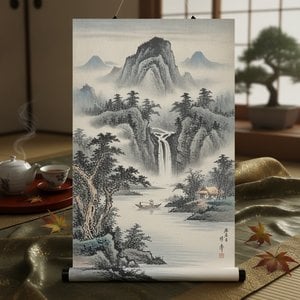
Serenity on Canvas: A Guide to the Timeless Beauty of Japanese Landscape Painting
Discover the serene beauty of Japanese landscape painting. From Hokusai's iconic woodblock prints to meditative sumi-e ink washes, explore a visual journey through the 'floating world' and learn how to bring this timeless Zen aesthetic into your modern home decor.