


 实景预览
实景预览
 发送
发送 分享
分享
 详情
详情 指南
指南

 下载图片
下载图片
 相似作品
相似作品 X射线
X射线 幻灯片播放
幻灯片播放 统计数据
统计数据Ramat, Jerusalem


 阅读全文
阅读全文
手工油画复制品
由我们的艺术家按需定制,为您提供您所选尺寸及画框的布面手工油画。 ( 切换至版画销售渠道 切换至数字图像销售渠道)




































您可以从与原作比例一致的预设尺寸中进行选择。

请输入您需要的宽度和高度,以适配您的画框或墙面。由于作品为手工绘制,若您选择不同的尺寸比例,艺术家可能会在画面边缘多画一些或稍作裁剪 —— 由您决定。在开始绘画之前,我们会为您发送一份数字效果图供您确认。本页面上展示的图片并非最终实物 —— 只有效果图才能反映真实结果。
下单后,ArtsDot.com 团队将通过电子邮件联系客户获取具体要求,并提供效果预览图


 玻璃选项仅适用于110厘米以下的尺寸。

Ramat, Jerusalem
复制品材质
复刻品尺寸说明
-


总计金额
¥ 1767
相关艺术品


艺术家简介
Soledad Salamé: Bridging Science, Nature, and the Human Condition
Born in Santiago, Chile, in 1954, Soledad Salamé’s artistic journey is deeply rooted in a profound connection to both her homeland's dramatic landscapes and a burgeoning awareness of global environmental challenges. From an early age, she was immersed in the vibrant textures and colors of South America, experiences that would profoundly shape her distinctive approach to multimedia installations. Her formative years were marked by studies at Santiago College, culminating in a Bachelor of Fine Arts degree, followed by further artistic exploration in Caracas, Venezuela, where she honed her skills in graphic design and printmaking – disciplines that would later become integral components of her expansive practice.
Salamé’s career trajectory is characterized by a relentless pursuit of interdisciplinary dialogue. Initially influenced by the lush biodiversity of the Amazon rainforest, she began to synthesize scientific observation with artistic expression. This synthesis wasn't merely decorative; it was driven by a deep concern for ecological fragility and social justice. Her work quickly moved beyond traditional painting and sculpture, embracing innovative materials and techniques – glass casting, paper making, textiles, and even incorporating found objects – to create immersive environments that demanded active engagement from the viewer.
Early Installations: Echoes of the Amazon and Venezuela
Salamé’s early installations, particularly those created in Venezuela during the 1980s and 90s, served as crucial laboratories for her evolving artistic language. The influence of the rainforest was palpable; she sought to capture its complex rhythms, textures, and inherent vulnerability through meticulously crafted pieces like “Garden of the Sacred Light” (1994). This work, constructed from wood, glass, and living plants, wasn’t simply a representation of nature but an attempt to embody its spirit—a testament to the ongoing process of growth, decay, and interconnectedness. Similarly, her exploration of the Tapojos River in 2001, leading to the creation of “Labyrinth of Solitude,” demonstrated a commitment to investigating environmental contamination and its impact on local communities.
These early projects established key themes that would continue to resonate throughout Salamé’s career: the interplay between art and science, the fragility of ecosystems, and the urgent need for ecological awareness. The use of natural materials—glass, paper, soil—was not arbitrary; it was a deliberate choice to ground her work in tangible realities and invite viewers to contemplate their own relationship with the environment.
The Expansion into Mixed Media and Technological Integration
Moving to Baltimore, Maryland, in 1983 marked a significant shift for Salamé. She established Sol Print Studios, a space dedicated to experimentation and collaboration—a hub where artists could explore new techniques and push the boundaries of their creative practice. This period witnessed an expansion into mixed media installations that increasingly incorporated technological elements. Her work began to address broader social issues alongside environmental concerns, including migration patterns driven by climate change and the impact of globalization on marginalized communities.
Notable examples from this era include “We The Migrants: Fleeing/Flooding” (2019), a powerful installation that confronted the human cost of ecological displacement. Her series "Amber" utilized resin to capture and preserve delicate details of decaying flora and fauna, creating hauntingly beautiful meditations on time, mortality, and the interconnectedness of life. The “City of Secrets” paintings, with their fragmented forms and evocative color palettes, explored themes of urban alienation and the hidden complexities of human experience.
Contemporary Relevance and Ongoing Exploration
Soledad Salamé’s work continues to be exhibited internationally, reflecting a sustained commitment to addressing pressing environmental and social issues. Her recent projects, such as “Camouflage” (2025), demonstrate an ongoing dialogue between art, science, and the human condition. This latest series builds upon her previous explorations of ecological vulnerability, utilizing textile techniques to transform images of the Atacama Desert—a region scarred by vast deposits of discarded textiles—into intricate camouflage patterns. These works serve as both a critique of consumer culture and a poignant reminder of the urgent need for sustainable practices.
Salamé’s legacy lies not only in her distinctive artistic style but also in her unwavering dedication to fostering interdisciplinary collaboration and raising awareness about critical global challenges. Her work invites viewers to engage with complex issues through a lens of beauty, empathy, and profound ecological responsibility.

Soledad Salamé
1954 - , Chile
快速概览
- Full Name: Soledad Salamé
- Nationality: Chilean-American
- Date Of Birth: 1954
- Place Of Birth: Santiago, Chile
- Notable Artworks:
- Ramat, Jerusalem
- Craters, Nevada
- Czech Republic
- Artistic Movement Or Style: Multimedia installation
相关文章

Romantic Realism's Finest: 10 Masterpieces for Your Home | ArtsDot
Explore 10 defining masterpieces of Romantic Realism! Discover Courbet, Millet & Daumier's powerful paintings—capturing emotion and social realities. Find museum-quality reproductions for your home at ArtsDot.com.

Echoes of Time: Exploring the Enduring Appeal & Historical Context of Vintage Art Prints
Explore the captivating world of vintage art prints! Discover their history, collecting tips & enduring appeal. Expert insights on chromolithography and building a legacy collection with ArtsDot.
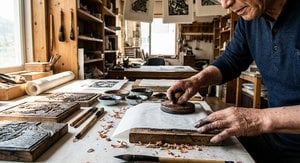
木刻版画的持久遗产:技术、历史与艺术表达 (Mùkè bǎnhuà de chíjiǔ yíchǎn: jìshù, lìshǐ yǔ yìshù biǎodá)
探索浮世绘的迷人世界:深入了解其历史、精湛技法和对西方艺术的深远影响。ArtsDot为您提供专业的艺术咨询与高品质浮世绘复制品,重现经典之美。

The Enduring Legacy of Fine Art Prints: Technique, History & Aesthetic Impact
Explore the rich history & techniques of fine art prints. Discover investment potential, assess authenticity, and learn how to preserve your collection with expert guidance. Trusted insights for discerning collectors.

高檔藝術品複製技術:Giclée微噴的檔案品質與鑑賞細節
深入了解Giclée微噴技術:檔案品質、色彩還原的專業解析。探索高檔藝術品複製的細節與保存技巧,為您的收藏提供博物館級別的選擇。專家指導,確保完美呈現原作神韻。