

 效果预览
效果预览
 切换至印刷版
 分享
分享 分享
分享
 详情
详情

 下载
下载
 相似作品
相似作品 X射线
X射线 幻灯片播放
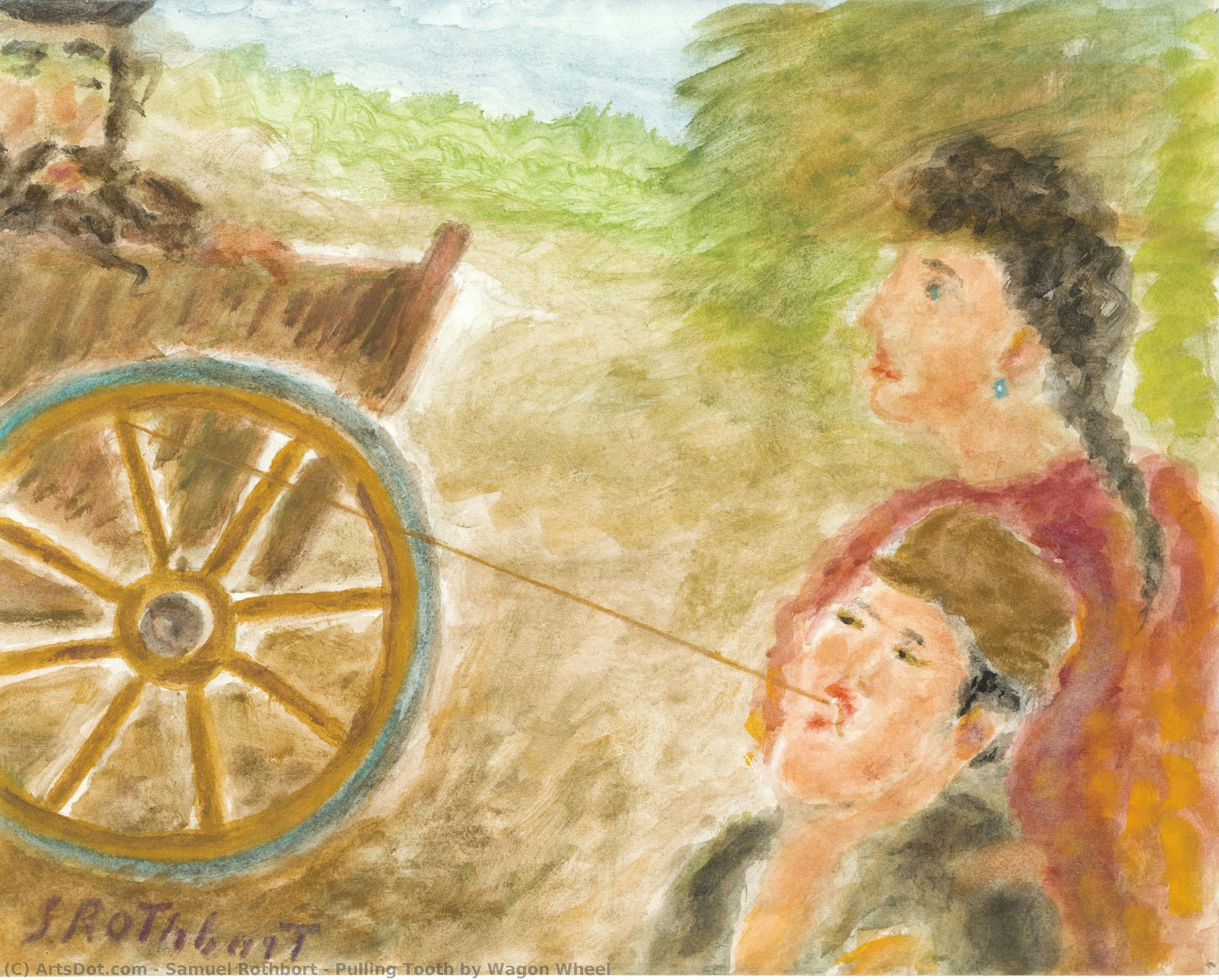
幻灯片播放Pulling Tooth by Wagon Wheel


 展开详情
展开详情
购买高分辨率增强版数字图像,其品质远超在线预览。
每一份文件都由我们的内部专家使用先进工具与专业的后期润色技术精心打造。我们确保每一张图像都具备卓越的清晰度、精准的色彩还原度以及细腻的细节表现。
最终文件将在 72 小时内通过电子邮件交付,并针对专业、编辑及印刷用途进行了优化。其品质与顶级设计工作室、出版社和画廊所信赖的标准完全一致。
每份数字图像订单均包含
专业数字图像交付,品质保障
选择 ArtsDot.com,您获得的不仅仅是一张图像——您收到的是经过专业级增强、精雕细琢的数字艺术作品,并享有满意保证。以下是您的订单中自动包含的所有内容:

邮件快速送达
您的高分辨率数字图像文件将在下单后 72 小时内通过电子邮件发送给您 —— 即可立即使用。

AI 增强型数字文件
您的艺术品经过专业优化,结合先进的 AI 技术与人工修饰,确保呈现极致的细节、清晰度与色彩准确度。

终身免费重发服务
不小心删除了文件或找不到了?没关系——我们将随时为您免费重发。

无需进口费用,始终如一
即刻拥有您的艺术作品,无需支付任何关税、税费或运费——数字下载始终免税。

色彩精准保证
我们通过专业工具与色彩管理技术,确保您的数字图像尽可能真实地还原原作色彩。

60天满意保证
如果您对所购买的数字图像不满意,我们将在60天内为您进行修改或退还100%的款项——无需任何解释。

100% 退款保证
如果不满意?在收到数字文件后的60天内,我们为您提供全额退款——无需任何理由。

批量订单优惠
购买 3 张图片可享 10% 折扣 - 购买 5 张可享 15% 折扣 - 购买 10+ 张可享 20% 折扣。非常适合创意项目、画廊和机构使用。
藏品详情
A Moment Frozen in Time: The Nostalgia of Rothbort
In the quiet, evocative strokes of Samuel Rothbort’s Pulling Tooth by Wagon Wheel, we are transported to a bygone era, a time when life moved at the rhythmic pace of a horse-drawn carriage. Painted in 1950, this piece serves as a profound window into the mid-century fascination with Americana and the preservation of folk memory. The scene captures a visceral, almost cinematic moment: a man seated within the sturdy frame of an old-fashioned wagon, surrounded by figures that populate a landscape of shared human experience. There is an undeniable sense of storytelling embedded in the composition, as if Rothbort has paused a moving picture to allow us to contemplate the grit and grace of rural life.
The painting’s strength lies in its ability to evoke nostalgia—not merely as a longing for the past, but as a deep respect for the textures of history. The prominent wagon wheel, with its meticulously rendered spokes, acts as both a structural anchor and a symbol of the cyclical nature of time and progress. As we gaze upon the figures positioned around this central element, we feel the weight of their presence; they are not mere bystanders but participants in a communal narrative that feels both intimate and universal.
Mastery of Light and Human Connection
Technically, Rothbort demonstrates a masterful command over chiaroscuro, using the interplay of light and shadow to breathe life into the scene. The way light catches the edges of the wooden wheel and illuminates the faces of the onlookers creates a sense of three-dimensional realism that draws the viewer inward. This careful manipulation of illumination does more than just define form; it sets an emotional tone of quiet reflection. The shadows are not merely dark spaces but are filled with mystery, suggesting the untold stories of the characters inhabiting this rustic setting.
For the discerning collector or interior designer, this artwork offers a sophisticated layer of depth to any space. Its palette, grounded in earthy, organic tones, provides a sense of stability and warmth, making it an ideal centerpiece for rooms designed for contemplation or conversation. The painting does not shout; rather, it invites a lingering gaze, rewarding the observer with new details upon every encounter. It is a piece that bridges the gap between historical documentation and fine art, offering a soulful connection to the craftsmanship of the early 20th century.
An Essential Addition to the Curated Home
Choosing a reproduction of Pulling Tooth by Wagon Wheel is an investment in atmosphere. It brings into a modern interior a sense of heritage and permanence. Whether placed in a sunlit study or a grand hallway, the painting acts as an anchor of character, providing a conversation starter that speaks to the enduring human condition. Rothbort’s ability to blend the mundane—a simple moment by a wagon—with the profound makes this work a timeless treasure for those who appreciate art that possesses both a historical heartbeat and a lasting aesthetic elegance.
相似艺术品


艺术家简介
Early Life and Artistic Beginnings
Samuel Rothbort (1882-1971) emerged from the quiet Russian town of Volkovysk, where he absorbed the traditions of his homeland—a formative experience that would profoundly shape his artistic vision. Born into a family steeped in Jewish heritage, Rothbort’s early life was marked by exposure to folklore and storytelling, elements which subtly permeate his later oeuvre. From a young age, he demonstrated an innate talent for sculpting, crafting animals from bread dough in his mother's kitchen—a testament to both his creativity and practical skills. This formative period instilled within him a dedication to craftsmanship and observation that would become hallmarks of his artistic practice.Immigration to America and Artistic Exploration
In 1904, Rothbort embarked on a journey westward, immigrating to the United States and establishing himself in New York City. This relocation coincided with a burgeoning artistic landscape—a vibrant community brimming with innovation and experimentation—where he honed his skills as an artist and sculptor. Initially working as a glassware store employee while simultaneously pursuing artistic endeavors like charcoal portraits and leatherworking training, Rothbort’s versatility underscored his adaptability to new environments and opportunities. He embraced the challenges of adapting to American culture whilst retaining the core values instilled in him during his Russian upbringing.Style and Notable Works
Rothbort's artistic style is characterized by a distinctive fusion of traditional and modern sensibilities. Notably, he gained recognition for his series of ‘Shtetl’ paintings—a poignant exploration of life in Volkovysk, Russia—capturing the atmosphere and spirit of a bygone era with remarkable detail. These canvases stand as powerful reminders of Jewish culture and heritage during the early 20th century. His meticulous technique combined elements of realism with expressive brushstrokes, reflecting influences from artists like Hans Memling and Simon Luttihuis. Among his celebrated works are pieces housed at the Museum Pomorskie in Danzig, Poland, and the Muzeum w Warszawie in Warsaw, Poland—institutions that acknowledge Rothbort’s contribution to Polish art history.Influences and Artistic Inspiration
Rothbort's artistic sensibilities were nurtured by a rich tapestry of influences—spanning from Flemish Renaissance masters like Hans Memling and Simon Luttihuis to the literary traditions of Russia, particularly Tolstoy and Mendeleev. These inspirations translated into his art through careful observation and stylistic choices. He sought to convey emotion and narrative depth within his compositions, mirroring the humanist values prevalent in European culture during his time.Legacy and Historical Significance
Samuel Rothbort’s legacy extends beyond his artistic creations—it resides in his embodiment of resilience and perseverance as a self-taught artist who overcame obstacles to achieve considerable success. His work continues to resonate with audiences today, serving as an enduring symbol of cultural heritage and artistic expression. Institutions like the Museum Pomorskie and Muzeum w Warszawie recognize Rothbort’s contribution to Polish art history, ensuring that his vision persists across generations. Explore Rothbort's evocative paintings at https://AllP
Samuel Rothbort
1882 - 1971 , Russia
基本信息
- Artistic Movement Or Style: Shtetl paintings; Blend of traditional & modern styles
- Artists Or Movements Influenced By This Artist: ['Russian Art']
- Artists Who Influenced This Artist:
- Hans Memling
- Simon Luttichuijs
- Date Of Birth: 1882
- Date Of Death: 1971
- Full Name: Samuel Rothbort
- Nationality: Polish-American
- Notable Artworks:
- Pulling Tooth by Wagon Wheel
- Summer Day at Coney Island
- Melted Candle and Sleeping Rabbi
- Place Of Birth: Volkovysk, Russia

