


 效果预览
效果预览
 分享
分享 分享
分享
 详情
详情 指南
指南

 下载
下载
 相似作品
相似作品 X射线
X射线 幻灯片播放
幻灯片播放 统计数据
统计数据Drawing the Eel
 Oil On Canvas
- WallArt
- Dutch Golden Age
 1650
1650- Early Modern
 75.0 x 106.0 cm
 大都会艺术博物馆
 展开详情
展开详情
手工油画复制品
由我们的艺术家按需定制,为您提供您所选尺寸及画框的布面手工油画。 ( 切换至版画销售渠道 切换至数字图像销售渠道)




P118B $10

P118H $10

P118W $10

P438Z $10

P508JH $12

P508YH $12

P805H $10

P805Z $10

P919BZ $10

P919G $10

P919XJ $10

P959ZH $10

P968JZ $12

W106C $8

W218G $10

W218JH $8

W218Y $10

W307PJ $10

W316G $10

W316PJ $8

W316Y $10

W398PJ $8

W4111J $10

W500HY $15

W500JH $15

W692G $12

W849H $8

W940BG $15

W953PJ $8




从与原作比例一致的预设尺寸中进行选择。

您可以输入自定义尺寸,以适配特定的画框或空间。如果所选尺寸与原图比例不符,我们将通过裁剪作品或添加手绘元素来扩展画面。数字样稿将在制作开始前发送给您确认。
请注意,屏幕预览无法准确反映实际的裁剪或扩展效果,只有样稿才能真实呈现最终的构图。
虽然我们提供定制尺寸服务,但为了保留原作比例,建议您从预设列表中选择尺寸。
下单后,ArtsDot.com 团队将通过电子邮件联系客户获取具体要求,并提供效果预览图。


 玻璃选项仅适用于110厘米以下的尺寸。

Drawing the Eel
复制材质
复制品尺寸
-


最终总价
$ 263
A Window Into Seventeenth Century Holland
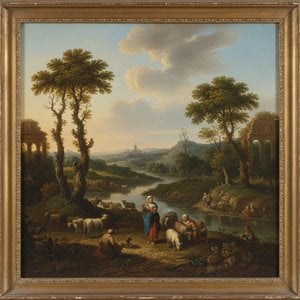
In the heart of the Dutch Golden Age, amidst a period of unprecedented maritime prosperity and cultural flowering, Salomon van Ruysdael captured more than just scenery; he captured the very soul of a nation. His masterpiece, Drawing the Eel, completed around 1650, serves as an exquisite meditation on light, observation, and the subtle grandeur found within the rhythms of everyday life. While many of his contemporaries sought to overwhelm the viewer with dramatic, idealized vistas, Ruysdael championed a remarkably restrained and intimate approach. He possessed a singular ability to render the precise nuances of natural light—particularly that soft, diffused glow filtering through an overcast sky—a technique that transforms a simple village scene into a breathing, atmospheric experience.
The painting unfolds across a wide horizontal expanse, inviting the eye to wander through a tranquil landscape where a river meanders gracefully toward the horizon. The composition is anchored by a substantial house, likely the residence of a wealthy landowner, which stands prominently on the right, its architecture reflecting the stability and burgeoning wealth of the era. Surrounding this structure, trees laden with fruit create a rich tapestry of textures, their leaves catching the light in a way that demonstrates Ruysdael’s meticulous mastery of detail. This is not merely a landscape, but a carefully constructed stage where the elements of nature and human industry exist in a delicate, harmonious balance.
The Pulse of Village Life and Festive Tradition
Beyond its serene landscape, Drawing the Eel is a vibrant chronicle of social history. The canvas is alive with the movement of a community engaged in the seasonal festivities of a clear winter day. Scattered throughout the scene are figures that breathe life into the Dutch countryside: villagers tending to livestock, children playing near the riverbank, and groups gathered around carts in moments of shared greeting. At the center of this social tapestry lies the depiction of palingtrekken, or "eel pulling," a traditional Dutch festival pastime that adds a layer of cultural depth to the work.
Every brushstroke serves to document the textures of 17th-century life, from the heavy folds of woolen clothing to the shimmering reflections on the water’s surface. The presence of boats on the river hints at the vital commerce and trade that fueled the Dutch economy, while the inclusion of cows and horses underscores the essential connection between the people and their land. For the discerning collector or interior designer, this painting offers a profound sense of narrative richness; it is a piece that rewards repeated viewing, revealing new details of human interaction and rural industry with every encounter.
A Timeless Aesthetic for the Modern Interior
For those seeking to infuse a space with historical elegance and emotional depth, a high-quality reproduction of this work offers unparalleled inspiration. The color palette—dominated by verdant greens, earthy tones, and the luminous blues of a fair-weather sky—is both soothing and sophisticated, making it an ideal centerpiece for a variety of interior styles, from classical traditionalism to contemporary organic modernism. The painting’s ability to evoke a sense of tranquility and nostalgia allows it to act as a "window," expanding the perceived boundaries of a room and bringing the peaceful spirit of the Dutch countryside indoors.
Owning a piece that echoes the mastery of Salomon van Ruysdael is an opportunity to celebrate the enduring power of observation. This artwork does not demand attention through grandiosity, but rather earns it through its quiet, persistent beauty. It remains a testament to a time when art was used to find the extraordinary within the ordinary, making it a timeless acquisition for anyone who appreciates the profound impact of light, landscape, and the human story.
相似艺术品


艺术家简介
荷兰风景画中的细腻宗师:萨洛蒙·范·雷斯达尔的一生
在十七世纪荷兰那个由前所未有的繁荣与艺术盛世所定义的黄金时代,萨洛蒙·范·雷斯达尔(Salomon van Ruysdael)作为一位具有深刻大气感敏锐度的画家脱颖而出。他于1602年左右出生在纳尔登,其一生与荷兰黄金时代的脉络紧密交织。尽管历史的聚光灯往往投射在他名声更显赫的弟弟雅各布·范·雷斯达尔身上,但萨洛蒙却在风景画的艺术殿堂中开辟出了一个独特且无可替代的地位。他的作品不仅仅是在描绘土地,更是在捕捉荷兰乡村那富有生命力的气息——在那里,光影与水流在画布上上演着一场无声而永恒的舞剧。
他艺术造诣的基石,奠定于一个将匠心与精准视为至高的家庭之中。他的父亲雅各布·詹斯·德·高耶是一位技艺精湛的木匠,擅长制作精美的乌木框架,用以装裱那个时代最珍贵的镜子与画作。这种早期对构架细节的严谨接触,或许在萨洛蒙心中植入了对质感与结构完整性的终身敬畏。尽管他的正式教育范围广博得令人惊叹——涵盖了复杂的拉丁语甚至医学知识——但他的心始终系于视觉世界。通过1623年加入享有盛誉的哈勒姆圣路加行会,他进入了顶尖艺术家的圈层,并直接受到扬·波塞利斯(Jan Porcellis)和埃塞亚斯·范·德·费尔德(Esaias van de Velde)等大师的影响。这些导师是大气透视法与观察现实主义的倡导者,为萨洛蒙日后创作那些宁静、以水景为核心的远景提供了必备的技术语言。
水与光的交响乐
萨洛蒙·范·雷斯达尔真正的卓越之处,在于他能够呈现荷兰大气中那转瞬即逝的特质。不同于许多追求戏剧性、宏大景观或汹涌风暴的同代艺术家,萨洛蒙在内陆水道的宁静中找到了最伟大的灵感。他的构图往往围绕着河流律动的流向与湖泊平静的广阔展开,天际与水面在柔和的光线与沉稳色调的无缝过渡中交汇。在诸如德文特附近的河流景观等杰作中,人们可以观察到他如何利用细腻的色调来唤起荷兰那潮湿而清凉的空气,邀请观者步入一个深邃而静谧的瞬间。
他的技术造诣在处理海洋与河流题材时尤为显著。在《内陆水域上的帆船》等作品中,他展现了无与伦比的能力,能够捕捉到船只在平静水流中航行时的重量感与动态美。人物元素的融入——例如在《带有渔民的河流》中微妙出现的渔夫——从未显得突兀;相反,这些人物的存在为风景增添了尺度感与生活气息。在他的画笔下,水不再仅仅是一个平面,它化作一面镜子,倒映着变幻的云朵以及定义了荷兰天空的那种柔和而弥散的光芒。
艺术遗产与历史意义
萨洛蒙·范·雷斯达尔的历史意义在于他作为大气风景画先驱的角色。他推动了艺术从早期时代僵硬的地形描绘,向一种更具情感化、感官化的自然体验转变。他能够将静物元素的精准度与风景画的辽阔感完美融合,创造出一种独特的审美范式,这引起了荷兰中产阶级的共鸣,因为他们渴望艺术能反映出自己那和平且勤勉的生活环境。
时至今日,他的艺术遗产仍被保存在世界上一些最受尊崇的机构中,包括蒂森·伯纳米萨博物馆(Museo Thyssen-Bornemisza)。研习范·雷斯达尔的作品,本身就是一场关于耐心与观察力的修行。他的作品始终是那种“于细微处见美”的明证,提醒着我们:最深刻的艺术真理往往隐藏在河流最静谧的倒影中,或是落日最后那抹温柔的光辉里。他对荷兰黄金时代的贡献,依然是人类学习如何不仅观察世界之表象,更去感受世界之灵魂的重要篇章。

萨洛蒙·范·雷斯达尔
1602 - 1670 , 荷兰
艺术家简介
- Artistic Movement Or Style: 荷兰黄金时代风景画
- Artists Or Movements Influenced By This Artist: ['Jacob Van Ruisdael']
- Artists Who Influenced This Artist:
- Jan Porcellis
- Esaias van de Velde
- Date Of Birth: 荷兰纳尔登 (1602)
- Date Of Death: 1670年11月3日
- Full Name: Salomon van Ruysdael
- Nationality: 荷兰
- Notable Artworks:
- 河流风景
- Gorinchem附近的渡口
- 德文特的景观
- Place Of Birth: 纳尔登
相关文章

荷兰黄金时代:十幅定义艺术史的巨作 | ArtsDot
探索荷兰黄金时代的艺术巅峰! 伦勃朗、维米尔等大师名作,带您领略巴洛克艺术的辉煌。高清画作、博物馆级品质,点亮您的家居空间。ArtsDot.com 提供精选艺术复制品和定制装饰方案。立即在线探索全系列!

Charles Leickert: Capturing the Dutch Golden Age Light – A Comprehensive Study of Technique, Context, and Legacy
Explore the captivating winter landscapes of Charles Leickert, a master of Dutch Golden Age light & atmosphere. Discover his techniques, symbolism, and lasting legacy – a comprehensive study for art enthusiasts and collectors.
Nicolaes Berchem: Dutch Golden Age Pastoralism & the Evolution of Landscape Painting
Explore the captivating world of Nicolaes Berchem, a leading Dutch Golden Age painter. Discover his idyllic landscapes, masterful technique & lasting influence on art history. Learn more at ArtsDot.

Golden Light & Dutch Skies: Bringing the Magic of Dutch Golden Age Landscapes into Your Home
Transform your home with the breathtaking light of Dutch Golden Age landscapes. Discover how hand-painted oil reproductions of masterworks like Ruisdael and Vermeer bring timeless elegance, atmosphere, and soulful texture to modern interiors. Elevate your space with museum-quality art.

荷兰黄金时代绘画:文化创新中的现实主义反思
深入探索荷兰黄金时代绘画的文化创新与现实主义反思。本文解读伦勃朗、维米尔等大师的作品,并结合玛莉特·韦斯特曼的图像学研究,揭示艺术史背后的社会语境与现代性意识觉醒。