

 实景预览
实景预览
 分享
分享 分享
分享
 详情
详情 指南
指南

 下载作品
下载作品
 相似作品
相似作品 X射线
X射线 幻灯片播放
幻灯片播放 问答
问答 统计数据
统计数据Two Heads


 展开全文
展开全文
艺术微喷/版画
博物馆级艺术微喷或帆布版画,制作高效,并提供多种饰面选择。 ( 订购纯手工绘制画作 切换至数字图像销售渠道)




P118B ¥10

P118H ¥10

P118W ¥10

P438Z ¥10

P508JH ¥12

P508YH ¥12

P805H ¥10

P805Z ¥10

P919BZ ¥10

P919G ¥10

P919XJ ¥10

P959ZH ¥10

P968JZ ¥12

W106C ¥8

W218G ¥10

W218JH ¥8

W218Y ¥10

W307PJ ¥10

W316G ¥10

W316PJ ¥8

W316Y ¥10

W398PJ ¥8

W4111J ¥10

W500HY ¥15

W500JH ¥15

W692G ¥12

W849H ¥8

W940BG ¥15

W953PJ ¥8




您可以从与原作比例一致的预设尺寸中进行选择。

请输入您所需的宽度和高度,以适配您的画框或墙面。由于印刷品只能进行裁剪,无法超出原图尺寸,因此若比例不一致,画面的一部分将会被裁切。在正式印刷之前,我们会为您发送一份数字效果图供您确认。本页面显示的图片并非最终裁剪后的效果——只有效果图才能展示真实的裁剪情况。


 玻璃选项仅适用于110厘米以下的尺寸。

Two Heads
艺术微喷/版画
复刻品尺寸
-


最终结算价
¥ 422
相似作品


艺术家简介
A Life Immersed in Color and Tension: The World of Rudolf Wacker
Rudolf Wacker, born in Bregenz, Austria in 1893, was an artist whose relatively short life was deeply etched by the tumultuous currents of the early 20th century. Though he died prematurely in 1939, his legacy as a pivotal figure within Austrian Expressionism and a precursor to Magical Realism endures. Wacker’s artistic journey wasn't one of immediate acclaim but rather a gradual unfolding shaped by personal hardship, political awareness, and an unwavering commitment to capturing the emotional weight of his time. His early life was supported by parents who recognized and nurtured his talent, allowing him to pursue studies at the College of Industrial Drawing in Bregenz before venturing towards Vienna and later Weimar—centers of artistic ferment. However, initial rejection from the Academy of Fine Art didn’t deter him; instead, it propelled him toward alternative avenues of learning and self-discovery.From Expressionist Roots to a Unique Vision
The years surrounding World War I proved formative for Wacker. His experiences as a soldier, including nearly five years spent in Siberian prison camps, left an indelible mark on his psyche and subsequently, his art. These harrowing events fueled a deeply personal artistic language that initially drew from the intensity of Expressionism but soon began to diverge toward something uniquely his own. After the war, Wacker gravitated towards Berlin’s vibrant avant-garde scene, dividing his time between the city's creative energy and the quieter landscapes of Vorarlberg. It was during this period he married Ilse Moebius, who became a frequent subject in his paintings. While initially exploring Expressionist themes, Wacker gradually developed a style characterized by precise draftsmanship, bold color palettes, and an unsettling emotional depth—qualities that would later be associated with the *Neue Sachlichkeit* (New Objectivity) movement. However, to categorize him solely within this framework feels limiting; his work transcends simple labels, hinting at a burgeoning “Magischer Realismus” – a magical or phantastic realism that sought to reveal hidden psychological truths beneath the surface of everyday life.Navigating Artistic and Political Landscapes
The 1920s saw Wacker actively engage with the artistic community, co-founding “Der Kreis” (The Circle) in an attempt to foster collaboration among artists in the Lake Constance region. Despite securing his first museum sale in 1928, financial struggles remained a constant companion. He was a voracious reader of contemporary art and deeply critical of Austrian painting, preferring instead to focus on German artistic developments. His fascination with Old Masters, particularly those from the 17th century, also informed his meticulous technique and symbolic use of imagery. As the political climate darkened in the 1930s, Wacker’s work took on a more overtly critical tone. Unlike many of his contemporaries, he openly challenged the rising tide of Nazism through his art and writings, participating in peace rallies and advocating for resistance—actions that brought him under scrutiny from authorities. This period was marked by increasing financial hardship and limited recognition despite several exhibitions in Vienna.Legacy and Enduring Influence
Rudolf Wacker’s most celebrated works include ‘Two Heads’ (1932) and ‘Self-Portrait with a Palette’ (1935), paintings that exemplify his distinctive style—a potent blend of psychological insight, technical mastery, and emotional intensity. His influence can be seen in the work of later artists who explored similar themes of alienation, anxiety, and the fragility of human existence. Though he didn't achieve widespread fame during his lifetime, Wacker’s art has gained increasing recognition in recent decades, with exhibitions at prestigious institutions such as the Kunsthaus Zürich, the Neue Galerie in New York, and the Belvedere in Vienna. His paintings are now held in prominent collections including those of the Museum of Modern Art in New York and the Tate Gallery in London—testaments to his enduring artistic significance. Wacker’s ability to capture the anxieties and complexities of a rapidly changing world continues to resonate with audiences today, solidifying his place as a vital voice within 20th-century art history. His work serves as a poignant reminder of the power of art to confront difficult truths and bear witness to the human condition.
Rudolf Wacker
1893 - 1939 , Austria
艺术家简介
- Full Name: Rudolf Wacker
- Nationality: Austrian
- Date Of Birth: 1893
- Date Of Death: 1939
- Place Of Birth: Regensburg, Austria
- Notable Artworks:
- Two Heads
- Self-Portrait with Palette
- Artistic Movement Or Style: Expressionism
- Artists Who Influenced This Artist:
- Van Gogh
- Edvard Munch
- Artists Or Movements Influenced By This Artist: ['Vienna Secession']
相关文章

画布上的流光溢彩:油画技法、历史沿革与当代实践
深入探索油画技法的历史沿革,从文艺复兴到卡拉瓦乔的革命性创新。了解多层涂布技术如何塑造色彩与光影,并洞悉当代油画实践中的传统与突破。ArtsDot为您提供专业的艺术品咨询和定制服务。

The Enduring Power of Painting: A Historical & Contemporary Exploration of Form and Emotion
Explore the rich history & enduring techniques of oil painting with ArtsDot. Discover masterpieces, learn about art collecting, and find authentic handmade reproductions crafted by skilled artists.
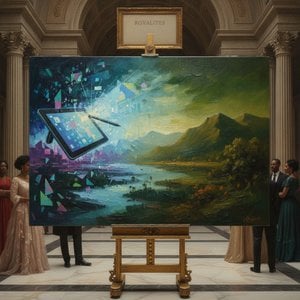
将数字艺术升华为手绘油画,凭借ArtsDot实现高额版税与精品复制品的轻松售卖
ArtsDot以专业手绘油画复制技术,将数字艺术与NFT作品转化为博物馆级精品,兼具高端美感与可观版税收益。我们提供定制肖像、限量版复制及全球物流保障,让您在家中拥有可信赖的艺术传承与投资价值。

The Enduring Legacy of Oil on Canvas: Technique, History & Aesthetic Impact
Explore the rich history & techniques of oil painting – from Renaissance masters to Impressionism. Discover pigments, layering methods, and why this timeless medium endures. Expert insights for artists & art enthusiasts.

Oil on Canvas: A Historical & Technical Exploration of a Timeless Artistic Medium
Explore the rich history & enduring techniques of oil painting on canvas. Discover the science behind its longevity, conservation practices, and contemporary relevance. Expert insights for art enthusiasts.