


 效果预览
效果预览
 购买印刷品
购买印刷品 分享
分享 分享
分享
 详情
详情

 下载
下载
 相似作品
相似作品 X射线
X射线 幻灯片播放
幻灯片播放Untitled (3)

 展开详情
展开详情




































从与原作比例一致的预设尺寸中进行选择。

您可以输入自定义尺寸,以适配特定的画框或空间。如果所选尺寸与原图比例不符,我们将通过裁剪作品或添加手绘元素来扩展画面。数字样稿将在制作开始前发送给您确认。
请注意,屏幕预览无法准确反映实际的裁剪或扩展效果,只有样稿才能真实呈现最终的构图。
虽然我们提供定制尺寸服务,但为了保留原作比例,建议您从预设列表中选择尺寸。
下单后,ArtsDot.com 团队将通过电子邮件联系客户获取具体要求,并提供效果预览图。


 玻璃选项仅适用于110厘米以下的尺寸。

Untitled (3)
复制材质
复制品尺寸
-


最终总价
$ 263
相似艺术品


艺术家简介
Rudolf Belling: A Sculptor of Paradoxes
Rudolf Belling (1886-1972) wasn’t merely a sculptor; he was a provocateur, a theorist, and ultimately, a visionary who fundamentally challenged the established norms of 20th-century art. Born in Berlin into a family with roots in metalworking, Belling's early exposure to craftsmanship laid the groundwork for his later explorations of form and space. However, it wasn’t simply technical skill that defined him; rather, it was an insistent questioning of conventional sculptural approaches – a desire, as he himself described, to “show only good views.” This seemingly simple statement belied a complex intellectual project, one rooted in the writings of Benvenuto Cellini and fueled by a deep dissatisfaction with the prevailing theories of his time. Belling’s career became inextricably linked with periods of intense political upheaval, marked by exile, persecution, and ultimately, a remarkable resilience.Early Influences and Theoretical Foundations
Belling's artistic journey began in the early 1900s, initially within the framework of traditional sculpture training. Yet, he quickly recognized limitations in the prevailing emphasis on creating a single, definitive viewpoint – the idea that a sculpture should be “comprehensible” and never force the observer to circle it, as articulated by Adolf von Hildebrandt. This critique resonated deeply with Belling’s own artistic sensibilities. He drew inspiration from the Renaissance sculptor Benvenuto Cellini, whose writings advocated for sculptures possessing multiple compelling perspectives, mirroring the way we naturally perceive objects in our environment. This concept of “good views” became a central tenet of Belling's theory – that sculpture should embrace complexity and offer a multitude of engaging viewpoints simultaneously. This theoretical framework wasn’t merely academic; it directly informed his creative process, leading him to develop innovative techniques and explore unconventional materials.The "Dreiklang" and the Rise of a Maverick
Belling's most famous work, the “Dreiklang” (Triad) created in 1919-1924, perfectly encapsulates his theoretical principles. This monumental sculpture, constructed from bronze, exemplifies Belling’s desire to present multiple perspectives within a single form. The piece is deliberately ambiguous, inviting viewers to approach it from various angles and discover new relationships between its constituent parts. The “Dreiklang” immediately generated considerable debate among critics and fellow artists, establishing Belling as a controversial figure in the burgeoning avant-garde scene of Berlin. He was lauded by figures like Carl Einstein and Paul Westheim for his radical ideas, yet simultaneously challenged by established artistic voices who dismissed his work as overly complex or lacking in traditional beauty. This tension – between innovation and acceptance – became a recurring theme throughout Belling’s career.Exile, Re-evaluation, and the Istanbul Years
The rise of Nazism dramatically altered Belling's trajectory. In 1933, his work was deemed “degenerate” by the regime, leading to its destruction or confiscation. Forced into exile, Belling sought refuge in New York City in 1935, where he exhibited a selection of his most significant works at the Weyhe Gallery. This period provided him with invaluable exposure and allowed him to continue developing his theories, lecturing on modern sculpture and space. However, the looming threat of war prompted him to return to Germany in 1937, driven by concerns for his nine-year-old son, Thomas. His subsequent years in Istanbul were particularly formative, where he served as a lecturer at the Academy of Fine Arts, introducing Turkish students to the principles of modern sculpture and fostering a new generation of artists. During this time, Belling created a striking bronze statue of Mustafa Kemal Atatürk, Turkey’s founder, solidifying his position as a respected figure within the country's artistic landscape.Legacy and Lasting Influence
Rudolf Belling’s impact on 20th-century sculpture is profound, despite the challenges he faced throughout his career. His insistence on multiple viewpoints, his embrace of ambiguity, and his willingness to challenge established conventions paved the way for subsequent generations of sculptors. His theoretical writings continue to be studied by art historians and critics, while his sculptures – often characterized by their dynamic forms and complex spatial relationships – remain powerful testaments to his unique vision. Belling’s story is not simply one of artistic achievement; it's a poignant reflection on the intersection of art, politics, and personal resilience—a testament to an artist who refused to compromise his principles in the face of adversity. His work serves as a reminder that true innovation often arises from questioning the status quo and embracing the inherent paradoxes of form and space.
rudolf belling
1886 - 1972
艺术家简介
- Artistic Movement Or Style: Modern Sculpture
- Artists Or Movements Influenced By This Artist:
- Carl Einstein
- Paul Westheim
- Artists Who Influenced This Artist: ['Benvenuto Cellini']
- Date Of Birth: August 26, 1886
- Date Of Death: June 9, 1972
- Full Name: Rudolf Belling
- Nationality: German
- Notable Artworks:
- Dreiklang (Triad)
- Untitled Sculptures
- Place Of Birth: Berlin, Germany
相关文章


Edgar Degas: Capturing Modern Life – A Study of Movement, Observation, and the Parisian Belle Époque
Explore the captivating world of Edgar Degas! Discover his innovative techniques, iconic ballet paintings, and unique portrayal of Parisian life in this insightful art history study.

青铜雕塑艺术史:跨越千年的力量与美感,探究古代铸造工艺与现代创作的永恒魅力
探索青铜雕塑的千年魅力,本文由资深艺术史学者撰写,深入解析古代铸造技术与现代收藏价值。为高端藏家提供专业鉴定、保养指南和投资建议,让您在信任与品质中发现珍贵艺术品。
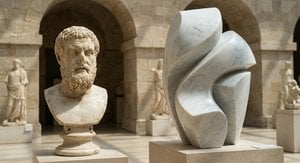
The Enduring Allure of Marble in Art History: From Classical Sculpture to Modern Abstraction
Explore the captivating history of marble sculpture from ancient Greece to modern art. Discover renowned artists like Canova & Michelangelo, carving techniques, and investment insights at ArtsDot.

The Enduring Legacy of Bronze Sculpture: A Collector's Guide to Form & Cultural Significance
Explore the rich history & enduring appeal of bronze sculpture with expert insights for collectors at ArtsDot. Learn about casting techniques, iconic artists, and collecting tips to build a discerning art collection.

