


图片将根据您的选择进行更新: , .
藏品详情
Experience Roy Lichtenstein’s ‘Bull (2)’ (1973) – a dynamic Pop Art screenprint bursting with bold yellow and red hues. A captivating study of form, color, and iconic imagery by a modern art master.
 展开全文
展开全文
手工油画复制品
由我们的艺术家按需定制,为您提供您所选尺寸及画框的布面手工油画。 ( 切换至版画销售渠道 切换至数字图像销售渠道)
更多关于此画作的信息
 实景预览
实景预览
 分享
分享 分享
分享
 详情
详情 指南
指南

 下载作品
下载作品
 相似作品
相似作品 X射线
X射线 幻灯片播放
幻灯片播放 问答
问答 统计数据
统计数据只需简单四步,即可订购您的画作
请慢慢挑选。您可以随时更改任何选项;订单详情卡中的价格将随您的选择实时更新。
1 四步中的第一步
您想要哪种尺寸?
这些尺寸均保持了原画的比例。示意图展示了您所选尺寸在墙面上的效果,其位置位于一张两米宽的沙发上方。
或输入您自定义的尺寸
您可以从与原作比例一致的预设尺寸中进行选择。

请输入您需要的宽度和高度,以适配您的画框或墙面。由于作品为手工绘制,若选择不同比例的尺寸,艺术家可能会在画面边缘多画一些或稍作裁剪 —— 由您决定。在开始绘画之前,我们会为您发送一份数字效果图供您确认。本页面上展示的图片并非最终实物 —— 只有效果图才能反映真实结果。
2 四步中的第二步
您希望如何装裱:卷轴装、绷框装还是带框装?
以下价格对应您在第一步中所选的尺寸。
选择绷边画布的边缘样式
选择您的画框

白色边缘 ¥1

边缘晕染效果 ¥1

延展式 ¥1

P118B ¥10

P118H ¥10

P118W ¥10

P438Z ¥10

P508JH ¥12

P508YH ¥12

P805H ¥10

P805Z ¥10

P919BZ ¥10

P919G ¥10

P919XJ ¥10

P959ZH ¥10

P968JZ ¥12

W106C ¥8

W218G ¥10

W218JH ¥8

W218Y ¥10

W307PJ ¥10

W316G ¥10

W316PJ ¥8

W316Y ¥10

W398PJ ¥8

W4111J ¥10

W500HY ¥15

W500JH ¥15

W692G ¥12

W849H ¥8

W940BG ¥15

W953PJ ¥8

H24-GOLD ¥30

H24-SILVER ¥30

H36-GOLD ¥45

H36-SILVER ¥45
带框
边框材质: . 含框总尺寸: .
3 四步中的第三步
您想对画作进行任何修改吗?
大多数人的回答是否定的。由于每一幅画作都是手工绘制,我们的艺术家也可以为您进行定制。
下单后,ArtsDot.com 团队将通过电子邮件联系客户获取具体指令,并提供效果预览图
4 第四步(共四步)
几种饰面选项
所有选项均为可选。已选择的答案不会产生额外费用。
出自哪位艺术家之手?
像博物馆里的那样,配上一块铭牌?
青铜铭牌雕刻详情
This elegant plaque features the artist's name and the title of the artwork, finely engraved for a timeless presentation.
It is made from bronze with a refined, elegant finish. The text is precisely laser-engraved for a sharp and permanent result. Measuring 9x2 cm, the plaque is compact yet easy to read. It's built to be durable and scratch-resistant, offering a professional, museum-quality look. Mounting is simple thanks to the included adhesive backing.
透明亚克力铭牌详情
The plaque includes essential engraved details such as the artist's name, the title of the artwork, the date it was created, the type of media used-like oil on canvas or watercolor-a brief description of the piece, and a QR code that links to the complete artwork information.
It is crafted from clear acrylic, offering a sleek, modern appearance. The text is UV-engraved in black to ensure strong visual contrast. With a size of 10x15 cm, it ensures optimal readability. It comes equipped with two metal hooks for secure wall mounting. The plaque is designed to be weather-resistant, making it suitable for various environments, and it includes interactive features that work seamlessly with smartphone scanning.
黑色亚克力铭牌详情
This elegant plaque includes engraved information such as the artist's name, the title of the artwork, the date it was created, the type of media used (like oil on canvas or watercolor), a short description of the artwork, and a QR code for quick access to more information.
The plaque itself is made from refined black acrylic with a premium finish. The text is laser-engraved in white for high contrast and readability. Its size is 10x15 cm, designed to be easy to read. It comes with two metal hooks for professional mounting. The design is sleek and fits any interior style. It is also weather-resistant and durable, with built-in digital integration for mobile compatibility.
需要保护性光油吗?
您预计何时收到?
✓ 确认并下单
您的画作,正如您所订购的那样

Bull (2) (1973)
复制品材质
复刻品尺寸
-

精选资深艺术家
更丰富的细节、更精湛的工艺以及更充裕的制作时间
-

复制画装裱选项
-
-
对于任何边长超过 105 厘米(约 41 英寸)的艺术品或复制品,画框将以拆解后的组件形式发货。此方法可确保安全送达并防止运输过程中的损坏。
需由专业人员组装 —— 本产品不适用于 DIY 操作。
该组件必须由经验丰富的专业装裱师进行组装及画布绷装,过程中需使用木工胶(不随附)、画布绷边钳以及夹具,以确保在胶水干燥期间保持内框方正。组装不当或画布张力不均可能会对艺术品造成永久性损坏,且此类情况不在我们的保修范围之内。
 对于任何边长超过 105 厘米(约 41 英寸)的艺术品或复制品,画框将以拆解后的组件形式发货。此方法可确保安全送达并防止运输过程中的损坏。
包含所有实木条,尺寸精确,便于组装。
使用随附的螺丝进行组装,另需准备用于角部连接的木工胶(本品不含木工胶),请由您的装裱师自行准备。
需另备专业工具(本套件不含):画布绷紧钳以及用于在胶水干燥过程中保持木条方正的夹具。
重要提示:
角部连接处需要使用木工胶,边框条必须使用夹具固定直至胶水完全干透,且在组装好的框架上绷紧画布需要用到画布拉伸钳。以上工具均不包含在套装内。请在订购此尺寸前,预先联系经验丰富的专业装裱师。

展品铭牌
-
-

保护性清漆
光泽清漆(提亮色彩,防光防潮)
-

定制我的艺术品
定制化示例:替换面部为客户照片;添加宠物(例如,将猫替换为狗);在背景中加入隐藏信息;更改背景风景或元素。
-

加急
全球配送()仅需 3-4 周即可送达,无需等待标准时效的 5 周。(10 November)。品质始终如一,绝不妥协。
-
极速达
全球配送(),预计 5 周送达。(17 November)。
已包含
最终结算价
¥ 1764
玻璃选项仅适用于110厘米以下的尺寸。
每份订单均包含
- 全球免运费特快专递服务
- 优质亚麻画布
- 全程运输保险
- 关税退款保证
- 色彩精准还原保证
- 100天退货保障(仅限制造缺陷)
- 100% 退款保证
- 多件购买优惠


Roy Lichtenstein’s ‘Bull (2)’ – A Pop Art Icon of Boldness and Contemplation
Roy Lichtenstein's “Bull (2),” created in 1973, is more than just a depiction of an animal; it’s a potent distillation of the artist’s signature Pop Art style—a vibrant explosion of color, simplified forms, and a deliberate engagement with the visual language of advertising and comic books. This particular iteration, part of a series exploring the motif of the bull, stands as a testament to Lichtenstein's ability to imbue seemingly mundane subjects with layers of meaning and emotional resonance. The painting immediately commands attention through its striking use of yellow and red – colors traditionally associated with energy, passion, and even danger – creating a dynamic visual tension that draws the viewer in.
The composition itself is deceptively simple. A stylized bull dominates the canvas, rendered in broad, flat areas of color rather than meticulously detailed brushstrokes. This technique, borrowed directly from Ben-Day dots used extensively in commercial printing, gives the image a graphic, almost mechanical quality. The repetition of these small squares creates an illusion of depth and texture, mimicking the effect of printed images. It’s a deliberate move away from traditional representational painting, signaling Lichtenstein's rejection of academic art conventions and his embrace of the visual culture surrounding him.
The Genesis of a Pop Visionary: Context and Influences
To fully appreciate “Bull (2),” it’s crucial to understand the context in which it was created. The 1970s were a period of significant social and cultural change, marked by consumerism, mass media saturation, and a growing skepticism towards established institutions. Pop Art emerged as a direct response to this environment, challenging traditional notions of artistic value and exploring the relationship between art and everyday life. Roy Lichtenstein’s work was deeply influenced by artists like Andy Warhol, who similarly appropriated imagery from advertising and popular culture. However, Lichtenstein's approach differed in its deliberate use of Ben-Day dots and his exploration of themes beyond mere replication – he sought to imbue these borrowed images with a sense of narrative and psychological depth.
Born in Manhattan in 1923, Roy Fox Lichtenstein’s artistic journey began with an interest in realistic drawing and painting. His early training at the Art Students League and subsequent studies at Ohio State University provided him with foundational skills, but it was his encounter with Reginald Marsh, a pioneering realist painter, that truly shaped his approach. Marsh's emphasis on direct observation and capturing the essence of subjects through simplified forms proved to be a key influence on Lichtenstein’s later work. His marriage to Dorothy Herzka (née Lichtenstein), also an artist and art historian, further enriched his intellectual and artistic life.
Decoding the Symbolism: Beyond the Surface
While superficially resembling a commercial print, “Bull (2)” invites deeper interpretation. The bull itself is a potent symbol – often associated with strength, virility, and aggression, but also with fertility and protection. In this context, it can be seen as representing primal forces or perhaps even the anxieties of a rapidly changing society. The vibrant yellow and red colors intensify these associations, creating a sense of urgency and dynamism. The simplified form, devoid of intricate detail, suggests an emotional state rather than a literal representation.
Interestingly, Lichtenstein’s exploration of the bull motif coincided with his interest in mythology and folklore. He frequently referenced ancient stories and symbols in his work, adding layers of historical and cultural significance to his Pop Art images. The series as a whole can be viewed as an investigation into the enduring power of archetypal imagery – how these fundamental symbols continue to resonate across time and cultures.
A Timeless Masterpiece: Reproduction and Interior Design
ArtsDot offers meticulously crafted, hand-painted reproductions of “Bull (2)” that capture the essence of Lichtenstein’s original work with remarkable fidelity. Our artists utilize traditional oil painting techniques to faithfully recreate the bold colors, graphic textures, and dynamic composition of this iconic piece. Whether you're a seasoned art collector or seeking to add a touch of Pop Art flair to your interior design scheme, our reproductions provide an authentic and affordable way to bring Lichtenstein’s vision into your home or office.
The scale and color palette of “Bull (2)” make it exceptionally versatile for various settings. Consider pairing it with complementary neutrals to allow the artwork's vibrancy to truly shine, or juxtapose it with more muted tones for a sophisticated contrast. Explore our range of sizes and framing options to find the perfect fit for your space – and experience the enduring appeal of this Pop Art masterpiece.
常见问题与解答
"Bull (2) (1973)" 在 Pop Art 流派中具有怎样的影响力?
罗伊·利希滕斯坦 的《Bull (2) (1973)》 被归类为 Iconic,并属于 Pop Art 流派。
"Bull (2) (1973)" 的主题与 罗伊·利希滕斯坦 常有的创作主题有何关联?
罗伊·利希滕斯坦 的创作主题常涉及 comic book aesthetics, consumerism, american iconography, popular culture, critique of mass media, pop art experimentation, bold colors, lichtenstein’s signature style”;而《Bull (2) (1973)》则聚焦于 pop art, yellow red, stripes, figure, graphic, bold, lichtenstein。
罗伊·利希滕斯坦 的《Bull (2) (1973)》 的色调是明亮还是深沉?
“Bull (2) (1973)”的整体亮度为brilliant,其亮度值为Luminous。


罗伊·利希滕斯坦
1923 - 1997, 美国
艺术家简介
波普艺术的先驱:罗伊·利希滕斯坦
罗伊·福克斯·李希滕斯坦,1923年10月27日出生于纽约市曼哈顿,是二十世纪艺术领域一位极具影响力的关键人物。作为波普艺术运动的核心代表,他并非简单地反映时代精神,而是积极地对其进行解构,将日常图像转化为引人深思的艺术表达。李希滕斯坦出身于一个中产阶级的犹太家庭,这种文化背景赋予了他对社会的高度敏感性,而童年时期接触博物馆和音乐会所培养出的艺术鉴赏力,则为他日后挑战传统艺术观念奠定了基础。尽管早年对写实绘画表现出浓厚兴趣,但李希滕斯坦的正式训练始于1939年在雷金纳德·马什门下学习美术联盟课程,随后在俄亥俄州立大学进修——短暂中断的原因是二战期间的军队服役。这些经历为他日后通过大众文化和商业美学的视角重新诠释艺术作品提供了坚实的技术基础。他的标志性风格并非诞生于传统的艺术殿堂,而是源自被忽视的日常图像世界,特别是漫画书和广告。从抽象到挪用:艺术轨迹的关键转折
李希滕斯坦早期的作品展现出对抽象表现主义的明显认同,反映了战后时期流行的审美趋势。然而,这一阶段只是一个过渡期,是通往他革命性风格的垫脚石。在罗格斯大学任教期间,他与艾伦·卡普罗相遇,卡普罗的影响重新点燃了他对前波普图像的兴趣。这次相遇引发了他在艺术轨迹上的关键转变,促使他对“高雅”艺术和“低俗”艺术之间的既定界限提出了质疑。他开始超越抽象表现主义的主观表达,转向大众文化——特别是漫画书和广告——客观的视觉语言。1961年标志着一个转折点,《米老鼠看图》大胆地挪用了迪士尼漫画中的角色,预示着他标志性风格的开端。这并非简单的模仿,而是一项艺术重新评估的行为,将日常图像提升到高雅艺术的地位。他不仅仅是复制漫画书,而是运用模仿商业印刷过程的技术,一丝不苟地再现它们,从而模糊了原创艺术品和批量生产之间的界限。这种挪用并非对消费主义进行无批判的赞扬,而是旨在考察其对美国社会产生的普遍影响,并挑战传统的艺术等级制度。点彩与粗线条:波普艺术的视觉语言
李希滕斯坦的艺术词汇立刻就能被识别出来:大胆而鲜艳的原色、厚重的黑色轮廓,最著名的莫过于点彩——直接从漫画书机械复制技术中借鉴的一种技巧。这些点不仅仅是装饰性的,它们也是他概念框架的重要组成部分,代表着批量生产的过程,并挑战了对艺术家手工艺的传统强调。他经常将漫画书中的细节放大到巨大的尺度,迫使观众直面一种通常被认为微不足道的艺术形式的美学品质。诸如《哇!》(Whaam!)、 《溺水少女》(Drowning Girl) 和《哦,杰夫……我爱你,可是……》(Oh, Jeff…I Love You, Too…But…) 成为波普艺术的标志性代表作,捕捉了快速变化的消费文化中的焦虑和欲望。这些并非仅仅是对漫画书场景的描绘;它们是对战争、爱情和社会期望主题的评论,通过大众媒体的视觉语言进行过滤。他旨在剥离任何艺术主观性的假象,将自己的作品呈现为美国社会客观的反映——一面映照着自身制造现实的镜子。这种刻意的平坦和缺乏绘画手势进一步强调了这种超然性,模仿了商业印刷的人工化本质。遗产与持久的影响
罗伊·李希滕斯坦的影响力远远超出绘画领域。他创新地运用商业技术和挪用手法为新一代探索消费主义、媒体饱和度和文化认同主题的艺术家铺平了道路。 *杰作* (Masterpiece) 在2017年的售出价格高达 1.65亿美元,巩固了他作为美国历史上最成功的商业艺术家之一的地位,但他的遗产并不仅仅由货币价值来定义。他挑战了对艺术创作和原创性的传统观念,迫使人们重新评估什么构成了“艺术”本身。他的作品继续激励着平面设计师、插画家以及各个学科的视觉艺术家。- 主要成就:开创波普艺术风格;以突破性的展览获得国际认可。
- 著名作品:《哇!》、《溺水少女》、《哦,杰夫……我爱你,可是……》、《杰作》。
- 教学生涯:影响了 SUNY Oswego 和罗格斯大学的有志艺术家。


相关文章
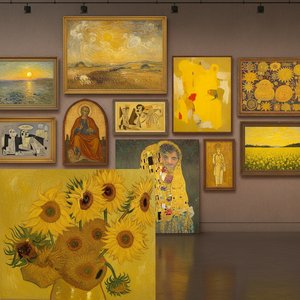
Golden Hues: 10 Masterpieces Dominated by Chrome Yellow | ArtsDot
Immerse yourself in golden light! Explore 10 famous paintings dominated by 'Chrome Yellow', from Van Gogh’s Sunflowers to Monet's Haystacks. Discover the stories behind these iconic Impressionist & Post-Impressionist masterpieces and find museum-quality art reproductions at ArtsDot.com.

The Psychology of the Palette: Decoding Roy Lichtenstein’s Bold Color Theory
Explore the vibrant psychology behind Roy Lichtenstein’s color theory. Discover how Ben-Day dots and primary colors revolutionized Pop Art, transforming mass media into timeless masterpieces for modern collectors and interior design enthusiasts.

波普艺术十大杰作:定义时代的经典之作 | ArtsDot
探索波普艺术十大杰作!安迪·沃霍尔、罗伊·利希滕斯坦等大师作品,定义现代艺术潮流。了解艺术史背后的故事,为您的客厅或卧室增添色彩与活力。ArtsDot.com提供博物馆品质的艺术复制品,在线发现更多经典之作!