

 实景预览
实景预览
 分享
分享 分享
分享
 详情
详情 指南
指南

 下载作品
下载作品
 相似作品
相似作品 X射线
X射线 幻灯片播放
幻灯片播放 Q&A
Q&A 统计数据
统计数据Landscape

- 25.0 x 34.0 cm


 展开全文
展开全文
艺术微喷/版画
博物馆级艺术微喷或帆布版画,制作高效,并提供多种饰面选择。 ( 订购纯手工绘制画作 切换至数字图像销售渠道)




































您可以从与原作比例一致的预设尺寸中进行选择。

请输入您所需的宽度和高度,以适配您的画框或墙面。由于印刷品只能进行裁剪,无法超出原图尺寸,因此若比例不一致,画面的一部分将会被裁切。在正式印刷之前,我们会为您发送一份数字效果图供您确认。本页面显示的图片并非最终裁剪后的效果——只有效果图才能展示真实的裁剪情况。


 玻璃选项仅适用于110厘米以下的尺寸。

Landscape
艺术微喷/版画
复刻品尺寸
-


最终结算价
¥ 416
Artistic Style and Influences
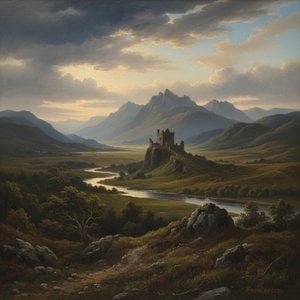
Robert Lillie's work can be compared to other notable artists, such as George Benjamin Luks, who created the captivating oil painting Blue Devils on Fifth Avenue. Both artists have a unique style that sets them apart from others. The Landscape painting is also reminiscent of the works found in the The Museum Gwynedd County Council Collection in Caernarfon, United Kingdom. Key Features of the painting include:- A beautiful valley with mountains in the background
- Lush green grass and trees
- A river running through the scene
- Several people scattered throughout the scene
Availability and Reproductions
The original Landscape painting by Robert Lillie is available for viewing at the Lillie Art Gallery in the United Kingdom. However, for those who cannot visit the gallery, ArtsDot.com offers handmade oil painting reproductions of the artwork. These reproductions are created by skilled artists and are a great way to own a piece of art history.The Landscape painting by Robert Lillie is a must-see for anyone who appreciates beautiful artwork and nature. With its unique style and captivating scenery, it is a great addition to any art collection. For more information on the painting and other artworks by Robert Lillie, visit ArtsDot.com.
常见问题与解答
是否可以下载"Landscape"的高分辨率版本?
若想获取 Robert Lillie 的《Landscape》 的数字版文件,请前往其 高分辨率数字图像 页面进行 高分辨率数字图像下载。
Robert Lillie 的《Landscape》 的色彩特征是什么?
Robert Lillie 的《Landscape》 采用了 Earthy 色调,并以 Clay (#916d2f) 作为主导色。
"Landscape" 是否体现了 Robert Lillie 一贯的创作风格?
"Landscape" 描绘了 landscape, valley, mountains, river, greenery, serenity, rural, nature,而 Robert Lillie 的创作主题则以 scottish landscapes, nature's beauty, serene depictions", luks, gwynedd collection, impressionism, rural life, tranquility 见长。通过两者的对比,可以发现此作与艺术家惯用题材之间的内在联系。
相似作品


艺术家简介
A Life Immersed in Scottish Light: The World of Robert Lillie
Robert Lillie, born in 1867 and passing in 1949, was a painter deeply entwined with the spirit of Scotland. While not a name immediately recognized alongside the giants of Victorian art, his work offers a compelling window into the quieter moments of Scottish life and landscape painting during a period of significant change. Lillie wasn’t an artist who sought radical innovation; instead, he dedicated himself to capturing the subtle beauty of his surroundings with remarkable skill and sensitivity. His paintings are not grand statements but intimate observations—a gentle ripple on a loch, the soft glow of twilight over a coastal scene, the quiet dignity of everyday life in rural communities. He was a master of atmosphere, using light and color to evoke a sense of place and mood that resonates deeply with viewers even today.Early Years and Artistic Development
Details surrounding Lillie’s early life remain somewhat sparse, but it is known he received his artistic training at the Glasgow School of Art. This institution was undergoing a period of transformation during his time there, moving away from rigid academic styles towards a more naturalistic approach influenced by the Barbizon school and emerging Impressionism. While Lillie didn't fully embrace the radical techniques of the later Impressionists, this influence is visible in his loose brushwork and focus on capturing fleeting moments of light. He quickly established himself as a painter of Scottish landscapes, drawn to the dramatic scenery of the Highlands and Islands, but also finding beauty in the more subtle charms of the Lowlands. His early works often depict scenes along the River Clyde, showcasing the industrial activity alongside the natural world—a reflection of Scotland’s evolving identity during the late 19th century.Themes and Techniques: A Palette of Serenity
Lillie's oeuvre is characterized by a consistent focus on Scottish landscapes and genre scenes. He painted rivers – particularly the Orchy River, which became a recurring motif in his work – lochs, coastal views, and depictions of rural life. His technique was rooted in traditional oil painting methods, but he employed a softer palette than many of his contemporaries, favoring muted tones and subtle gradations of color to create atmospheric effects. He wasn’t interested in dramatic contrasts or bold statements; instead, he sought to capture the quiet beauty of the Scottish countryside.- Light and Atmosphere: Lillie was a master of capturing light, particularly the soft, diffused light characteristic of Scotland. His paintings often evoke a sense of tranquility and peace.
- Genre Scenes: Alongside landscapes, he painted scenes of everyday life in rural Scotland, depicting figures engaged in work or leisure activities with sensitivity and dignity.
- Brushwork: While rooted in traditional techniques, his brushwork is often loose and expressive, contributing to the atmospheric quality of his paintings.
Later Life and Legacy
Lillie continued to paint throughout his life, exhibiting regularly at galleries across Scotland and beyond. While he never achieved widespread fame during his lifetime, his work was appreciated by collectors and critics for its technical skill and evocative atmosphere. Today, Robert Lillie’s paintings are increasingly recognized as important examples of Scottish landscape painting from the late 19th and early 20th centuries. His works offer a valuable glimpse into a Scotland undergoing rapid change—a world where traditional ways of life were slowly giving way to modernity. He stands as a testament to the enduring power of observation, capturing the essence of a place and time with quiet grace and remarkable skill. His paintings are not merely representations of landscapes; they are evocations of mood, memory, and the subtle beauty of the Scottish countryside.
Robert Lillie
1867 - 1949
艺术家简介
- Full Name: Robert Lillie
- Nationality: British
- Date Of Birth: 1867
- Date Of Death: 1949
- Place Of Birth: Milngavie, Scotland
- Notable Artworks:
- The Clyde at Bowling
- Landscape
- Artistic Movement Or Style: Impressionism
相关文章

David Roberts: A Scottish Pioneer of Topographical Art & Orientalist Vision
Explore the captivating world of David Roberts, a pioneering Scottish painter renowned for his detailed Orientalist scenes & stunning Egyptian landscapes. Discover his legacy and find museum-quality reproductions at ArtsDot.

Robert Lillie: A Study in Victorian Genre Painting and Domestic Narrative
Explore the captivating Victorian genre paintings of Robert Lillie (1867-1949). Discover his serene Scottish landscapes and intimate domestic scenes, reflecting a unique artistic vision. Learn about his life, style & legacy.
Alexander Nasmyth: Picturing Scotland's Romantic Landscape – Innovation & Identity
Explore the life & art of Alexander Nasmyth, a pivotal figure in Scottish Romantic landscape painting. Discover his iconic works, including portraits of Robert Burns, and learn about his lasting influence on national identity. Fine art reproductions available.

Evocations of Place: A Historical Journey Through Landscape Art
Explore the rich history of landscape art with ArtsDot. Discover renowned artists, movements like Impressionism & Romanticism, and expert guidance for collecting timeless pieces. Find your perfect serene escape today!

浪漫主义画派的十部巨作:定义风景画的艺术传奇
探索浪漫主义风景画的巅峰!本文精选十部经典名作,带您领略莫奈、库尔贝等大师的艺术魅力。感受色彩与光影的诗意,重温自然风光的震撼。ArtsDot.com为您提供博物馆级别的艺术复制品和个性化家居装饰方案。尽在ArtsDot.com!