

 购买版画
购买版画 分享
分享 分享
分享
 Details

 下载
下载
 相似作品
相似作品 X-Ray
X-Ray 幻灯片播放
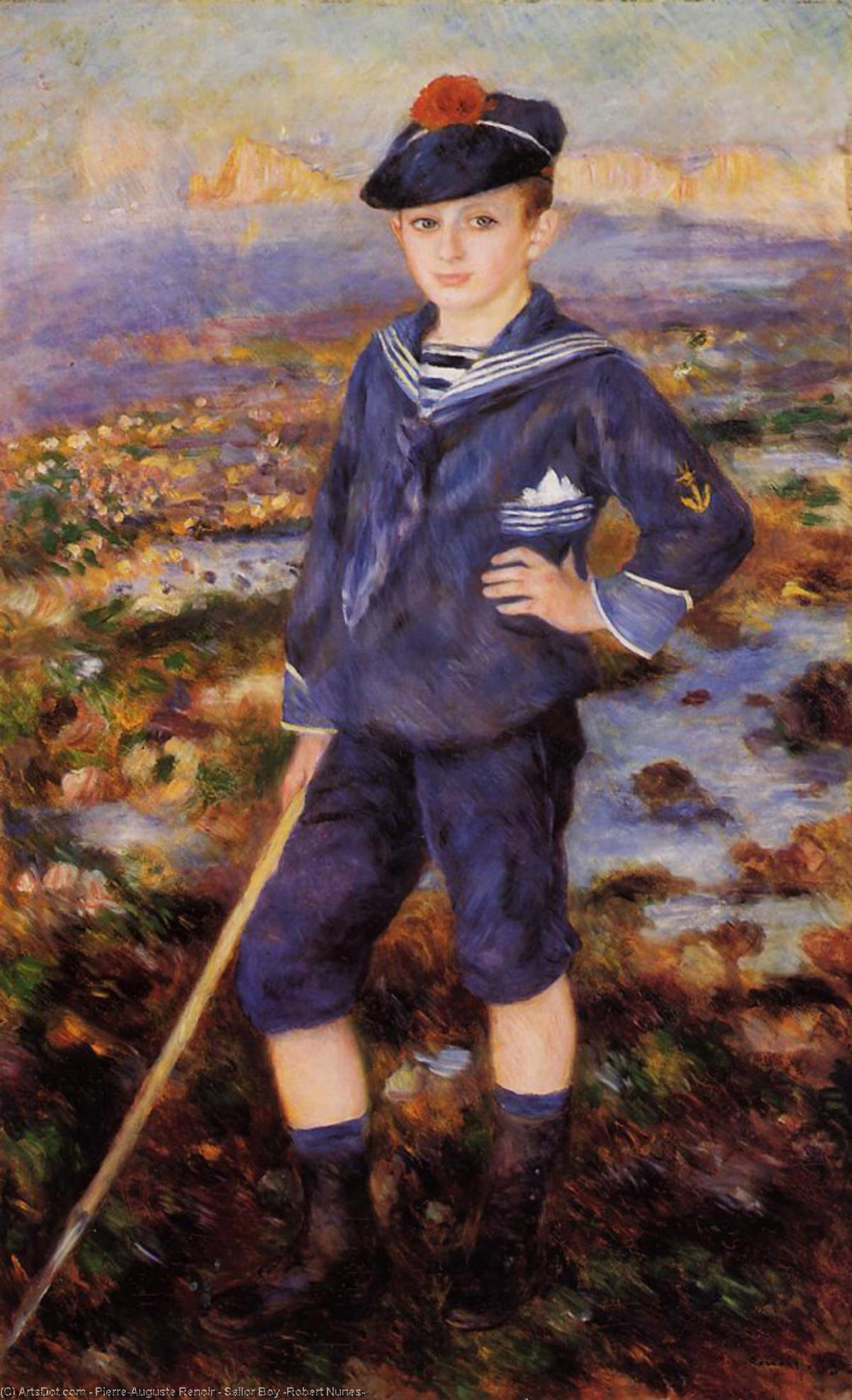
幻灯片播放Sailor Boy (Robert Nunes)






P118B $10

P118H $10

P118W $10

P438Z $10

P508JH $12

P508YH $12

P805H $10

P805Z $10

P919BZ $10

P919G $10

P919XJ $10

P959ZH $10

P968JZ $12

W106C $8

W218G $10

W218JH $8

W218Y $10

W307PJ $10

W316G $10

W316PJ $8

W316Y $10

W398PJ $8

W4111J $10

W500HY $15

W500JH $15

W692G $12

W849H $8

W940BG $15

W953PJ $8




 了解更多
了解更多从与原作比例一致的预设尺寸中进行选择。

您可以输入自定义尺寸,以适配特定的画框或空间。如果所选尺寸与原图比例不符,我们将通过裁剪作品或添加手绘元素来扩展画面。数字样稿将在制作开始前发送给您确认。
请注意,屏幕预览无法准确反映实际的裁剪或扩展效果,只有样稿才能真实呈现最终的构图。
虽然我们提供定制尺寸服务,但为了保留原作比例,建议您从预设列表中选择尺寸。
下单后,ArtsDot.com 团队将通过电子邮件联系客户获取具体要求,并提供效果预览图。


 玻璃选项仅适用于110厘米以下的尺寸。

Sailor Boy (Robert Nunes)
复制材质
复制品尺寸
-


最终总价
-
作品详情
A Portrait of Youthful Resolve: Pierre-Auguste Renoir’s *Sailor Boy*
Pierre-Auguste Renoir's 1883 painting, *Sailor Boy*, isn’t merely a snapshot of a young boy; it’s a carefully constructed tableau brimming with quiet dignity and nascent masculinity. Captured in a moment of poised contemplation, the subject – Robert Nunes – stands on a grassy verge, hands resting comfortably on his hips, radiating an understated confidence that belies his youth. This seemingly simple portrait is a testament to Renoir's masterful ability to imbue ordinary scenes with profound emotional resonance and technical brilliance. The painting immediately draws the viewer in, inviting us to decipher the story held within this single, compelling image.
Renoir’s Impressionistic style shines through every brushstroke. He eschews sharp lines and meticulous detail in favor of capturing fleeting moments of light and atmosphere. Notice how he uses loose, visible brushwork to render the texture of the grass beneath Nunes' feet – a vibrant green that contrasts beautifully with the darker tones of his uniform. The subtle shifts in color and tone create an illusion of depth and movement, drawing our eye across the canvas. The lighting itself is crucial; it’s diffused and natural, suggesting a late afternoon sun casting long shadows and highlighting the boy's youthful features.
The Uniform as Symbol
The young sailor’s attire – the hat, the tie, the crisp blue uniform – immediately establishes a context of formality and expectation. However, Renoir subtly subverts this traditional symbolism. Nunes isn’t presented as a hardened veteran or a stoic soldier; instead, he appears relaxed, almost playful. The pose itself—hands on hips, head slightly tilted—suggests self-awareness and a quiet confidence that transcends the prescribed roles of military youth. The uniform, therefore, becomes less about duty and more about potential, about the nascent identity being formed within this young boy.
Interestingly, Nunes’s pose mirrors elements found in classical portraiture – a gesture reminiscent of Roman statues depicting youthful heroes. This deliberate echo connects the painting to centuries of artistic tradition, elevating Nunes' image beyond a simple snapshot and imbuing it with a sense of timelessness. The inclusion of the stick lying on the ground adds another layer of intrigue; was it used for support during the photograph? Or does it represent a moment of playful contemplation before the formal pose?
A Window into Parisian Life
Painted in Paris, *Sailor Boy* offers a glimpse into the vibrant social life of the late 19th century. Renoir was deeply embedded within this artistic and cultural milieu, capturing the essence of Parisian youth and their aspirations. The painting reflects the era’s fascination with youth, beauty, and the pursuit of pleasure – themes that were central to Impressionist art. It's a scene not just of an individual boy, but of a generation poised on the cusp of adulthood, navigating the complexities of identity and social expectation.
Renoir’s ability to capture such nuanced emotion in a relatively small canvas is remarkable. *Sailor Boy* isn’t simply a portrait; it's a meditation on youth, potential, and the quiet dignity of everyday life—a timeless image that continues to resonate with viewers today. ArtsDot offers meticulously hand-painted reproductions of this captivating work, allowing you to bring its beauty and emotional depth into your own space.
相似艺术品


艺术家简介
光与生机的诗人:皮埃尔-奥古斯特·雷诺阿
皮埃尔-奥古斯特·雷诺阿,这位诞生于1841年法国利穆日的艺术家,其一生如同一首欢快的颂歌,献给阳光、色彩和人间的欢乐。从瓷器工坊的学徒到印象派大师,雷诺阿的艺术之路并非一帆风顺,却始终闪耀着对美的执着追求与对生活的热爱。他的童年时光在巴黎度过,这座充满活力的大都市为他提供了无尽的灵感源泉。最初,为了生计,他不得不从事瓷器绘画工作,但这并未阻碍他对艺术的渴望。频繁光顾卢浮宫,细致研究大师们的作品,逐渐培养了他对美的敏锐感知和精湛的绘画技巧。年轻时的雷诺阿在查尔斯·格莱尔的工作室学习,在那里结识了莫奈、西思蕾等未来的印象派同伴,这为他们共同开启一场艺术革命奠定了基础。从现实主义到光芒四射的印象
雷诺阿的艺术生涯并非一蹴而就,他的创作受到多种风格的影响,并不断演变。早期,他深受古斯塔夫·柯贝和马奈等现实主义大师的影响,力求真实地描绘当代生活。然而,鲁本斯与瓦托作品中那充满光彩的色彩和感性的造型却深深吸引了他,激发他对美的追求和对欢乐场景的偏爱。这些早期的影响逐渐融合,形成了雷诺阿独特的艺术风格,其特点是鲜艳的色彩、跳跃的笔触以及捕捉瞬间光影效果的能力。1874年,他积极参与了第一次印象派画展,尽管最初受到了一些批评,但这次展览标志着他对传统学术规范的挑战和对全新艺术视野的拥抱。雷诺阿的作品,如《Moulin de la Galette的舞蹈》,正是这种风格的典范,它将观众带入巴黎夜生活的生动场景之中,感受那阳光洒落下的欢快氛围。捕捉生命中的转瞬即逝:代表作与主题
雷诺阿的画作是对生活简单快乐的颂歌——亲密的聚会、沐浴在阳光下的风景以及人体的优美形态。他的《波雅特河畔野餐》堪称其最具代表性的作品之一,描绘了一群朋友悠闲地享受着塞纳河畔的午后时光。这幅画作完美地展现了他捕捉光线和运动的能力,人物被温暖的阳光笼罩,水面泛着粼粼波光。而《浴后的女人》则体现了雷诺阿对女性身体之美的细腻描绘,柔和的色调和优雅的姿态令人赏心悦目。《Bougival的舞蹈》同样是一件杰作,他运用流畅的笔触捕捉了瞬间的印象和氛围,营造出一种动感和即兴的感觉。雷诺阿并非关注宏大的历史叙事或戏剧性的寓言,而是专注于描绘日常生活中蕴含的美好,将平凡的时刻提升为艺术作品。向形式与结构转变:晚年与遗产
1890年代,雷诺阿的风格发生了一个显著的变化。虽然他从未完全放弃印象派的根基,但他开始转向更具雕塑感和古典主义的创作手法,这受到他在意大利旅行以及对形式和结构的重新关注的影响。随着年龄增长,关节炎逐渐限制了他的行动能力,迫使他调整绘画技巧。尽管面临这些挑战,雷诺阿仍然坚持不懈地进行创作,他的作品呈现出更加饱满的人物形象和更温暖的色调。晚年的画作往往流露出一种沉思的氛围,但依然保留着对美的赞颂这一贯注的主题。除了艺术成就之外,雷诺阿的家族也为世界贡献了宝贵的文化遗产——他的儿子让·雷诺成为了一位著名的电影导演,将创造精神传承给后代。1919年,皮埃尔-奥古斯特·雷诺阿离开了人世,留下了无数令人惊叹的作品,这些作品至今仍激励着并取悦着世界各地的观众。他无疑是艺术史上最受喜爱的艺术家之一,以其非凡的能力捕捉生活中的欢乐和人类体验之美而闻名于世。持久的影响
- 雷诺阿对后世艺术家的影响是不可否认的。他对光、色彩以及捕捉瞬间的强调为许多现代艺术运动铺平了道路。
- 他对美的赞颂和感性表达至今仍能引起观众的共鸣,使他的作品具有普遍吸引力。
- 他在确立印象派作为艺术史上一股重要力量方面发挥了关键作用,挑战了传统惯例并为艺术表达开辟了新的可能性。
- 他画作经久不衰的人气——在无数海报、日历和其他商品上被复制——证明了他的作品具有永恒的品质。

雷诺阿
1841 - 1919 , 法国
艺术家简介
- Artistic Movement Or Style: 印象派
- Artists Or Movements Influenced By This Artist: 印象派
- Artists Who Influenced This Artist:
- 鲁本斯
- 瓦陶
- Date Of Birth: 1841年2月25日
- Date Of Death: 1919年12月3日
- Full Name: 皮埃尔-奥古斯特·雷诺阿
- Nationality: 法国人
- Notable Artworks:
- 《磨坊舞会》
- 《塞纳河畔的午宴》
- 《沐浴女郎》
- 《布吉瓦尔的舞蹈》
- Place Of Birth: 法国利穆日
相关文章

Alice Pike Barney: A Life Painted in Impressionism & Washington Society
Explore the life & art of Alice Pike Barney, a pioneering American Impressionist painter who defied convention and fostered Washington D.C.'s vibrant arts scene. Discover her unique style, portraits, and lasting legacy.


Sir John Watson Gordon: A Study in Scottish Landscape Painting & Tonal Impressionism
Explore the captivating portraits of Sir John Watson Gordon, a leading Scottish master. Discover his evolution from neoclassical style to atmospheric Tonalism and influence on 19th-century British art. Learn about his iconic sitters & legacy.

The Digital Portrait Renaissance: Transforming Personal Photography into Timeless Oil Paintings Through Artistic Reproduction
Transform your cherished photos into timeless oil paintings with ArtsDot's expert artists. Museum-quality reproductions & custom portraits, crafted to last a lifetime. Discover the art of personal legacy.

From Snapshot to Legacy: The Art of Commissioning a Hand-Painted Reproduction from Photography – Preserving Memories Through Oil Painting Techniques
Transform cherished photos into timeless oil paintings with skilled artists. Trusted for bespoke portraits & heirloom art. Discover the process, styles & lasting value – a legacy preserved.

雷诺阿大师25幅经典之作:光影中的艺术与生活 | ArtsDot
探索雷诺阿25幅经典之作,感受印象派大师的光影魅力与色彩诗意。从《舞会》到《煎饼磨坊》,ArtsDot为您呈现艺术背后的故事与技巧。高品质艺术复制品,点亮您的家居空间!立即在ArtsDot.com探索完整系列。



