


 效果预览
效果预览
 切换至手工绘画版
 分享
分享 分享
分享
 详情
详情

 下载
下载
 相似作品
相似作品 X射线
X射线 幻灯片播放
幻灯片播放Design for
 Drawing
- WallArt
- Arts and Crafts
 1860
1860- 19th Century
 71.0 x 35.0 cm
 威廉·莫里斯美术馆
 展开详情
展开详情




P118B $10

P118H $10

P118W $10

P438Z $10

P508JH $12

P508YH $12

P805H $10

P805Z $10

P919BZ $10

P919G $10

P919XJ $10

P959ZH $10

P968JZ $12

W106C $8

W218G $10

W218JH $8

W218Y $10

W307PJ $10

W316G $10

W316PJ $8

W316Y $10

W398PJ $8

W4111J $10

W500HY $15

W500JH $15

W692G $12

W849H $8

W940BG $15

W953PJ $8




从与原作比例一致的预设尺寸中进行选择。

您可以输入自定义尺寸,以适配特定的画框或空间。如果您选择的尺寸与原图比例不符,我们将对作品进行裁剪,或通过镜像填充/纯色填充边缘的方式来扩展图像。在开始制作之前,我们会向您发送一份数字效果图供您确认。
请注意,屏幕上的预览并不能反映实际的裁剪或扩展效果。只有效果图才能准确展示最终的构图。
虽然我们提供定制尺寸,但为了保持原图比例,我们建议您从预设列表中选择尺寸。


 玻璃选项仅适用于110厘米以下的尺寸。

Design for
艺术微喷/版画
复制品尺寸
-


最终总价
$ 62
藏品详情
相似艺术品


艺术家简介
Philip Speakman Webb (1831–1915): Pioneer of Arts and Crafts Architecture
Philip Speakman Webb (1831-1915) stands as a monumental figure in British architectural history, recognized primarily for his unwavering devotion to the Arts and Crafts movement and his singular contribution to its aesthetic principles. Born in Witley, Surrey, England, on January 12, 1831, Webb’s career blossomed under the mentorship of George Edmund Street, shaping him into a visionary architect deeply attuned to vernacular design and handcrafted beauty—a philosophy that cemented his legacy as “the father of Arts and Crafts architecture.” His designs weren't merely buildings; they were embodiments of a profound belief in artistic integrity and social responsibility.Early Life and Influences
Webb’s formative years instilled within him an appreciation for medieval architecture and the movement championed by William Morris, whose collaborative spirit profoundly impacted Webb’s artistic trajectory. Street’s guidance honed Webb's technical skills while simultaneously exposing him to the burgeoning Arts and Crafts ethos—a fusion that would define his architectural style. The encounter with Morris proved pivotal, fostering a partnership that yielded groundbreaking projects reflecting their shared conviction in elevating craftsmanship and rejecting industrial uniformity. This connection fueled Webb’s fascination with Gothic Revival, yet he swiftly transcended stylistic constraints, forging an independent aesthetic rooted in simplicity and functionality.Notable Works: Red House and Beyond
Webb's architectural prowess reached its zenith with the design of Red House (1859) for William Morris—a residence that irrevocably established Arts and Crafts principles as a cornerstone of domestic architecture. Situated in Bexleyheath, Kent, this house stands as an exemplar of restrained elegance achieved through meticulous attention to detail and the skillful integration of natural materials. Beyond Red House, Webb’s oeuvre encompassed diverse projects: Buffet (1862), showcasing his mastery of decorative arts; Standen (1891), a testament to his enduring commitment to beauty and craftsmanship; and numerous churches and educational buildings reflecting his humanist ideals. His work extended beyond structural design, encompassing furniture, metalwork, and stained glass—each element meticulously crafted to harmonize with the overall architectural vision.Collaborations and Legacy
Webb’s artistic collaborations solidified his position as a central figure within the Arts and Crafts movement. He partnered closely with luminaries such as William Morris, Edward Burne-Jones, Dante Gabriel Rossetti, and Ernest Symonds, fostering an environment of intellectual exchange and creative experimentation. Together they founded Morris, Marshall, Faulkner & Co., transforming it into a celebrated furnishing firm—a testament to Webb’s entrepreneurial spirit and his unwavering belief in the transformative power of collaborative artistry. His establishment of the Society for the Protection of Ancient Buildings (SPAB) underscored his dedication to preserving architectural heritage and championed innovative approaches to conservation. Furthermore, Webb's influence extended beyond his own creations; he inspired subsequent generations of architects and designers to prioritize craftsmanship, materiality, and responsiveness to context—leaving an indelible mark on the history of British architecture and shaping the aesthetic sensibilities of the era.Concluding Thoughts
Philip Speakman Webb’s architectural legacy transcends mere stylistic innovation. He championed a philosophy centered on ethical considerations within design—a conviction that continues to resonate today. His unwavering devotion to Arts and Crafts principles ensured that buildings were conceived as expressions of human creativity and social responsibility, cementing his place as one of the most influential architects of the Victorian period and an enduring symbol of artistic integrity.
philip speakman webb
1831 - 1915 , United Kingdom
艺术家简介
- Artistic Movement Or Style: Arts and Crafts
- Artists Or Movements Influenced By This Artist: ['Morris & Co.']
- Artists Who Influenced This Artist:
- George Edmund Street
- William Morris
- Date Of Birth: January 12, 1831
- Full Name: Philip Speakman Webb
- Nationality: British
- Notable Artworks:
- Red House
- Buffet
- Place Of Birth: Oxford, United Kingdom
相关文章

Slate Blue Masterpieces: 10 Iconic Paintings & Timeless Home Decor Ideas
Immerse yourself in the captivating world of slate blue! Explore 10 iconic paintings by Monet, Van Gogh & Renoir. Discover their stories, techniques & find museum-quality art reproductions for your home at .

Verdant Visions: Exploring the Symbolism & Aesthetic Impact of Green in Art History
Explore the rich history & symbolism of green in art! Discover iconic paintings, techniques, and how to bring verdant harmony into your home with ArtsDot's expert guide.

Chrome Green Masterpieces: 10 Famous Paintings & Their Alluring Hues |
Explore 10 famous paintings where 'Chrome Green' reigns supreme! Discover Monet, Manet & Van Gogh’s masterpieces. Learn the stories behind these iconic artworks and find museum-quality art reproductions for your home at .
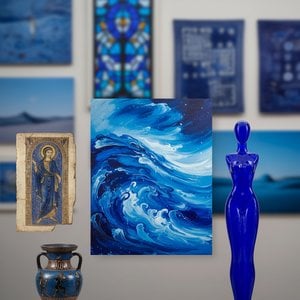
The Allure of Azure: Exploring the Symbolic & Aesthetic Depths of Blue in Art History
Explore the rich history of blue in art! Discover its symbolism, from ancient pigments to modern masterpieces by Kandinsky & Seurat. Uncover the psychological impact and cultural meanings behind this captivating hue.

Dark Olive Green Masterpieces: 10 Iconic Paintings & Decor Ideas
Explore 10 iconic paintings where dark olive green reigns supreme! From Van Gogh to Rembrandt, discover art history's most captivating masterpieces & the stories behind them. Find museum-quality reproductions and curated decor ideas at .

