


图片将根据您的选择进行更新: , .
藏品详情
Experience Jackson Pollock's 'Blue (Moby Dick)': A mesmerizing abstract expressionist masterpiece brimming with blues and whites, evoking mystery & emotion. Explore its layers of symbolism and Pollock’s revolutionary drip technique.
 展开全文
展开全文
手工油画复制品
由我们的艺术家按需定制,为您提供您所选尺寸及画框的布面手工油画。 ( 切换至版画销售渠道 切换至数字图像销售渠道)
更多关于此画作的信息
 实景预览
实景预览
 分享
分享 分享
分享
 详情
详情 指南
指南

 下载作品
下载作品
 相似作品
相似作品 X射线
X射线 幻灯片播放
幻灯片播放 问答
问答 统计数据
统计数据只需简单四步,即可订购您的画作
请慢慢挑选。您可以随时更改任何选项;订单详情卡中的价格将随您的选择实时更新。
1 四步中的第一步
您想要哪种尺寸?
这些尺寸均保持了原画的比例。示意图展示了您所选尺寸在墙面上的效果,其位置位于一张两米宽的沙发上方。
或输入您自定义的尺寸
您可以从与原作比例一致的预设尺寸中进行选择。

请输入您需要的宽度和高度,以适配您的画框或墙面。由于作品为手工绘制,若选择不同比例的尺寸,艺术家可能会在画面边缘多画一些或稍作裁剪 —— 由您决定。在开始绘画之前,我们会为您发送一份数字效果图供您确认。本页面上展示的图片并非最终实物 —— 只有效果图才能反映真实结果。
2 四步中的第二步
您希望如何装裱:卷轴装、绷框装还是带框装?
以下价格对应您在第一步中所选的尺寸。
选择绷边画布的边缘样式
选择您的画框

白色边缘 ¥1

边缘晕染效果 ¥1

延展式 ¥1

P118B ¥10

P118H ¥10

P118W ¥10

P438Z ¥10

P508JH ¥12

P508YH ¥12

P805H ¥10

P805Z ¥10

P919BZ ¥10

P919G ¥10

P919XJ ¥10

P959ZH ¥10

P968JZ ¥12

W106C ¥8

W218G ¥10

W218JH ¥8

W218Y ¥10

W307PJ ¥10

W316G ¥10

W316PJ ¥8

W316Y ¥10

W398PJ ¥8

W4111J ¥10

W500HY ¥15

W500JH ¥15

W692G ¥12

W849H ¥8

W940BG ¥15

W953PJ ¥8

H24-GOLD ¥30

H24-SILVER ¥30

H36-GOLD ¥45

H36-SILVER ¥45
带框
边框材质: . 含框总尺寸: .
3 四步中的第三步
您想对画作进行任何修改吗?
大多数人的回答是否定的。由于每一幅画作都是手工绘制,我们的艺术家也可以为您进行定制。
下单后,ArtsDot.com 团队将通过电子邮件联系客户获取具体指令,并提供效果预览图
4 第四步(共四步)
几种饰面选项
所有选项均为可选。已选择的答案不会产生额外费用。
出自哪位艺术家之手?
像博物馆里的那样,配上一块铭牌?
青铜铭牌雕刻详情
This elegant plaque features the artist's name and the title of the artwork, finely engraved for a timeless presentation.
It is made from bronze with a refined, elegant finish. The text is precisely laser-engraved for a sharp and permanent result. Measuring 9x2 cm, the plaque is compact yet easy to read. It's built to be durable and scratch-resistant, offering a professional, museum-quality look. Mounting is simple thanks to the included adhesive backing.
透明亚克力铭牌详情
The plaque includes essential engraved details such as the artist's name, the title of the artwork, the date it was created, the type of media used-like oil on canvas or watercolor-a brief description of the piece, and a QR code that links to the complete artwork information.
It is crafted from clear acrylic, offering a sleek, modern appearance. The text is UV-engraved in black to ensure strong visual contrast. With a size of 10x15 cm, it ensures optimal readability. It comes equipped with two metal hooks for secure wall mounting. The plaque is designed to be weather-resistant, making it suitable for various environments, and it includes interactive features that work seamlessly with smartphone scanning.
黑色亚克力铭牌详情
This elegant plaque includes engraved information such as the artist's name, the title of the artwork, the date it was created, the type of media used (like oil on canvas or watercolor), a short description of the artwork, and a QR code for quick access to more information.
The plaque itself is made from refined black acrylic with a premium finish. The text is laser-engraved in white for high contrast and readability. Its size is 10x15 cm, designed to be easy to read. It comes with two metal hooks for professional mounting. The design is sleek and fits any interior style. It is also weather-resistant and durable, with built-in digital integration for mobile compatibility.
需要保护性光油吗?
您预计何时收到?
✓ 确认并下单
您的画作,正如您所订购的那样

Blue (Moby Dick)
复制品材质
复刻品尺寸
-

精选资深艺术家
更丰富的细节、更精湛的工艺以及更充裕的制作时间
-

复制画装裱选项
-
-
对于任何边长超过 105 厘米(约 41 英寸)的艺术品或复制品,画框将以拆解后的组件形式发货。此方法可确保安全送达并防止运输过程中的损坏。
需由专业人员组装 —— 本产品不适用于 DIY 操作。
该组件必须由经验丰富的专业装裱师进行组装及画布绷装,过程中需使用木工胶(不随附)、画布绷边钳以及夹具,以确保在胶水干燥期间保持内框方正。组装不当或画布张力不均可能会对艺术品造成永久性损坏,且此类情况不在我们的保修范围之内。
 对于任何边长超过 105 厘米(约 41 英寸)的艺术品或复制品,画框将以拆解后的组件形式发货。此方法可确保安全送达并防止运输过程中的损坏。
包含所有实木条,尺寸精确,便于组装。
使用随附的螺丝进行组装,另需准备用于角部连接的木工胶(本品不含木工胶),请由您的装裱师自行准备。
需另备专业工具(本套件不含):画布绷紧钳以及用于在胶水干燥过程中保持木条方正的夹具。
重要提示:
角部连接处需要使用木工胶,边框条必须使用夹具固定直至胶水完全干透,且在组装好的框架上绷紧画布需要用到画布拉伸钳。以上工具均不包含在套装内。请在订购此尺寸前,预先联系经验丰富的专业装裱师。

展品铭牌
-
-

保护性清漆
光泽清漆(提亮色彩,防光防潮)
-

定制我的艺术品
定制化示例:替换面部为客户照片;添加宠物(例如,将猫替换为狗);在背景中加入隐藏信息;更改背景风景或元素。
-

加急
全球配送()仅需 3-4 周即可送达,无需等待标准时效的 5 周。(11 November)。品质始终如一,绝不妥协。
-
极速达
全球配送(),预计 5 周送达。(18 November)。
已包含
最终结算价
¥ 1763
玻璃选项仅适用于110厘米以下的尺寸。
每份订单均包含
- 全球免运费特快专递服务
- 优质亚麻画布
- 全程运输保险
- 关税退款保证
- 色彩精准还原保证
- 100天退货保障(仅限制造缺陷)
- 100% 退款保证
- 多件购买优惠


The Echoes of Moby Dick: Jackson Pollock’s Blue Abstraction
Jackson Pollock's “Blue (Moby Dick),” painted in 1943, isn’t merely a canvas splashed with color; it’s an immersive experience, a visual embodiment of the anxieties and primal forces that fueled Herman Melville’s epic tale. This work, residing within the Ohara Museum of Art in Kurashiki, Japan, stands as a pivotal moment in the trajectory of Abstract Expressionism, revealing Pollock's unique approach to translating complex emotions onto the canvas. It’s a piece that invites prolonged contemplation, rewarding viewers with layers of meaning and a profound sense of unease – mirroring, perhaps, the relentless pursuit of the unattainable.
Initially conceived as “Moby Dick,” the painting quickly underwent a transformation, reflecting Pollock's evolving artistic process and his engagement with psychological theories. The early iteration, a more explicitly figurative work, was deemed too constrained by conventional representation. Pollock, influenced by Jungian psychology and seeking to express raw emotion rather than depict concrete forms, abandoned this initial approach, opting instead for an all-over composition that prioritized the act of painting itself. This shift marked a crucial step toward his signature “drip” technique – a method where paint was poured, dripped, and flung onto the canvas from above, creating a dynamic web of color and texture.
A Symphony in Blue: Technique and Composition
The dominant hue is, unsurprisingly, blue—a deep, resonant shade that immediately establishes a mood of mystery and depth. However, this isn’t a simple monochromatic statement. Pollock masterfully employs a range of complementary colors – vibrant yellows, stark whites, and touches of black and orange – to create a swirling, almost turbulent effect. These contrasting hues aren't juxtaposed in a static manner; instead, they bleed into one another, suggesting movement, chaos, and the relentless power of nature. The composition itself is deliberately ambiguous, featuring amorphous shapes that evoke marine life—fish, whales, perhaps even the ominous form of Moby Dick himself—suspended within a dynamic field of color.
Pollock’s technique is central to the painting's impact. He utilized a mixed medium of gouache and ink on composition board, allowing for both precision and spontaneity. The “drip” method, perfected over years of experimentation, allowed him to bypass traditional brushstrokes, creating an immediate connection between his body and the artwork. The resulting surface is not smooth or polished; it’s textured, layered, and imbued with a palpable energy—a testament to the physicality of the act of painting.
Decoding the Symbolism: Melville and the Unconscious
While Pollock himself remained notoriously reticent about interpreting his work, scholars have identified several symbolic connections between “Blue (Moby Dick)” and Melville’s novel. The recurring motif of the table—a subtle yet persistent element within the composition—can be interpreted as a representation of the human psyche, a space where conflicting forces collide. The figures that populate the painting are not clearly defined; they exist in a state of flux, mirroring the instability and uncertainty inherent in the pursuit of knowledge and understanding – a key theme in *Moby Dick*.
Furthermore, the painting’s intense emotionality—the sense of dread, obsession, and ultimately, futility—resonates with the novel's exploration of human ambition and the limitations of reason. The whale itself, a symbol of both power and destruction, looms large in the subconscious of the viewer, prompting questions about humanity’s relationship to nature and its own destructive tendencies. It is believed that Pollock was influenced by Melville’s work, perhaps even drawing parallels between his own struggles with alcoholism and Ahab's relentless pursuit.
A Legacy of Emotion: Reproductions and Beyond
“Blue (Moby Dick)” stands as a powerful example of Abstract Expressionism’s ability to evoke profound emotional responses. ArtsDot offers meticulously hand-painted reproductions that capture the essence of this iconic work, allowing you to experience its depth and complexity firsthand. These reproductions faithfully recreate Pollock's dynamic technique and vibrant color palette, bringing the painting’s raw energy into your space. Whether displayed in a contemporary setting or as a thoughtful addition to a classic interior, a reproduction of “Blue (Moby Dick)” serves as a constant reminder of the power of art to challenge our perceptions and connect us to the deepest recesses of human emotion.
Explore ArtsDot’s collection of Jackson Pollock reproductions today and discover how you can bring this masterpiece into your world. View “Blue (Moby Dick)” reproduction here
常见问题与解答
在哪里可以找到关于“Blue (Moby Dick)”的指南?
针对 杰克逊·波洛克 的《Blue (Moby Dick)》,我们提供了一个 指南 页面:这是一份可打印的艺术品资料页,专为学生及课堂教学使用而设计。
针对 杰克逊·波洛克 的《Blue (Moby Dick)》,建议采用怎样的打印尺寸与方向?
建议将 杰克逊·波洛克 的《Blue (Moby Dick)》 打印为 Large 大小,并采用 Landscape 构图。
杰克逊·波洛克 的《Blue (Moby Dick)》 的主导色是什么?
杰克逊·波洛克 的《Blue (Moby Dick)》 的主色调为 Espresso (#33251d)。


杰克逊·波洛克
1912 - 1956, 美國
艺术家简介
早年生活、家庭与艺术启蒙
杰克逊·波洛克的生命故事始于怀俄明州科迪那片崎岖的土地,他于1912年1月28日降生于此。作为五兄弟中的幼子,他出生在斯特拉·梅·麦克卢尔与利罗伊·波洛克的家庭中。他的父亲是一名土地测量员,这份职业意味着必须在广袤的美国西部不断迁徙。这种游牧般的生活方式,使得这个男孩的童年充满了频繁的搬迁,那种不安分的生命状态,仿佛正是他父亲工作中不断变幻的地平线的缩影。在西部的早期旅程中,他与自然世界进行了直接而纯粹的邂逅,并感受到了美洲原住民艺术中蕴含的精神共鸣——这些深刻的印象在他拿起画笔之前,便已悄然沉淀在他的潜意识深处。
随着年龄增长,对归属感的追寻将他引向了沿海城市的喧嚣活力。为了给内心涌动的冲动寻找一种规范的表达方式,他进入了洛杉矶的手工艺术高中就读。然而,真正塑造他艺术手法的时刻,是在他移居纽约市之后才真正开启。正是在那里的艺术学生联盟,他开启了一段漫长且具有变革意义的学习生涯。从1929年到1942年,他在托马斯·哈特·本顿的指导下潜心钻研。尽管本顿强调节奏性的构图以及美国生活中的叙事重量,但这位年轻的学生已经在向着属于他自己的、更为抽象的内在真理悄然漂移。
独特技法的诞生与演变
到了1947年,杰克逊·波洛克对待画布的方式发生了深刻的转变。他彻底告别了传统的画架,转而选择将画布直接铺在地面上。这一改变让他能够俯身于作品之上,使自己成为创作行为本身的一部分。他不再仅仅是涂抹颜料,而是从上方滴落、泼洒并甩出色彩,让液体以不可预测的模式坠落。这种方法将绘画行为转化成了一场身体表演,由重力与肢体动作共同主宰着最终的形态。
他的工具与其创作手法一样不落窠臼。他利用棍棒、小刀甚至注射器来操纵流动的媒介。有时,他会使用抹刀或滴落的稀释颜料来营造特定的质感。他经常在表面上进行刮擦,或使用各种奇特的物体来堆砌出厚重的颜料层,为作品增添了一种触手可及的雕塑感。这一过程与其说是受控的笔触练习,倒不如说是一种将能量有节奏地、近乎原始地释放到画布表面的律动。
关键作品与艺术表达
随着他逐渐摆脱画架的束缚,他的画布开始反映出一种与媒介之间更为本能的交感。1943年,他创作了《壁画》,这是一件尺寸达8x20英尺(2.4x6.1米)的巨作,展现了他驾驭宏大画面的惊人能力。在这一时期,他对潜意识的探索以及对绘画行为本身的沉浸,催生了如1946年左右创作的《热浪中的眼睛》等作品。这些作品不仅仅是图像,更是身体存在的记录,他全身心的律动主宰着每一处色彩的飞溅与汇聚。
在随后的岁月里,他不断完善那种极具节奏感的“满幅”构图,这成为了他艺术名望的基石。他试图创造一种无边无际的空间感,让画面中没有任何一个点能够占据绝对的主导地位。这种创作理念在《1949年第1号》中得到了充分体现,这件作品捕捉到了能量的原始喷涌;而在《1950年第1号:薰衣草雾》中,这种风格依然是其艺术成就的重要见证。在这些作品中,掌控与偶然性之间的交织创造出一种微妙的平衡,仿佛颜料是自然释放出来的,而非被刻意涂抹上去的。
他后期的实验不断挑战着在水平面上操纵颜料的极限。他经常使用棍棒、小刀甚至直接用油漆罐来甩洒颜料,从而形成错综复杂的线条网络。这种技法在《1952年第11号:蓝极》以及充满生命力的《汇聚》中清晰可见。通过这些作品,杰克逊·波洛克达到了一种境界,使绘画本身仿佛拥有了独立的生命,从他深邃的想象力中喷薄而出。
赞助人、工作室与委约创作
杰克逊·波洛克的职业生涯轨迹,既受到社会需求的影响,也得益于几位关键支持者的慷慨扶持。在1938年至1942年间,他作为WPA联邦艺术计划的一名画家获得了稳定的工作,这段时期为他尚在成形中的艺术实践提供了必要的节奏感。随着时间的推移,这种稳定性逐渐转化为一种更具个人色彩且具有变革意义的盟友关系——1943年7月,佩吉·古根海姆向他提供了画廊合约。她的支持远不止于职业层面的提携;1945年,她甚至提供了2000美元的首付款以帮助他购置房产,这一举动将他的个人生活与艺术生存紧密地交织在了一起。
最终,他的创作生活在纽约州东汉普顿找到了核心。在波洛克-克拉斯纳住宅与工作室里,他与妻子 李·克拉斯纳 并肩生活与创作。那间工作室是一个充满剧烈肢体运动的空间,艺术家与画布之间的界限在那里消融。他常常背离传统的画架,更倾向于将画布平铺在地面上,以便从四面八方与颜料进行博弈。这个工作空间不仅仅是一个生产场所,更是一个蕴含着深邃且躁动能量的阵地,他那些最激进的艺术实验便是在这里发生。
晚年生活与逝世
艺术家的个人生活与其创作中的挣扎紧密交织在一起。1945年,他与艺术家李·克拉斯纳(Lee Krasner)结为连理,这段婚姻在他人生中最具变革性的岁月里,为他提供了至关重要的陪伴与支持。然而,在他职业生涯攀升的辉煌表象之下,始终笼罩着一层挥之不去的阴影。终其一生,他都在与酒精成瘾作斗争,这场持久的内心博弈往往使他的生活变得复杂,也让他难以在日益增长的名望压力中寻得平衡。
这种内在与外在的动荡,最终在美国纽约州东汉普顿以一种悲剧性的方式画上了句号。1956年8月11日,年仅44岁的杰克逊·波洛克在一场突发且剧烈的车祸中不幸丧生。当时他正在驾车,由于酒精的影响,他遭遇了一场单车碰撞事故。这场致命的撞击夺走了他的生命,留给世人的,是一份如同他泼洒在画布上的颜料一般,充满了动荡与狂放的艺术遗产。
遗产与对现代艺术的影响
杰克逊·波洛克那激进创作方式所激起的涟漪,早已穿透了东汉普顿工作室的围墙,向外无尽蔓延。通过打破画笔与画架之间传统的束缚,他成为了抽象表现主义运动的核心人物,这一转变从根本上改变了美国艺术创作的轨迹。他的出现,助力纽约市巩固了其作为全球现代艺术中心的地位,将前卫艺术的心脏从欧洲的统治地位中转移了出来。作为首批被公认为可以与20世纪欧洲艺术大师并驾齐驱的美国画家之一,他证明了一种全新的、直觉性的艺术语言,完全可以从美国的土壤中孕育而出。
他的影响力如同一剂催化剂,点燃了随后涌现的诸多艺术运动。他与画布交锋的方式——将画布视为身体行动的竞技场,而非仅仅是表现形象的平面——为那些试图通过姿态来表达潜意识的艺术家们开启了大门。这种对创作过程本身的强调,在现代艺术史上留下了永恒的印记,确保了自发性与非计划性在艺术家的创作工具箱中,将永远占据一席之地。
- 1949年第1号
- 蓝极:1952年第11号
- 汇聚
- 秋韵:1950年第30号
今日何处寻迹其作
若想亲眼见证那些记录了他身体律动的物质痕迹,必须前往那些守护着他狂放能量的伟大艺术殿堂。在纽约市,现代艺术博物馆收藏有他的多幅画布,让观众得以伫立在那些定义了那个时代的、宏大且无中心的构图面前。位于华盛顿特区的国家美术馆也保存着他的作品,为人们提供了一个静心观察他通过独特技法所创造出的错综色彩网络的空间。而在大西洋的另一端,伦敦的泰特美术馆在其馆藏中延续着他的艺术生命,确保他的影响力能够跨越美国本土,触及更广阔的世界。
对于那些渴望与他的创作过程建立更深层情感联结的人来说,位于东汉普顿的波洛克-克拉斯纳故居与工作室提供了一种深刻的场所感。这处被列为国家历史地标的遗址,曾是杰克逊·波洛克与他的妻子李·克拉斯纳共同生活与创作的空间。这片土地依然是连接他生平的重要纽带,完整地保留了孕育他艺术蜕变的生存环境——正是在这里,他完成了从传统形式向那种改变了现代绘画进程的、自发的地面创作方法的转变。漫步于这些空间,人们能真切地感受到他创作挣扎中的规模感与身体实感。
- 《1949年第1号》
- 《蓝极:1952年第11号》
- 《壁画》(1943年)
- 《汇聚》


相关文章

抽象表现主义:十幅定义艺术史的杰作
探索抽象表现主义的十幅经典杰作!波洛克、罗斯科等大师作品,揭秘艺术史上的重要瞬间。ArtsDot.com为您呈现高品质艺术品复制和精选家居装饰方案,感受现代艺术的力量与魅力。立即浏览全系列!

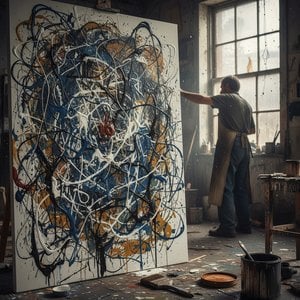
Paul Jackson Pollock: A Radical Departure – Exploring Abstract Expressionism's Pioneering Figure and His Enduring Legacy
Explore the revolutionary art of Jackson Pollock & Abstract Expressionism. Discover his iconic drip paintings, lasting impact, and considerations for collecting this pivotal American artist. Expert insights at ArtsDot.