


 实景预览
实景预览
 发送
发送 分享
分享
 详情
详情 指南
指南

 下载图片
下载图片
 相似作品
相似作品 X射线
X射线 幻灯片播放
幻灯片播放 统计数据
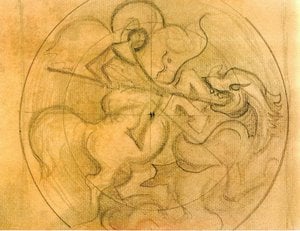
统计数据Untitled
 1962
1962 152.0 x 122.0 cm
 阅读全文
阅读全文
艺术微喷/版画
博物馆级艺术微喷或帆布版画,制作高效,并提供多种饰面选择。 ( 订购此收藏品的纯手工复刻画作 切换至数字图像销售渠道)




































您可以从与原作比例一致的预设尺寸中进行选择。

请输入您所需的宽度和高度,以适配您的画框或墙面。由于印刷品只能进行裁剪,无法超出原图尺寸,因此若比例不一致,画面的一部分将会被裁切。在正式印刷之前,我们会为您发送一份数字效果图供您确认。本页面显示的图片并非最终裁剪后的效果——只有效果图才能展示真实的裁剪情况。


 玻璃选项仅适用于110厘米以下的尺寸。

Untitled
艺术微喷/版画
复刻品尺寸说明
-


总计金额
¥ 416
相关艺术品


艺术家简介
The Structural Logic of Paul Feeley
To look at the work of Paul Feeley is to confront a deliberate reduction of form. He did not rely on decorative flourishes to hold attention; instead, he utilized the fundamental mechanics of painting and sculpture to command space. His practice was defined by a rigorous approach to geometry and scale. As a painter, sculptor, and muralist, his output moved between the two-dimensional plane and three-dimensional presence with a singular focus on how shapes interact within a frame.
His career was not limited to the canvas. He operated as an educator and portrait painter, yet his most significant contributions lie in his ability to manipulate visual weight. The archives of his life reveal a man deeply engaged with the physical reality of his materials, from sketchbooks to correspondence that tracked his technical evolution.
A Multidimensional Practice
Feeley’s versatility was a functional necessity rather than a pursuit of variety. His work as a muralist required an understanding of architectural integration, while his sculptural endeavors demanded a grasp of volume and mass. This breadth allowed him to approach the concept of space from multiple angles.
- Painting: Focused on the interaction of shapes and color fields.
- Sculpture: An exploration of physical form and spatial occupation.
- Murals: Large-scale applications designed for specific environments.
- Portraiture: A secondary but present engagement with figurative representation.
The technical foundation of his work is visible in the surviving records of his process. His notes and writings suggest a disciplined method where every line and color choice was calculated to achieve a specific visual equilibrium. He avoided the unnecessary, stripping his compositions down to their essential components.
The Archive of an Artist
The historical weight of Feeley’s contribution is preserved through a substantial collection of papers held by the Smithsonian Institution. These documents provide a direct look at the mechanics behind his creative decisions. The collection includes:
- Biographical materials and personal correspondence.
- Writings, notes, and printed materials.
- Photographs and detailed sketchbooks.
These records do more than document a life; they map the development of an aesthetic that prioritized clarity. By examining his sketches alongside his finished works, one sees the transition from initial thought to executed form. His legacy is found in this precision.

Paul Feeley
1910 - 1966 , United States of America
快速概览
- Full Name: Paul Feeley
- Place Of Birth: Des Moines, United States of America
- Date Of Birth: 1910
- Date Of Death: 1966