

 效果预览
效果预览
 购买手绘画作
 分享
分享 分享
分享
 详情
详情

 下载
下载
 相似作品
相似作品 X射线
X射线 幻灯片播放
幻灯片播放Flowers
 Acrylic On Canvas
- WallArt
- Symbolist Painting
 1905
1905 58.0 x 47.0 cm
 圣加仑美术馆
 展开详情
展开详情




P118B $10

P118H $10

P118W $10

P438Z $10

P508JH $12

P508YH $12

P805H $10

P805Z $10

P919BZ $10

P919G $10

P919XJ $10

P959ZH $10

P968JZ $12

W106C $8

W218G $10

W218JH $8

W218Y $10

W307PJ $10

W316G $10

W316PJ $8

W316Y $10

W398PJ $8

W4111J $10

W500HY $15

W500JH $15

W692G $12

W849H $8

W940BG $15

W953PJ $8




从与原作比例一致的预设尺寸中进行选择。

您可以输入自定义尺寸,以适配特定的画框或空间。如果您选择的尺寸与原图比例不符,我们将对作品进行裁剪,或通过镜像填充/纯色填充边缘的方式来扩展图像。在开始制作之前,我们会向您发送一份数字效果图供您确认。
请注意,屏幕上的预览并不能反映实际的裁剪或扩展效果。只有效果图才能准确展示最终的构图。
虽然我们提供定制尺寸,但为了保持原图比例,我们建议您从预设列表中选择尺寸。


 玻璃选项仅适用于110厘米以下的尺寸。

Flowers
艺术微喷/版画
复制品尺寸
-


最终总价
$ 62
藏品详情
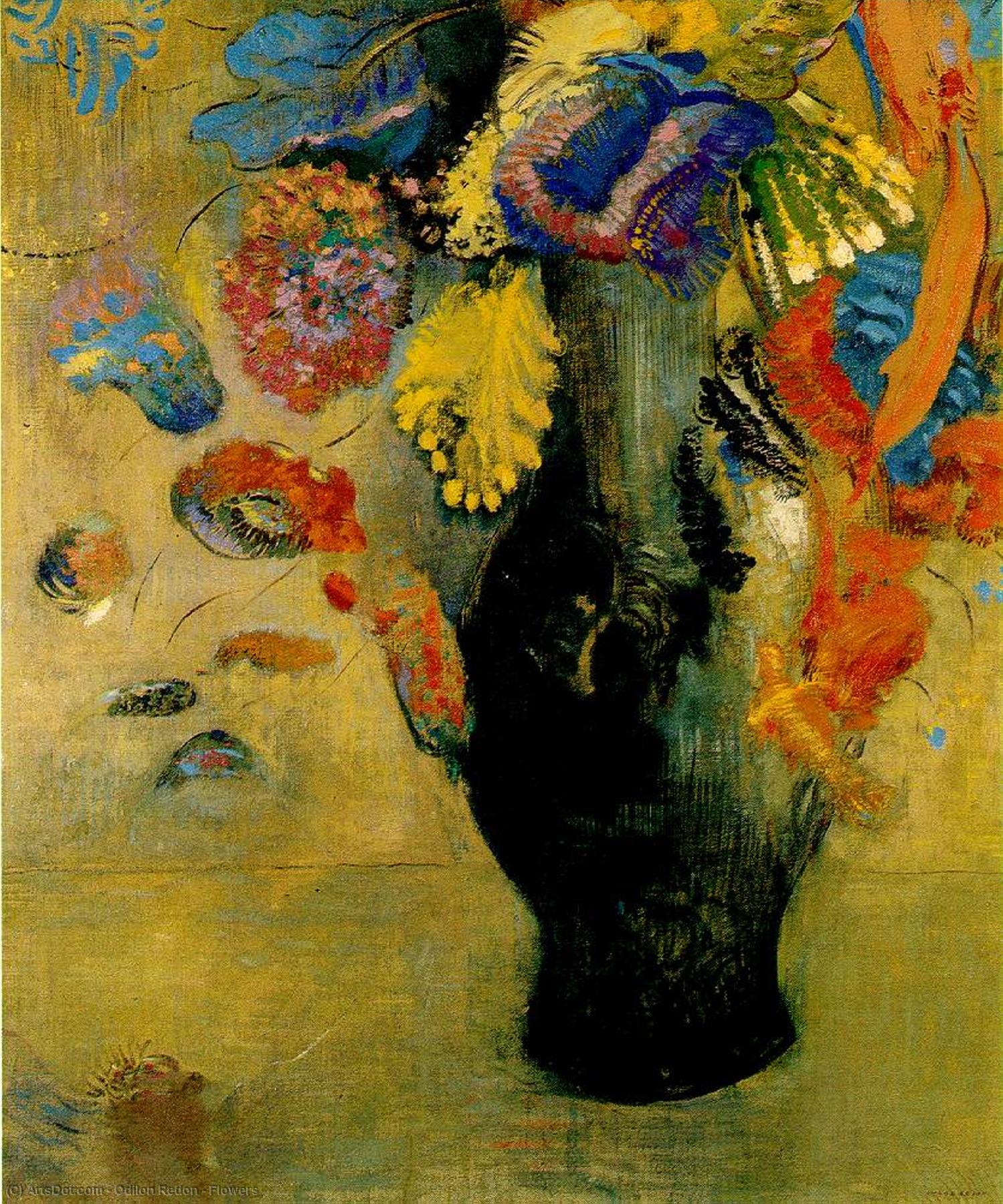
Odilon Redon’s “Flowers”: A Dreamscape of Color and Subconscious
Odilon Redon's "Flowers," painted around 1905, isn’t merely a depiction of botanical beauty; it’s an immersion into the artist’s intensely personal and often unsettling inner world. This captivating work, rendered in oil on canvas, transcends simple still life, offering instead a glimpse into the realms of dream, memory, and perhaps even a touch of melancholy. Redon, a pivotal figure in the Symbolist movement, deliberately eschewed academic realism, favoring instead an evocative style that prioritized mood and suggestion over precise representation.
The painting immediately draws the eye with its vibrant yet muted palette. Deep blues and purples dominate, creating a sense of twilight or shadowed introspection. Within this subdued atmosphere, bursts of color – fiery reds, sunny yellows, and delicate greens – emerge from the arrangement of flowers within a simple black vase. These aren’t the bright, celebratory blooms of a typical still life; rather, they possess an almost otherworldly quality, as if illuminated by an unseen light source. The flowers themselves are rendered with loose, expressive brushstrokes, hinting at their fragility and suggesting a fleeting beauty.
The Influence of Symbolism and Japanese Art
Redon’s artistic journey was profoundly shaped by the Symbolist movement, which sought to express subjective emotions and ideas rather than objective reality. He was deeply influenced by artists like Gustave Moreau and Edvard Munch, both known for their exploration of psychological themes and dreamlike imagery. Furthermore, Redon developed a deep appreciation for Japanese art, particularly its emphasis on suggestion, asymmetry, and the use of color to evoke mood. This influence is evident in the painting’s flattened perspective, simplified forms, and the careful orchestration of colors – techniques borrowed from traditional Japanese prints.
Interestingly, Redon's artistic development wasn't linear. He began his career with meticulously detailed charcoal drawings, known as “noirs,” which explored themes of death, decay, and the subconscious. However, he gradually moved towards more colorful and expressive forms, embracing oil paints and pastels to capture the elusive qualities of dreams and visions. "Flowers" represents a pivotal moment in this transition, showcasing his newfound ability to translate inner experiences into tangible visual form.
Decoding the Symbolism: Flowers as Vessels of Emotion
The choice of flowers themselves is laden with symbolic meaning. Redon frequently depicted flowers in his work, often associating them with themes of mortality, beauty, and the passage of time. In "Flowers," the arrangement seems deliberately unbalanced, creating a sense of unease or instability. The dark vase acts as a container, not just for the blooms but also for the artist’s emotions – perhaps hinting at a hidden sadness or longing.
The specific colors used are equally significant. Red, often associated with passion and vitality, is tempered by the surrounding blues and purples, suggesting a delicate balance between joy and sorrow. The yellow flowers evoke feelings of hope and optimism, while the greens represent growth and renewal. It’s important to note that Redon's use of color wasn't purely decorative; he employed it strategically to create specific emotional responses in the viewer.
A Legacy of Dreamlike Visions
"Flowers" is a testament to Odilon Redon’s unique artistic vision. It’s a painting that invites contemplation, prompting viewers to delve beneath the surface and explore the depths of their own subconscious. Redon's work continues to resonate with audiences today, offering a powerful reminder of the enduring power of art to capture the intangible qualities of human experience. Reproductions of this evocative piece are highly sought after by collectors and interior designers alike, who appreciate its ability to infuse any space with a sense of mystery and beauty.


艺术家简介
可见之境之外的世界:奥迪隆·雷东那神秘莫测的艺术
1840年出生于法国波尔多的贝尔特朗-让·雷东(Odilon Redon),是一位永远致力于将想象与梦境的无形领域转化为有形形态的艺术家。他的艺术旅程并非始于宏大的野心,而是源于静谧的观察;年仅十岁时,他便获得了一项绘画奖,这预示了他日后定义其一生的视觉敏锐度。尽管最初受家族期望的影响而转向建筑学,但雷东真正的天职却在别处。在让-莱昂·热罗姆以及至关重要的罗多夫·布雷丹的指导下,他掌握了蚀刻画和石版画这些精细的艺术技艺。这些技术成为了他早期探索的基石,使他能够深入一个充满阴影人物和模糊形态的世界,这种世界很快便令那些寻求学术写实主义之外替代方案的人们为之着迷。尽管普法战争曾一度中断了他的创作,让他短暂地服役于军中,但直到回到巴黎,他的艺术愿景才真正开始凝聚成型。象征主义的诞生:“黑色绘画”与早期幻象
雷东早期的职业生涯以刻意脱离主流艺术趋势为特征。他并不寻求复制可见的世界,而是试图唤起其隐藏的暗流——那些潜藏在日常生活表象之下的焦虑、欲望与精神渴望。这促成了他著名的“黑色绘画”(no𝓲rs)系列,这些作品采用木炭和石版画创作,呈现出单色的质感。这不仅仅是对黑暗的研究,更是对潜意识的探索,画面中充斥着奇异的生物、游离的眼睛以及从旋涡状迷雾中浮现的忧郁身影。爱伦·坡和查尔斯·波德莱尔等作家的影响在此清晰可见——他们对恐怖、神秘以及暗示的力量有着共同的痴迷。这些作品最初并未立即获得认可,雷东多年来在很大程度上仍鲜为人知。然而,转机出现在1884年,随着若里斯-卡尔·于斯曼的小说《逆向》(À rebours)的出版,书中颓废贵族德·埃塞恩对雷东素描的推崇,瞬间提升了他在先锋派圈子中的地位。这种认可为他打开了大门,使他能够进一步发展自己独特的艺术语言。他曾将自己的作品描述为模糊且无法定义的,称其应当“像音乐一样,将我们置于一种不确定性的暧昧领域之中”。调色盘的觉醒:从单色到绚烂的表达
虽然“黑色绘画”确立了雷东在象征主义中的重要地位,但他的艺术在19世纪90年代经历了一场非凡的蜕变。他开始拥抱色彩——先是粉彩,随后是油画——为他的构图注入了全新的活力与光泽。这种转变不仅仅是技术上的,它反映了艺术家自身不断演变的内心情感景观。早期的作品往往带有忧郁与孤独感,而后期的绘画则展现出对神话、佛教和日本艺术日益增长的兴趣——日本主义是一个重要的影响因素。诸如《佛陀之死》(1899)等作品展示了这种对东方精神性的着迷,而为多梅西男爵在其城堡委托创作的作品,则展现了雷东将装饰元素与象征性意象融合的能力。多梅西男爵夫人及其女儿珍妮的肖像画是这一时期的杰出代表,它们不仅捕捉到了形体的相似性,更捕捉到了一种内在生命力与心理深度。雷东通过艺术探索自己的内心感受与灵魂,旨在“让可见之物为不可见之物服务”。遗产与影响:超现实主义的先驱
奥迪隆·雷东对艺术界的影响远远超出了他的有生之年。他于1903年被授予荣誉军团勋章,其作品在1913年纽约军械库展览会上的展出获得了更广泛的认可。然而,直到他在1916年去世后,他的真正意义才完全显现。雷东对梦境、潜意识和非理性领域的探索为超现实主义铺平了道路,激励了马塞尔·杜尚和马克斯·恩斯特等艺术家深入探索类似的领域。他对主观经验和情感表达的强调也引起了表现主义画家的共鸣。他不仅仅是在描绘他所看到的;他是在视觉化他所感受到的,这一原则至今仍在启发着艺术家。雷东留下的遗产是一种艺术上的勇气,一种拥抱模糊性的意愿,以及一种对艺术能够揭示人类经验隐藏维度的深刻信念。他的素描作品拒绝被归类,开启了一种独特的、诞生于病态与谵妄之中的幻想意象,却始终蕴含着一种令人难忘的美感。核心特征与主题
- 象征主义:雷东被视为象征主义运动的核心人物,他优先考虑情感与精神的表达,而非写实的再现。
- 梦幻意象:他的作品常以幻想生物、模糊的景观以及唤起梦境氛围的场景为特征。
- 潜意识探索:雷东深入探讨了焦虑、欲望以及人类心灵隐藏深处的各种主题。
- 文学与神话的影响:他从坡和波德莱尔等作家,以及东方宗教与神话中汲取灵感。
- 技术创新:雷东对石版画的精湛掌握,以及他在粉彩和油画中对色彩的创新运用,对其艺术愿景的实现至关重要。

奥迪龙·雷东
1840 - 1916 , 法國
艺术家简介
- Artistic Movement Or Style: 象征主義
- Artists Or Movements Influenced By This Artist: ['超現實主義']
- Artists Who Influenced This Artist:
- 讓· LEON·傑羅姆
- 羅杜夫·布雷斯丁
- Date Of Birth: 1840年4月20日
- Date Of Death: 1916年7月6日
- Full Name: Odilon Redon
- Nationality: 法國
- Notable Artworks: ['聖靈的水']
- Place Of Birth: 法國波蘭德
相关文章
Crimson Threads of Narrative: Exploring Symbolism & Representation in Artworks Featuring the Red Dress
Explore the rich symbolism of the red dress in art history! From ancient power displays to iconic portraits like Cézanne’s 'Madame Cezanne', discover the cultural and artistic significance behind this captivating color. Expert analysis & insights.

Impressionism's Masterpieces: 10 Paintings That Defined a Movement | ArtsDot
Journey through Impressionism's heart with 10 iconic paintings by Monet, Renoir & Degas. Explore light, color & the stories behind these masterpieces. Find museum-quality art reproductions and elevate your home decor on ArtsDot.com.

保罗·塞尚:25幅大师杰作,重塑现代艺术与家居美学 | ArtsDot
探索保罗·塞尚25幅经典杰作!深入了解后印象派大师的艺术生涯、独特技法与色彩运用。ArtsDot提供高清油画复制品,为您的家居带来博物馆级艺术体验。立即发现更多名画,点亮生活空间!

Blossoming Symbolism: A Historical Journey Through Flowers in Western Painting
Explore the rich history of flower symbolism in Western painting! Discover how artists from the Renaissance to Modernism used blossoms to convey meaning, emotion & beauty. Learn about iconic artworks and movements.

Fleeting Moments & Radiant Light: Exploring the Enduring Legacy of Impressionism
Explore the captivating world of Impressionism! Discover its history, key artists like Monet & Renoir, defining techniques, and lasting impact on modern art. Expert insights for collectors.


