


 定制手绘复刻品
 分享
分享 分享
分享
 详情
详情

 下载
下载
 相似作品
相似作品 X射线
X射线 幻灯片播放
幻灯片播放Bell-Tower Keeper
 Oil On Canvas
- WallArt
- Symbolist
 1910
1910- 19th Century
 62.0 x 143.0 cm
 大原美術館
大原美術館
 展开详情
展开详情




P118B $10

P118H $10

P118W $10

P438Z $10

P508JH $12

P508YH $12

P805H $10

P805Z $10

P919BZ $10

P919G $10

P919XJ $10

P959ZH $10

P968JZ $12

W106C $8

W218G $10

W218JH $8

W218Y $10

W307PJ $10

W316G $10

W316PJ $8

W316Y $10

W398PJ $8

W4111J $10

W500HY $15

W500JH $15

W692G $12

W849H $8

W940BG $15

W953PJ $8




从与原作比例一致的预设尺寸中进行选择。

您可以输入自定义尺寸,以适配特定的画框或空间。如果您选择的尺寸与原图比例不符,我们将对作品进行裁剪,或通过镜像填充/纯色填充边缘的方式来扩展图像。在开始制作之前,我们会向您发送一份数字效果图供您确认。
请注意,屏幕上的预览并不能反映实际的裁剪或扩展效果。只有效果图才能准确展示最终的构图。
虽然我们提供定制尺寸,但为了保持原图比例,我们建议您从预设列表中选择尺寸。


 玻璃选项仅适用于110厘米以下的尺寸。

Bell-Tower Keeper
艺术微喷/版画
复制品尺寸
-


最终总价
-
藏品详情
Bell-Tower Keeper – An Exploration of Dreamlike Symbolism in Odilon Redon’s Late Style
Odilon Redon's "Bell-Tower Keeper," painted in 1910, stands as a quintessential example of the Symbolist movement’s preoccupation with subconscious imagery and emotional resonance. More than just a portrait, it embodies Redon’s masterful manipulation of form and color to convey profound psychological states—a testament to his enduring influence on Surrealism and beyond.Subject Matter & Composition
The painting depicts a solitary figure positioned centrally against a dark, textured background reminiscent of volcanic rock formations. This stark contrast immediately establishes a dramatic tension, drawing the viewer’s gaze into the enigmatic expression etched upon the man's face. Two additional figures—positioned subtly on either side—suggest an unspoken narrative, hinting at contemplation and perhaps even apprehension. Redon eschews realistic representation, prioritizing instead the suggestion of form and emotion over precise detail. The figure’s upward gaze contributes to a feeling of yearning or aspiration, mirroring the tower itself – a symbol of resilience against adversity and reaching for unattainable heights.Technique & Material Considerations
Redon employed etching and lithography—techniques he honed during his formative years—to achieve an astonishing level of tonal gradation and textural complexity. The artist meticulously layered thin washes of pigment onto the canvas, creating a velvety surface that captures the subtle nuances of light and shadow. This painstaking process resulted in a monochrome composition dominated by shades of grey and black, punctuated by flashes of ochre and crimson – colors deliberately chosen to heighten emotional impact. These hues evoke associations with both earth’s primal forces and inner turmoil, reflecting Redon's fascination with geological landscapes as metaphors for the human psyche.Historical Context & Symbolism
Painted during a period marked by anxieties surrounding technological advancement and societal upheaval—the burgeoning Industrial Revolution alongside the looming shadow of World War I—"Bell-Tower Keeper" speaks to the broader concerns of its time. Redon’s Symbolist aesthetic aligns with the movement's desire to explore inner landscapes and confront existential questions, rejecting the rational optimism championed by Impressionism. The tower itself symbolizes aspiration, permanence, and perhaps even isolation – themes prevalent in Symbolist art. Furthermore, the figure’s posture conveys a sense of vulnerability amidst overwhelming forces, mirroring humanity’s struggle for meaning and transcendence.Emotional Impact & Artistic Legacy
Ultimately, “Bell-Tower Keeper” transcends mere visual depiction; it invites contemplation on themes of solitude, resilience, and the elusive nature of consciousness. Redon's masterful use of monochrome and textural layering creates an atmosphere of palpable unease—a deliberate provocation designed to unsettle the viewer’s perceptions. This artwork cemented Redon’s reputation as a visionary artist who anticipated Surrealist explorations into dreamlike states and subconscious symbolism. Its enduring power lies in its ability to communicate profound emotional truths without resorting to explicit narrative, securing its place as one of Redon's most iconic achievements and a cornerstone of Symbolist art history.相似艺术品


艺术家简介
Odilon Redon (1840-1916): Between Shadow and Light
Odilon Redon, born Bertrand Jean Redon in Bordeaux, France, on April 20, 1840, was an artist whose profound engagement with the subconscious and his masterful manipulation of monochrome and color established him as a pivotal figure in Symbolism—a movement that anticipated the Surrealist explorations of dreams and fantasy. From humble beginnings marked by childhood illness and familial expectations for architectural pursuits, Redon’s artistic destiny unfolded through meticulous observation of nature and an unwavering fascination with literature and mythology, shaping his distinctive visual language. ## Early Life & Artistic Formation: The Seeds of Imagination Redon's formative years were steeped in a contemplative atmosphere fostered by his uncle’s rural estate near Bordeaux—a landscape that would serve as an unending source of inspiration for his artistic endeavors. At the age of ten, he secured a drawing prize at school—a serendipitous event foreshadowing his innate visual sensitivity and signaling the beginning of his artistic journey. Despite familial pressures favoring architecture, Redon's true passion resided in art, nurtured by instruction from Jean-Léon Gérôme and Rodolphe Bresdin, who imparted invaluable skills in etching and lithography—techniques that would become foundational to his early explorations into a world of shadowy figures and ambiguous forms rejecting academic realism. The interruption of the Franco-Prussian War briefly compelled him to serve in the military, yet it was upon his return to Paris that Redon’s artistic vision truly began to coalesce amidst a vibrant intellectual milieu. He studied under Jean Leon Gerome at École des Beaux-Arts where he failed the entrance exam but continued his artistic development. ## The Birth of Symbolism: ‘Noirs’ and Early Visions – Monochrome Mastery Redon's artistic breakthrough arrived in 1879 with the publication of *Dans le rêve* (In the Dream)—his first album of lithographs, a series that immediately captivated critics and solidified his reputation as a pioneer of Symbolist aesthetics. These monochrome compositions—known as “noirs”—were not mere studies in darkness; they represented profound explorations of the subconscious mind, populated by unsettling creatures, disembodied eyes, and haunting figures emerging from swirling mists. The influence of writers like Edgar Allan Poe and Charles Baudelaire is palpable here—a shared preoccupation with the macabre, the mysterious, and the transformative power of suggestion. Redon’s meticulous attention to detail and his masterful use of tonal gradation achieved an unparalleled expressive effect, capturing the essence of psychological states and evoking a sense of otherworldly beauty. His early works demonstrated a remarkable ability to convey emotion through form and texture—a characteristic that would define his artistic style throughout his career. ## Expanding Horizons: Color and Influence – Embracing Japonism & Beyond Following the success of *Dans le rêve*, Redon gradually broadened his palette, incorporating pastel and oil paints into his repertoire—a stylistic shift that reflected a deepening engagement with natural beauty and a fascination for Eastern aesthetics, particularly *Japonism*. He experimented with flattened planes and decorative patterns inspired by Japanese prints, injecting vibrancy and dynamism into his compositions. His participation in the Nabis group—a collective of artists who championed Impressionistic techniques while retaining Symbolist sensibilities—further enriched his artistic dialogue and propelled him to international recognition. Exhibitions at the New York Armory Show in 1913 cemented Redon’s place as a visionary artist whose work anticipated the Surrealist movement, influencing generations of painters and cementing his legacy as one of the most original voices of Symbolism. ## Legacy & Significance – A Visionary Ahead of His Time Odilon Redon's enduring influence stems from his unwavering commitment to exploring the inner landscape of human experience—a pursuit that transcended stylistic conventions and challenged prevailing artistic norms. He wasn’t merely depicting what he saw; he was visualizing what he felt, striving to communicate profound psychological truths through evocative imagery and masterful technique. His exploration of dreams, mythology, and the subconscious continues to inspire artists today, demonstrating the timeless relevance of his vision—a testament to his enduring contribution to the history of art and a beacon for those seeking to unlock the mysteries of the human psyche. Redon’s legacy resides in his courageous embrace of ambiguity and his unwavering belief in the transformative power of artistic expression.
奥迪龙·雷东
1840 - 1916 , 法國
艺术家简介
- Artistic Movement Or Style: 象征主義
- Artists Or Movements Influenced By This Artist: ['超現實主義']
- Artists Who Influenced This Artist:
- 讓· LEON·傑羅姆
- 羅杜夫·布雷斯丁
- Date Of Birth: 1840年4月20日
- Date Of Death: 1916年7月6日
- Full Name: Odilon Redon
- Nationality: 法國
- Notable Artworks: ['聖靈的水']
- Place Of Birth: 法國波蘭德
相关文章

Decoding the Veil: Symbolism in Art – A Comprehensive Exploration of Meaning & Interpretation
Explore the rich world of art symbolism! Uncover hidden meanings in masterpieces from Renaissance allegories to modern movements. A comprehensive guide for enthusiasts & collectors.

Decoding the Veil: Symbolism in Art – A Comprehensive Exploration of Meaning & Interpretation
Explore the rich world of art symbolism! Uncover hidden meanings in masterpieces from Renaissance allegories to modern movements. A comprehensive guide for enthusiasts & collectors.
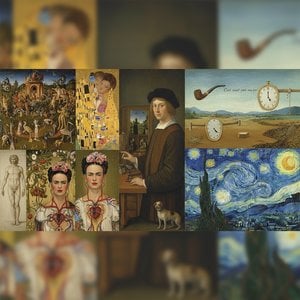
Symbolism in Art: 10 Masterpieces & Their Hidden Meanings | ArtsDot
Delve into the enchanting world of Symbolism with 10 iconic paintings by Klimt, Munch & Moreau. Explore hidden meanings, dreamlike imagery & rich color palettes. Find museum-quality art reproductions at ArtsDot.com and transform your home gallery. Discover all masterpieces on ArtsDot.com

萨尔瓦多·达利:25幅大师级作品,重塑超现实主义艺术与家居美学
探索萨尔瓦多·达利25幅大师级作品,领略超现实主义的奇幻魅力!深入了解达利的艺术风格、梦境般的色彩与象征意义。ArtsDot.com提供博物馆品质的达利画作复制品,为您的家居带来艺术灵感。立即探索完整系列!

Decoding the Visual Language: A Comprehensive Exploration of Symbolism in Art History for the Discerning Collector
Unlock the hidden meanings within masterpieces! Explore art symbolism with ArtsDot.com's expert guide. Understand iconography, historical context & elevate your collecting knowledge. Discover insights for discerning collectors.


